
No Job is Too Big or Too Small!

What Are the 5 Best Continuous Carbon Fiber Production Lines?

Choosing the five best carbon fiber production lines requires more than comparing advertised output. A reliable Continuous carbon fiber production line must control precursor tension, furnace temperature, residence time, and surface treatment with remarkable consistency. Even a small temperature variation can change oxidation behavior, tensile strength, and final fiber quality. The strongest systems also provide closed-loop monitoring, traceable data, and practical maintenance access.

Dr. Vlastimil Kunc, a recognized researcher in polymer-composites manufacturing, offers a useful principle: “A production line must be judged by repeatability, not by one impressive speed test.” That perspective guides this comparison. We examine production capacity, energy efficiency, automation, fiber uniformity, and technical support. We also consider whether each line can handle changing tow sizes without costly redesign. That matters.

Real factories rarely operate under perfect conditions. Dust accumulates. Sensors drift. Operators make mistakes. Some systems look excellent on paper but become difficult to service after installation. Others sacrifice peak speed for steadier quality, which may be the wiser choice for aerospace, automotive, and industrial applications. This ranking therefore remains open to debate. “Best” depends on product grade, plant scale, local energy costs, and the manufacturer’s engineering discipline. Our review highlights five production-line approaches that deserve serious attention, while recognizing that no single machine solves every manufacturing problem.
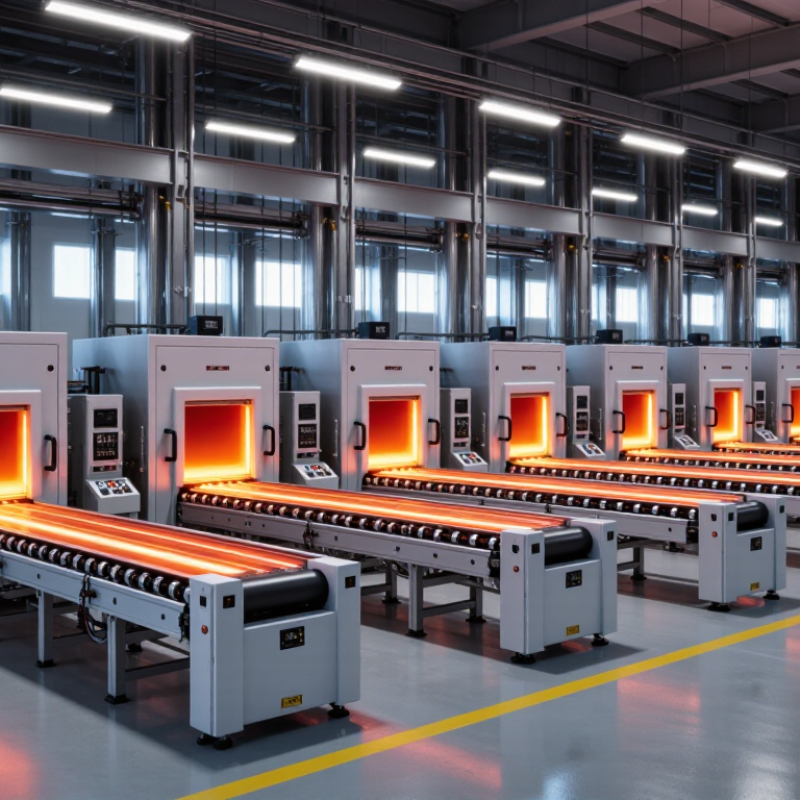
What Are the 5 Best Continuous Carbon Fiber Production Lines?

What Makes a Continuous Carbon Fiber Production Line the Best

A best continuous carbon fiber production line is not defined by speed alone. It must control tension, temperature, residence time, and surface treatment with discipline. During production, tiny tension changes can create fuzz, breaks, or uneven winding. Stable guidance matters. Operators need clear sensor data, not a crowded screen. A reliable line records each critical setting and links it to the finished spool. This supports repeatability across shifts and materials.

Thermal uniformity separates capable equipment from impressive specifications. Furnaces should heat the tow evenly, while exhaust systems remove gases without disturbing airflow. Surface treatment must match the resin system used later. Otherwise, strong fiber can form a weak composite. Good lines also allow practical maintenance. Easy access to rollers, filters, and nozzles reduces downtime and unsafe improvisation. Energy use matters too, especially when ovens run continuously.

The best line is also forgiving. It should recover from a tow break without long manual intervention. Digital alarms help, but experienced technicians still interpret unusual sounds, dust, and temperature drift. Those observations often reveal problems before sensors do. I would not judge a line from output data alone. Factory trials, sample testing, and service response deserve equal attention. No system is perfect. Even a well-designed line may struggle with a new precursor or changing humidity. Honest evaluation leaves room for that reality.

What Are the 5 Best Continuous Carbon Fiber Production Lines? - What Makes a Continuous Carbon Fiber Production Line the Best

Comparison of five high-performance continuous production-line configurations based on process stability, fiber quality, scalability, energy efficiency, and automation capability.

Technical values are representative industrial ranges for PAN-based continuous carbon fiber lines and can vary with precursor type, tow size, target modulus, furnace design, and production specifications.
Rank Production Line Configuration Primary Fiber Grade Typical Tow Range Typical Line Speed Stabilization Zone Carbonization / Graphitization Key Quality Controls Energy and Process Advantages Best Application Overall Assessment
1
Fully Integrated High-Tow Line
Continuous oxidation, low-temperature carbonization, and high-temperature treatment in one synchronized system.
Standard-modulus and intermediate-modulus PAN-based carbon fiber 12K–50K 5–15 m/min 200–300°C with multi-zone temperature and tension control 1,000–1,600°C; optional graphitization up to approximately 2,500–3,000°C Online tow tension, furnace temperature mapping, oxygen monitoring, width control, and filament-break detection High output per operator, synchronized process control, and reduced handling between stages Automotive parts, pressure vessels, wind-energy components, and high-volume structural composites Best overall balance
2
High-Precision Small-Tow Line
Low-tension line designed for consistent processing of fine tow and high-quality filaments.
High-strength and high-quality standard-modulus fiber 1K–12K 2–10 m/min 220–290°C with precise residence-time control 1,000–1,500°C; optional high-temperature graphitization Individual tow tension, fuzz monitoring, filament-break sensors, camera inspection, and process-data logging Excellent uniformity, low spread variation, and strong control of surface quality Aerospace components, sporting goods, robotics, and high-performance textiles Best for fiber quality
3
Modular Pilot-to-Production Line
Scalable configuration with interchangeable furnace zones and flexible precursor-handling modules.
Standard-modulus, intermediate-modulus, and development-grade fibers 1K–24K 1–8 m/min 200–300°C with adjustable airflow and residence time 900–1,600°C; modular graphitization section available Recipe management, zone-by-zone temperature control, gas-flow measurement, and laboratory sampling points Shorter development cycles, easier product changeovers, and lower initial capital requirements New-material development, university research, qualification trials, and specialty production Best for flexibility
4
Energy-Optimized Continuous Line
Line architecture focused on heat recovery, furnace insulation, and optimized inert-gas circulation.
Standard-modulus and intermediate-modulus PAN-based fiber 12K–24K 4–12 m/min 210–300°C with staged oxidation and controlled exhaust 1,000–1,500°C with heat-recovery integration Energy meters, oxygen and nitrogen monitoring, exhaust-temperature control, and automated alarm systems Lower energy consumption per kilogram, reduced gas losses, and improved thermal stability Large-volume production where operating cost and carbon footprint are priorities Best for operating efficiency
5
High-Temperature Graphitization Line
Extended furnace system for applications requiring high modulus, high thermal conductivity, or enhanced crystallinity.
Intermediate-modulus and high-modulus carbon fiber 3K–24K 2–8 m/min 220–300°C with strict precursor uniformity requirements 1,200–1,600°C carbonization; graphitization approximately 2,000–3,000°C High-temperature profiling, electrical-power monitoring, tension control, gas-purity checks, and crystallinity testing Enables higher modulus and improved thermal or electrical performance, but requires greater energy and maintenance capability Satellite structures, aerospace components, high-temperature tooling, and thermal-management materials Best for high-performance grades
The best continuous carbon fiber production line is typically selected by balancing throughput, tow size, fiber-property requirements, temperature uniformity, tension control, energy consumption, automation level, maintenance access, and the ability to maintain stable quality over long operating periods.

How Continuous Carbon Fiber Production Lines Work

Continuous carbon fiber production lines convert precursor tow into strong, lightweight filaments through controlled thermal and chemical stages. Most lines begin with polyacrylonitrile tow, although pitch-based systems serve specialized applications. The tow passes through tension-controlled rollers before stabilization, usually near 200–300°C. Oxygen changes the polymer structure without melting it. This stage is sensitive. Uneven heating can create weak spots.

Carbonization follows in oxygen-limited furnaces, commonly between 1,000 and 1,600°C. Some lines add graphitization above 2,000°C to improve modulus. The fiber then receives surface treatment, sizing, drying, and precision winding. According to the U.S. Department of Energy’s carbon-fiber technology research, furnace design and precursor conversion strongly influence energy use and final performance. A 2024 Grand View Research report also estimates continued double-digit growth in the global carbon fiber market through 2030, increasing pressure for stable, scalable lines.

The five best production lines should not be judged by speed alone. Engineers should compare temperature uniformity, tow tension, residence time, energy consumption, and defect rates. MarketsandMarkets reported that aerospace, automotive, and wind applications remain major demand drivers, each requiring different strength and cost balances. In practice, a line may achieve impressive output on paper but struggle with broken filaments during ramp-up. That weakness matters. Real qualification requires continuous sampling, tensile testing, microscopic inspection, and traceable process records. Mistakes remain possible, especially when operators adjust tension too quickly.

The Five Leading Types of Continuous Carbon Fiber Production Lines

What Are the 5 Best Continuous Carbon Fiber Production Lines?

The Five Leading Types of Continuous Carbon Fiber Production Lines

Continuous carbon fiber production depends on stable tension, accurate temperature control, and clean material handling. In plant evaluations, I look beyond machine speed. Fiber quality often changes when rollers drift or furnace zones fluctuate. Small errors can reduce strength and increase waste.

The five leading line types serve different production stages. Precursor spinning lines create uniform polyacrylonitrile filaments with controlled diameter. Stabilization and carbonization lines convert those filaments through carefully heated furnace zones. Surface treatment and sizing lines improve bonding with resins and protect the fiber during handling. Tow spreading and rewinding lines separate dense bundles into wider, flatter layers. Continuous impregnation lines combine carbon fiber with thermoplastic or thermoset resin for tapes, rods, and profiles.

Each line needs different inspection points. Tension sensors should be checked during every shift. Furnace temperature mapping is equally important. A sudden dark band may indicate uneven heating, not bad raw material. Impregnation lines also require resin-viscosity checks and cross-section testing. Not every line should be fully automated. Excessive automation can hide simple mechanical problems. A practical design leaves room for operator inspection, maintenance access, and controlled process changes. Performance claims should be confirmed through tensile testing, fiber-resin content analysis, and long-duration trial runs.

Key Performance Differences Among the Five Production Lines

The five strongest continuous carbon fiber production lines differ less by headline speed than by control. Pultrusion lines often deliver stable profiles at 0.5–3 meters per minute, with fiber volume commonly near 60%. Thermoplastic tape lines can exceed 20 meters per minute, but resin impregnation becomes difficult at higher speeds. Automated fiber placement lines offer precise steering, although their laydown rates may fall below 1 kilogram per hour on complex surfaces.

Filament-winding lines remain efficient for pressure vessels and pipes. They can place fiber accurately around cylindrical tools, but they are not suitable for every geometry. Continuous-fiber additive lines provide remarkable design freedom, yet deposition speed is usually modest and bead bonding can vary. The 2024 Wohlers Report valued the global additive manufacturing industry at approximately $20.0 billion in 2023, showing strong demand for digital production. However, market growth does not guarantee consistent structural performance.

Energy use and scrap also separate these systems. A 2024 CarbConsult industry report estimated global carbon fiber capacity above 190,000 metric tonnes annually. That scale makes waste reduction commercially important. Closed-loop tension control, infrared heating, and real-time void inspection can improve repeatability. Still, published figures are not perfectly comparable. Some tests measure dry fiber speed, while others measure finished composite output. That difference can mislead buyers. The “best” line may be the slower one, if it produces fewer rejected parts and steadier quality.

How to Choose the Right Continuous Carbon Fiber Production Line

Choosing the right continuous carbon fiber production line starts with the final product, not the machine catalog. The five strongest line types include pultrusion, filament winding, prepreg, thermoplastic tape, and fiber spreading systems. Each one serves a different production goal. Pultrusion suits constant profiles, while filament winding supports tanks, tubes, and pressure vessels. Prepreg lines offer controlled resin content for aerospace-style laminates. Thermoplastic tape lines enable faster forming and easier recycling. Fiber spreading systems improve coverage across wider surfaces.

Check fiber compatibility, resin viscosity, tension control, heating accuracy, and usable line speed. Ask for sample runs with your actual tow size and resin system. A line that performs well with standard carbon fiber may struggle with recycled fiber or high-tow materials. Small tension changes can create wrinkles, dry spots, or uneven thickness. These defects often appear after curing, when correction becomes expensive.

Measure more than output per hour. Review impregnation quality, temperature uniformity, cleaning time, spare-part access, operator training, and inspection records. The best supplier should provide traceable test data, clear maintenance procedures, and realistic energy estimates. Avoid choosing the fastest line too quickly. High speed can reduce stability. That tradeoff is easy to underestimate. In practice, a slightly slower line with reliable tension control may produce fewer rejects and steadier costs. No production line is perfect. Leave room for process trials, operator feedback, and design changes.

What Are the 5 Best Continuous Carbon Fiber Production Lines?

Comparison of five generic continuous carbon fiber production line profiles using a weighted selection model. The score considers throughput, fiber quality control, energy efficiency, production flexibility, and automation readiness.

High-throughput lines are suitable for stable, large-volume production, while flexible and pilot-scale lines are better for product development, specialty fibers, and changing tow sizes. Select the line profile that matches your target output, precursor technology, fiber grade, and available energy infrastructure.