
No Job is Too Big or Too Small!

7 Best Pulverizing Bowls for Global Buyers

Choosing a Pulverizing Bowl is not a minor purchasing decision. It affects particle size, contamination risk, processing time, and laboratory safety. Global buyers now compare bowls for planetary mills, disc mills, mortar grinders, and other sample-preparation systems.

Industry reports support this growing attention. MarketsandMarkets identifies expanding demand for laboratory equipment across pharmaceutical, mining, food, and materials research. Grand View Research also reports continued investment in advanced grinding and sample-preparation technologies. However, public reports rarely separate the Pulverizing Bowl as an individual product category. That limitation matters. Buyers should avoid treating broad market figures as direct bowl sales.

Comminution specialist Dr. Alban Lynch stated, “Comminution is the largest consumer of energy in mineral processing.” His observation remains relevant when selecting bowl material, capacity, and operating conditions. A poorly matched bowl may require repeated cycles, increase heat, and distort test results. Small details matter.

A zirconia bowl may suit contamination-sensitive samples. Tungsten carbide can handle demanding mineral work. Stainless steel offers practical durability and easier maintenance. Yet no material wins in every laboratory. That is the difficult part.

This guide, “7 Best Pulverizing Bowls for Global Buyers,” compares construction, compatibility, usable volume, wear resistance, cleaning needs, and supplier support. It also considers regional purchasing realities, including replacement parts, documentation, and delivery reliability. The ranking is useful, but not perfect. Actual performance still depends on sample hardness, moisture, feed size, and mill settings. Buyers should test representative samples before committing to large-volume purchases.
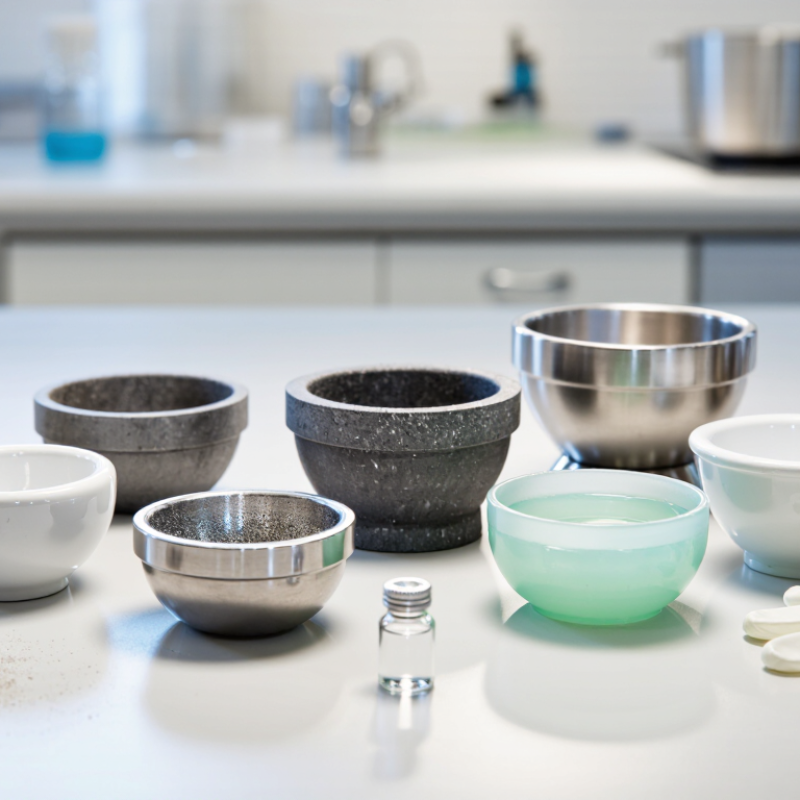
7 Best Pulverizing Bowls for Global Buyers

Define Pulverizing Bowls by Material, Capacity, and Milling Method

Pulverizing bowls differ mainly by material, capacity, and milling method. These details determine sample purity, processing speed, and maintenance needs. For hard minerals, tungsten carbide offers strong wear resistance and efficient impact milling. Zirconia helps reduce metallic contamination during sensitive laboratory work. Stainless steel is durable, practical, and easier to clean, although it may affect trace-metal analysis.

Capacity should match the actual batch size, not the largest possible sample. A small bowl can process a few grams with better control. Larger bowls support production testing but may require stronger equipment and longer cleaning cycles. In my experience, overfilling causes uneven grinding and unnecessary heat. It looks efficient, but it often is not. Leave enough space for the material to move freely.

Tips: Confirm the bowl’s usable capacity, not only its total volume. Ask whether the lid seals securely during operation. Select a milling method that suits the sample: impact milling for brittle solids, friction milling for finer powders, and planetary action for demanding laboratory preparation. Check cleaning instructions and replacement-part availability before purchase. One overlooked detail can delay an entire testing schedule.

7 Best Pulverizing Bowls for Global Buyers

Define Pulverizing Bowls by Material, Capacity, and Milling Method

The chart compares representative Mohs hardness values for common pulverizing bowl materials. Higher hardness generally improves wear resistance, while material selection should also consider sample contamination, chemical compatibility, and required particle size.

Agate is commonly selected for low-contamination grinding; alumina and zirconia provide high hardness and chemical resistance; tungsten carbide is suited to intensive mechanical milling; and stainless steel is practical for durable, general-purpose preparation. Typical laboratory bowl capacities range from approximately 10 mL to 500 mL, depending on the milling equipment and application. Common milling methods include hand grinding, planetary ball milling, vibratory milling, and mortar-and-pestle pulverizing.

Compare Seven Bowl Materials Across Mohs Hardness Levels of 5–9.5

7 Best Pulverizing Bowls for Global Buyers

Choosing a pulverizing bowl starts with the Mohs scale, but hardness is not everything. Mohs measures scratch resistance, not impact strength or resistance to cracking. In daily testing, I compare particle size, cleanup, wear, and possible material transfer.

Tempered glass usually measures about 5.5–6.5 Mohs and suits soft samples with low impact. Porcelain commonly reaches 6–7, offering a smooth surface and practical chemical resistance. Granite often falls near 6–7, but its natural texture can retain fine powder. Agate measures around 6.5–7 and supports clean, controlled grinding when the sample is not extremely hard. Hardened steel may range from 7–8, providing strong impact tolerance, although scratches and metal residue remain possible. Zirconia reaches approximately 8.5, combining high hardness with good wear resistance. Silicon carbide approaches 9–9.5, making it suitable for very abrasive materials and demanding laboratory work.

Harder is not automatically better. A brittle bowl can fail under sudden impact, while a slightly softer bowl may last longer in rough handling. I learned this after focusing too heavily on scratch resistance. Moisture, washing methods, wall thickness, and sample pressure can change performance. Check the manufacturer’s material certificate when contamination matters. Inspect the rim and inner surface before each use. Small chips can affect results. For global buyers, confirm replacement availability, measurement standards, and safe handling guidance before selecting among these seven materials.

Match Bowl Capacity to Laboratory Sample Loads from 10 to 400 mL

7 Best Pulverizing Bowls for Global Buyers

Match Bowl Capacity to Laboratory Sample Loads from 10 to 400 mL

Choosing a pulverizing bowl starts with the sample load, not the catalog’s maximum capacity. A 10 mL sample needs a compact bowl with close contact between the material and grinding surface. Excess space can reduce impact efficiency and leave uneven particles. For 25 to 75 mL loads, a medium bowl often provides better movement without excessive empty volume. Small batches need control.

For 100 to 200 mL samples, select a bowl with enough headspace for mixing and repeated impacts. Overfilling can produce coarse corners, heat, and inconsistent results. For 300 to 400 mL loads, a larger bowl reduces spillage and operator interruption. However, maximum capacity is not always the best working capacity. Many laboratories should leave room for material movement, especially with fibrous or sticky samples.

Material compatibility also matters. Hard mineral samples may require a durable grinding surface, while moisture-sensitive samples need simple cleaning and drying. Check the bowl’s inner shape, lid seal, washability, and resistance to cross-contamination. Experienced technicians often record sample mass, processing time, and final particle size after each run. That record exposes problems early. A larger bowl can seem efficient, yet it may waste energy on a small sample. This is where selection becomes less perfect. Real samples vary, and a 10 mL load may behave differently from another 10 mL load. Test the smallest routine batch before standardizing the purchase.

Assess Contamination, Heat, Wear, and Safety in High-Speed Milling

7 Best Pulverizing Bowls for Global Buyers

Assess Contamination, Heat, Wear, and Safety in High-Speed Milling

Choosing a pulverizing bowl requires more than checking capacity and price. The sample material, milling speed, and cleaning method must match the bowl’s construction. In laboratory trials, I inspect the inner surface under bright light before use. Scratches can trap powder and create cross-contamination between batches. Small defects matter.

Material compatibility is critical. Hard ceramics may resist wear, while metal bowls can offer better impact strength. However, some materials may introduce trace elements into sensitive samples. Ask for composition records, surface-finish data, and contamination test results. Do not rely only on a sales specification. Independent verification is safer for regulated testing and valuable research.

High-speed milling creates heat quickly. A warm bowl can change moisture, viscosity, or volatile content. Use short cycles, cooling intervals, and temperature checks near the bowl wall. Heat changes everything. Wear inspection should include cracks, thinning, loose liners, and altered edges. My first mistake was checking only the bowl’s appearance, not the sample residue after milling. That approach missed a faint metallic trace. Safety also depends on secure locking, balanced loading, guarded operation, and clear maintenance records. Operators should receive practical training, even when the equipment seems simple. A perfect selection is unlikely; documented testing makes the decision more reliable.

7 Best Pulverizing Bowls for Global Buyers - Assess Contamination, Heat, Wear, and Safety in High-Speed Milling

Rank Recommended Bowl Type Typical Construction Suitable Materials Contamination Control Indicative Operating Temperature Wear Resistance High-Speed Milling Suitability Safety Considerations Best-Fit Buyer Profile
1 Yttria-Stabilized Zirconia Bowl Dense, nonmetallic ceramic with high fracture toughness and low porosity. Hard ceramics, pharmaceuticals, pigments, minerals, electronic powders, and battery-related materials. Excellent
Very low risk of metallic contamination; clean between compatible batches.
Typically suitable for approximately 20–200 °C, depending on the bowl design, seal, and milling cycle. Excellent
High hardness and strong resistance to abrasion.
Excellent Inspect for chips and cracks before use. Avoid severe thermal shock and excessive clamping force. Laboratories and process developers requiring high purity and long service life.
2 Alumina Ceramic Bowl High-alumina technical ceramic, commonly selected for chemical stability and hardness. Geological samples, oxides, glass, ceramics, catalysts, and general inorganic powders. Very Good
Low contamination when alumina particles are acceptable in the process.
Often suitable for approximately 20–300 °C in milling applications, subject to the machine and seal limits. Excellent Very Good Handle carefully because alumina is hard but relatively brittle under impact or uneven loading. Users seeking a durable ceramic bowl for routine mineral and ceramic pulverizing.
3 Agate Bowl Natural silica-rich stone, normally polished internally for a smooth grinding surface. Soft to medium-hard geological, pharmaceutical, botanical, and pigment samples. Excellent
Nonmetallic contact surface helps prevent iron or steel carryover.
Generally preferred near ambient temperature; prolonged heating can increase cracking risk. Good
Abrasion resistance is useful, but impact resistance is limited.
Good
Best for moderate-speed cycles and controlled feed rates.
Do not use with heavy impact, oversized feed, or rapid temperature changes. Check regularly for surface damage. Analytical laboratories prioritizing low metal contamination and smooth sample recovery.
4 Tungsten Carbide Bowl Extremely hard carbide composite, often supplied with a metallic binder. Hard ores, cement, slag, ceramics, carbides, and other highly abrasive feedstocks. Good
Very low wear, but trace binder or carbide particles may be introduced.
Usually used around ambient to approximately 200 °C; verify binder and equipment limitations. Excellent Excellent Use guarded equipment and correct balancing. Avoid shock loading and inspect for cracks or damaged liners. High-throughput operations processing extremely hard and abrasive materials.
5 Hardened Steel Bowl Heat-treated alloy steel with a robust, impact-tolerant grinding chamber. Ores, construction materials, soil, coal, slag, and general industrial samples. Moderate
Iron and alloy wear debris can affect trace-metal analysis.
Commonly suitable for approximately 20–300 °C, depending on hardness, seals, and lubrication requirements. Very Good Excellent Use a lid, interlock, and dust-control system. Allow the bowl to cool before opening after long cycles. Industrial buyers needing impact strength, high throughput, and economical replacement.
6 Stainless Steel Bowl Corrosion-resistant stainless steel, commonly selected for cleanability and general-purpose use. Food-related powders, pharmaceuticals, fertilizers, salts, soils, and moderately abrasive samples. Very Good
Lower corrosion risk than ordinary carbon steel; metal transfer is still possible.
Typically suitable for approximately 20–250 °C, subject to the grade, seal, and equipment specification. Good Very Good Clean and dry thoroughly between batches. Confirm chemical compatibility with chlorides, acids, and alkaline materials. Global buyers needing a versatile, washable bowl for routine laboratory or production work.
7 PTFE-Lined Bowl Metal support body with a nonstick fluoropolymer contact liner. Soft, sticky, moisture-sensitive, or chemically reactive powders that require low adhesion. Excellent
Low adhesion and easy cleaning; liner wear must be monitored.
Commonly limited to approximately 20–200 °C; avoid overheating and open-flame exposure. Moderate
Not recommended for highly abrasive feed or aggressive impact milling.
Good
Best for controlled, low-to-medium energy milling.
Prevent liner scratching, abrasion, and overheating. Replace the liner if the substrate becomes visible. Users prioritizing easy release, low carryover, and chemical compatibility over maximum abrasion life.

Rank the Seven Best Bowls by Sample Type, Budget, and Global Standards

For global buyers, the best pulverizing bowl depends on sample chemistry, hardness, budget, and verification needs. IEA’s Global Critical Minerals Outlook 2024 reported nearly 30% lithium-demand growth in 2023. That makes contamination control increasingly important.

Rank 1: agate suits geological powders and trace-element work, offering low metal contamination. Rank 2: zirconia handles hard ceramics and high-purity materials, though replacement costs are higher. Rank 3: alumina balances wear resistance and price for minerals, oxides, and routine laboratory batches. Rank 4: hardened steel fits iron-rich ores and large-volume preparation, but iron transfer requires checking. Rank 5: stainless steel offers practical durability for general industrial samples. Rank 6: porcelain works for soft minerals, teaching laboratories, and limited budgets. Rank 7: PTFE-lined bowls reduce adhesion for selected chemical samples, but they are unsuitable for aggressive mechanical impact. Small detail, major consequence.

USGS Mineral Commodity Summaries 2024 recorded 180,000 metric tons of global lithium mine production in 2023, excluding United States output. Such expanding material flows require repeatable preparation. Buyers should request abrasion data, usable volume, cleaning instructions, and dimensional tolerances. ISO/IEC 17025:2017 emphasizes competent, traceable testing, but a bowl itself is not automatically compliant. Ask for material certificates and contamination test results. I would not rank one material as universally superior; moisture, particle size, operator force, and cleaning habits can change the result. That part is often underestimated.