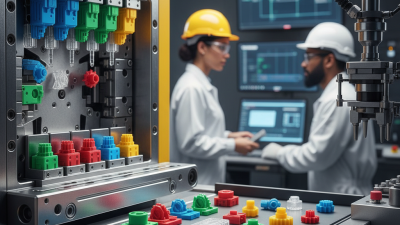
Injection molded parts have revolutionized the way businesses manufacture components. Companies across various industries benefit from their precision, efficiency, and cost-effectiveness. These parts are created by injecting molten materials into molds, allowing for complex shapes and consistent quality. Businesses find that injection molded parts reduce production time dramatically, enabling quicker time-to-market.
Despite these advantages, companies must choose their materials and designs wisely. The initial investment in molds can be significant. However, over time, the savings in material waste and labor can justify the expenses. Understanding the intricacies of this process is vital. Not every design translates well into injection molding; thus, careful planning is essential.
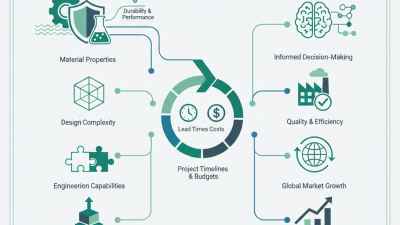
Injection molded parts can enhance product durability and performance. They can withstand harsh environments and meet stringent quality standards. With proper expertise, businesses can leverage this technology for a competitive edge. As industries continue evolving, staying updated on the latest advancements proves critical. Injection molded parts can be the key to innovation and success for a business.
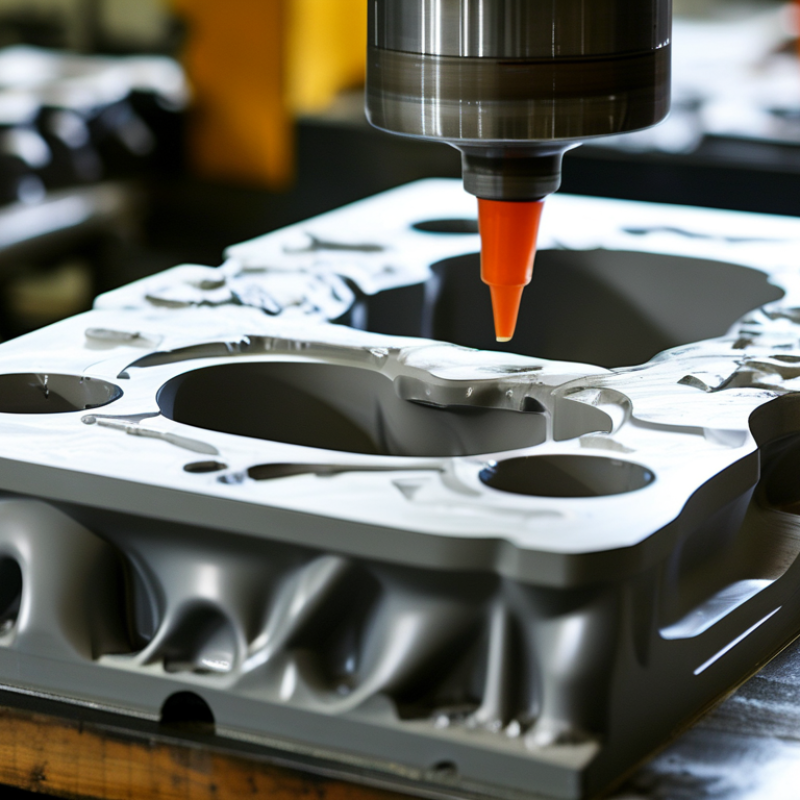
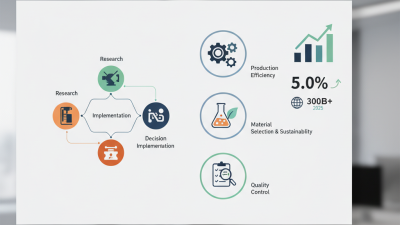
Injection molding is revolutionizing the manufacturing landscape. High production efficiency is one of its standout benefits. This method creates large volumes of parts quickly, making it ideal for businesses looking to scale operations. The process can produce thousands of parts in a short timeframe. This efficiency leads to reduced labor costs and increased throughput.
Despite these advantages, complexities exist. Not every design is suited for injection molding. Some intricate designs may require adjustments to ensure effectiveness. Companies must also account for initial tooling costs, which can be significant. Each phase of production demands careful planning and testing. Mistakes made during the design phase can lead to costly delays and waste. Ensuring a proper fit between product design and manufacturing capability is key.
Investing in injection molded parts can yield high returns for businesses ready to embrace this technology. With meticulous attention to detail and an understanding of the manufacturing process, companies can drive efficiency. However, aligning production goals with realistic expectations is critical for long-term success. Balancing speed and quality is a challenge that requires ongoing reflection and adjustment.
Injection molding is a manufacturing process widely recognized for its cost-effectiveness, especially in mass production environments. This method allows businesses to create large quantities of parts at a fraction of the traditional costs. The initial setup of molds can be expensive. However, once in place, the cost per part drops significantly with high-volume production. This makes injection molding a smart choice for companies looking to boost their bottom line.
Quality and precision also improve with injection molding. Parts produced through this method often have tight tolerances. Repeatability in the manufacturing process leads to consistent quality, reducing waste and rework. Yet, not all designs transfer effectively to this method. Complex geometries can pose challenges. Business owners must ensure that their designs are optimized for injection molding to fully harness its advantages. Investing time in design optimization can lead to substantial cost savings over the long term.
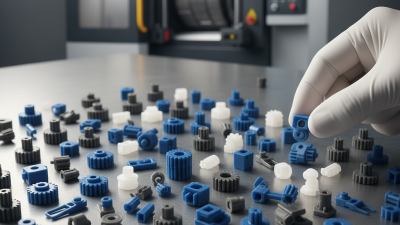
Injection molded parts offer remarkable versatility in material options, enabling businesses to achieve specific performance characteristics. Various materials can be used in injection molding, such as ABS, nylon, and polycarbonate. This range allows you to tailor products to fit unique requirements. For instance, ABS provides toughness and is easy to paint, while polycarbonate offers high impact resistance. Choosing the right material is crucial for optimizing both functionality and cost-effectiveness.
Customization is another key advantage of injection molded parts. With options like color variation and surface texture, businesses can create products that stand out. Brands often struggle to balance aesthetics with practicality. Understanding the application is essential. Sometimes, a material may not meet all performance needs, prompting a reassessment of the chosen material. This reflection can lead to innovative solutions and improved product design.
In addition to performance and aesthetics, sustainability is becoming increasingly important. Many manufacturers now offer bio-based materials that reduce environmental impact. However, these options may come with limitations. The decision to use sustainable materials should consider both the environmental benefits and potential compromises in performance. Evaluating these factors helps ensure the best fit for your needs while addressing the growing demand for eco-friendly practices.
Injection molded parts offer remarkable precision and consistency in manufacturing. This process allows for high levels of detail, which is essential for industries requiring exact specifications. The molds are created with advanced technology, ensuring that each part matches its predecessor closely. This accuracy reduces fitting issues, making assembly processes smoother and more efficient.
In addition to precision, consistency is vital for businesses. Once the mold is created, it can produce thousands of identical parts with minimal variation. This standardization helps maintain quality across batches. It can, however, lead to challenges. If a mold wears out, the replacements may not have exact precision. Regular maintenance and monitoring are crucial to mitigate this risk.
The enhanced precision and consistency in injection molded parts can elevate production capabilities. However, companies must weigh the benefits against potential drawbacks. Understanding how to balance these factors is key. Reliable manufacturing leads to satisfied customers and improved brand reputation over time.
| Benefit | Description | Impact on Business |
|---|---|---|
| Enhanced Precision | Injection molding allows for extremely precise part dimensions. | Minimizes waste and reduces rework costs. |
| Consistency in Quality | Maintains uniformity in manufacturing which leads to consistent quality. | Increases customer satisfaction and brand loyalty. |
| Reduced Production Costs | Lowers manufacturing costs by reducing material waste. | Improves overall profitability. |
| Versatility of Materials | Compatible with a wide range of materials for various applications. | Allows design flexibility and innovation. |
| Quick Turnaround Time | Faster production cycles compared to traditional methods. | Increases speed to market for new products. |
| Complex Geometries | Can create intricate designs that would be impossible with other methods. | Enhances product functionality and aesthetics. |
| Scalability | Easily scalable for large production runs. | Supports business growth and meeting demand. |
| Sustainability | Many materials used are recyclable and environmentally friendly. | Improves corporate social responsibility image. |
| Ease of Assembly | Parts can be designed for easy and efficient assembly. | Reduces labor costs and assembly time. |
| Improved Mechanical Properties | Parts often exhibit superior strength and durability. | Enhances product lifespan and reliability. |
Injection molding stands out as a highly effective manufacturing process, particularly due to its design flexibility. Businesses can create complex geometries and intricate features without significant costs. According to a study from the American Society for Quality, injection molding can produce parts with high accuracy, achieving tolerances as tight as ±0.002 inches. This precision allows engineers to push the limits of design.
Complex shapes, such as undercuts or intricate internal structures, can be produced seamlessly. This flexibility is crucial in industries like automotive and electronics, where innovative designs are essential. Additionally, injection molded parts can accommodate features like ribs, bosses, and snap-fits, enhancing their functionality. The materials used in this process often contribute to better performance, offering durability and resistance to environmental factors.
Consider the manufacturing process early. Evaluate the design for manufacturability to avoid challenges during production. Small adjustments can lead to significant cost savings. Often, redesigning a component may enhance its viability, addressing potential issues upfront. Remember, not every design can be efficiently molded. Conduct thorough research and prototyping to assess what works best for your needs. It's a crucial step toward maximizing the benefits of injection molded parts.