Best Plastic Materials for Sustainable Solutions?
In the quest for sustainable solutions, the role of plastic materials cannot be overlooked. Dr. Laura Evans, a leading expert in polymer science, once stated, "Sustainable plastics can redefine our environmental impact." This highlights the potential of innovative plastic materials to create a positive change.
The use of recycled and bio-based plastics is gaining momentum. These materials are designed to reduce waste and dependence on fossil fuels. However, the industry faces challenges. Not all plastics are recyclable, and many end up in landfills or oceans. Sustainable solutions must address these issues effectively.
The evolution of plastic materials calls for careful consideration. While they offer convenience, their environmental footprint is significant. The search for balance is ongoing. Experts emphasize the need for collaboration across industries to develop better alternatives. Only through collective effort can the right plastic materials be found for a sustainable future.

Sustainable Plastic Materials: An Overview
Sustainable plastic materials are crucial in addressing environmental concerns. They help reduce waste and limit fossil fuel reliance. Biodegradable plastics, made from renewable resources, offer promising alternatives. They break down into natural elements, minimizing long-term pollution.
Plant-based plastics exemplify this shift. Sourced from materials like cornstarch, they serve various applications. However, growing these crops can lead to land use issues. The balance between resource use and production efficiency is delicate. Not all bio-based plastics degrade easily, raising questions about their true sustainability.
Recycling plays a vital role as well. Traditional plastics can be reused multiple times. This process reduces the need for new materials. However, contamination in recycling streams remains a challenge. Efforts are needed to improve public awareness and recycling infrastructure. Understandably, sustainability is complex. Each solution requires careful consideration and commitment to long-term goals.
Types of Biodegradable Plastics and Their Applications
Biodegradable plastics are gaining popularity as sustainable alternatives. They break down naturally, reducing waste in landfills. Different types exist, each with unique applications.
Starch-based plastics are made from renewable resources. They are compostable and ideal for food packaging. However, these plastics can absorb moisture, affecting their strength. It’s essential to consider storage conditions.
PLA (Polylactic Acid) is another common option. It’s often used in 3D printing and disposable items. PLA is derived from corn starch and is compostable in industrial facilities. Yet, it has limitations in high-heat environments. Users should reflect on the intended use before selecting this material.
Tips: Always check certification for compostability. Understand the environmental conditions needed for proper breakdown. Consider the lifecycle of the product you choose, and whether it's truly sustainable.
Recycling Technologies for Enhanced Sustainability
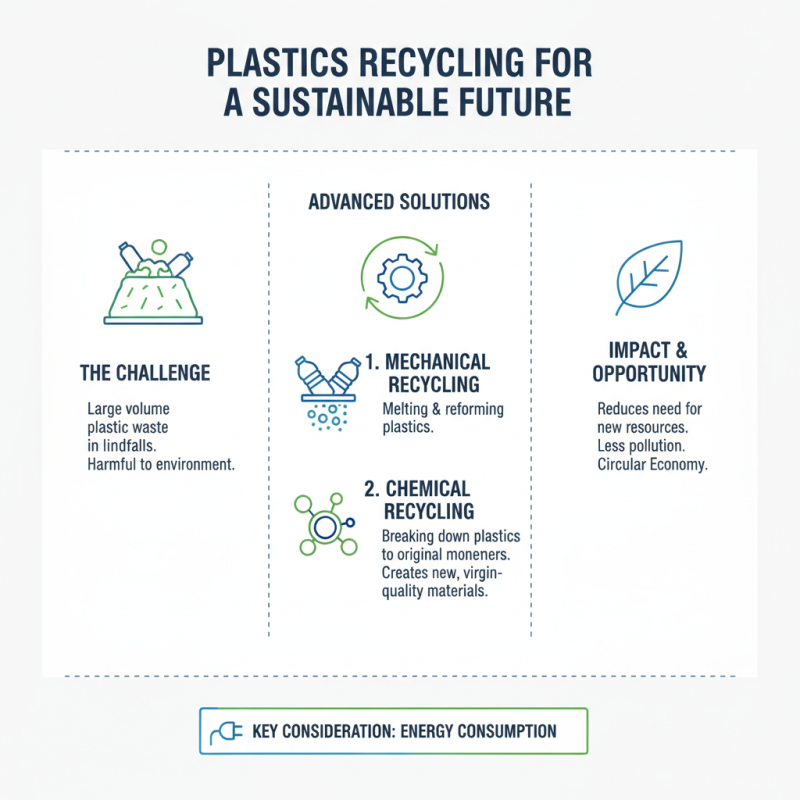
Recycling technologies are crucial for enhancing sustainability in plastic materials. Many plastics can be recycled, yet a large volume remains in landfills. Advanced techniques, like chemical recycling, can break down plastics into their original monomers. This process creates new materials, reducing the need for virgin resources. However, the energy consumption in these processes is often high.
Mechanical recycling is another method, focusing on shredding and melting plastics. While it's cost-effective, it may lead to lower quality in the final product. Contamination in plastics poses challenges, making sorting a complex task. The technology needs further innovation to address these issues efficiently.
Investing in better recycling infrastructure is essential. Education is also necessary, as consumers often lack knowledge about proper disposal. A conscious effort from both manufacturers and users can lead to better practices. The journey toward sustainable solutions requires ongoing reflection and improvement. Every step counts in minimizing plastic’s impact on our environment.
Comparative Analysis of Renewable vs. Traditional Plastics
The debate between renewable and traditional plastics continues to gain momentum. Renewable plastics are derived from biomass. They offer a reduced carbon footprint but come with challenges. For example, production may require vast land areas, impacting food resources. According to a report from the Ellen MacArthur Foundation, traditional fossil-based plastics accounted for 98% of global plastic production in 2020. Despite the growth of alternatives, the transition remains slow.
On the other hand, traditional plastics are cost-effective. They are widely available and versatile. However, their environmental toll is significant. A study by the World Economic Forum revealed that, if current trends continue, plastic production could reach 1.8 billion tons by 2030. This surge threatens our ecosystems and health. Despite advantages, traditional plastics create long-lasting pollution problems.
While renewable options are promising, they are not a perfect solution. Recycling rates for plastics are low, with only 9% of all plastics being recycled effectively. This calls for a deeper examination of how we approach plastic use. Sustainable practices must include rethinking consumption and enhancing recycling technologies. The path to a sustainable future requires more than just alternatives; it demands a fundamental shift in our habits.
Best Plastic Materials for Sustainable Solutions: Renewable vs. Traditional Plastics
Case Studies: Successful Implementations of Sustainable Plastics
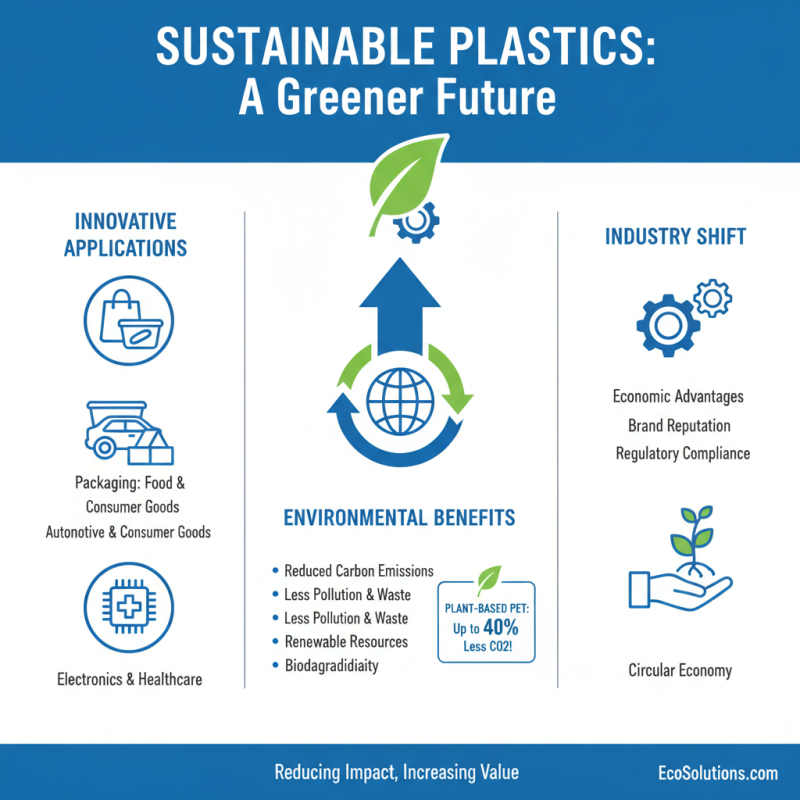
Sustainable plastics have gained traction in various industries. Case studies reveal innovative applications that highlight their benefits. For instance, researchers found that using plant-based PET reduced carbon emissions by up to 40% compared to conventional materials. This shift not only lessens environmental impact but also offers a viable alternative in packaging.
In the automotive sector, companies have started to integrate bioplastics. One study noted a significant reduction in weight with new materials, leading to improved fuel efficiency. Every kilogram saved can enhance mileage by approximately 0.1 liters per 100 km. However, challenges remain. The production of bio-based materials can still create waste. Not all bioplastics are biodegradable, which complicates their end-of-life scenario.
Some organizations are exploring recycling solutions. For example, repurposing PVC waste into new products has shown promise. A report indicated that up to 50% of materials can be reclaimed. Yet, not all recycling processes are efficient. Some methods lead to quality degradation of the material, which is a critical concern for many manufacturers. The journey towards sustainable solutions is ongoing, and reflections on these practices will guide future innovations.