Choosing the right plastic coating can be challenging. With various options available, it's crucial to understand your specific needs. According to Dr. Emily Richards, a renowned expert in the plastic coating industry, “Selecting the appropriate coating can significantly impact both durability and performance.”
Plastic coatings are utilized in many applications. From automotive parts to household items, the right choice can enhance longevity and resistance. Factors such as environmental conditions, substrate material, and desired finish play essential roles.
There are many types of plastic coatings, each with unique properties. Some offer excellent abrasion resistance, while others focus on chemical protection. However, it’s important to recognize that not all coatings will meet your requirements. This decision demands careful thought. Balancing performance with cost is often tricky. Being informed helps avoid expensive mistakes.

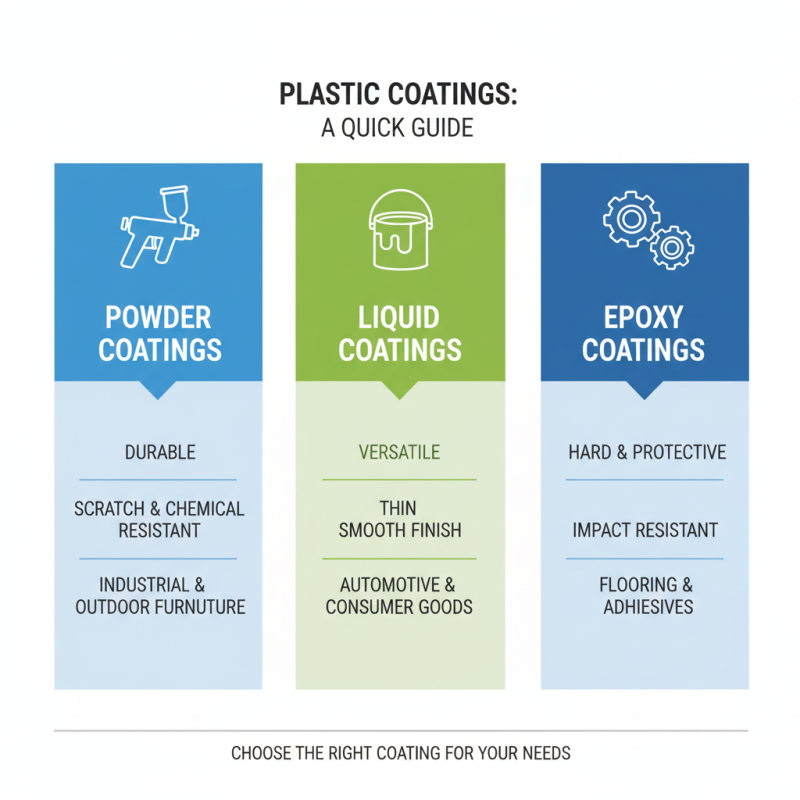
When selecting a plastic coating, it’s essential to understand the various types available. Each type has unique properties and ideal applications. Common options include powder coatings, liquid coatings, and epoxy coatings. Powder coatings are often durable and resistant to scratches and chemicals. They are frequently used in industrial settings and for outdoor furniture.
Liquid coatings, on the other hand, offer versatility in application methods. They can be sprayed, brushed, or rolled on surfaces. While they are easier to apply, they may not always provide the same level of durability as powder coatings. Epoxy coatings are known for their strong adhesion and resistance to moisture. They are commonly utilized in flooring solutions or protective barriers.
Choosing the right type depends on your specific needs. Reflect on the environment and usage conditions. Consider factors like exposure to sunlight, moisture, or chemicals. Each coating type carries its pros and cons. Researching and weighing these factors can help you make a more informed decision.
When choosing a plastic coating, evaluating environmental resistance is crucial. Different environments exert distinct pressures on coatings. For example, UV exposure can degrade outdoor applications. In humid conditions, mold and mildew may thrive. Each specific use has unique challenges.
Consider how a coating withstands temperature fluctuations. Some plastics may crack or peel in extreme cold. Others can warp under intense heat. Abrasion resistance also plays a role. Coatings in high-wear areas need exceptional durability. A simple scratch can compromise aesthetics and function.
Understand that not all coatings are created equal. Testing under real conditions is often necessary. Seek applications with proven performance metrics. Consult experts to gain insights into their experiences. Remember, the best choice may not always seem obvious. Continuous learning is vital. You may find unexpected results in everyday settings. Reflect on your requirements before making a decision.
| Coating Type | Temperature Resistance (°C) | Chemical Resistance | UV Resistance | abrasion Resistance | Typical Applications |
|---|---|---|---|---|---|
| Polyurethane (PU) | -30 to 80 | Excellent | Good | High | Automotive parts, Industrial equipment |
| Epoxy | -20 to 120 | Good | Fair | Moderate | Construction, Marine applications |
| Acrylic | -30 to 70 | Fair | Excellent | Low | Outdoor furniture, Signs |
| Polyvinyl Chloride (PVC) | -20 to 60 | Good | Low | Moderate | Pipes, Electrical insulation |
| Fluoropolymer | -200 to 260 | Excellent | Excellent | High | Food processing, Chemical processing |
When selecting a plastic coating, consider the application method.
Spray, dip, and brush coatings each have unique benefits.
Spray coating is popular for large areas. It provides an even finish and is quick.
This method works best in industrial settings where efficiency is key.
Dip coating offers a uniform layer, but it can be wasteful if excess material is not managed.
This method is suitable for intricate parts that require complete coverage.
Brush coating allows for precision.
It is ideal for small projects or touch-ups.
However, achieving an even finish can be challenging and may require skill.
Tips:
Always prep the surface well to enhance adhesion.
Test each method on a small area first.
This practice helps identify the best technique for your project.
Don't hesitate to adjust your method based on the material and desired outcome.
Keep in mind, sometimes the simplest solution isn’t the best.
When considering plastic coatings, understanding their cost-effectiveness and longevity is vital. Different types of coatings serve various purposes, from enhancing durability to providing aesthetic appeal. PVC coatings may be cheaper upfront, but they often require maintenance. In contrast, polyurethanes are more durable, offering a longer life span. Yet, they can be significantly more expensive.
It's essential to evaluate the specific application of the coating. For outdoor use, UV resistance is paramount. Indoor coatings may prioritize ease of cleaning. Additionally, installation costs should also be taken into account. Some coatings need professional application, driving up the overall expense.
Reliability stems from knowing what to expect in various conditions. Customer reviews can illustrate potential issues, but they vary widely. It's crucial to conduct thorough research and seek expert opinions. Every coating has strengths and weaknesses, and assessing them against your requirements demands careful thought. Taking the time to analyze these factors can save resources and enhance satisfaction in the long run.
When selecting a plastic coating, understanding safety and compliance standards is key. Many industries, such as automotive and construction, must adhere to strict regulations set by organizations like ASTM and ISO. These standards ensure that coatings meet safety, performance, and environmental criteria. According to a 2022 report by the American Coatings Association, the demand for compliant coatings has surged, driven by increasing regulatory scrutiny and awareness of material safety.
Often overlooked, the potential for harmful chemicals in plastic coatings can pose risks. Diverse applications may require coatings to be free from volatile organic compounds (VOCs) and heavy metals. The U.S. Environmental Protection Agency estimates that reducing VOC emissions can significantly improve indoor air quality. Elegantly toxic-free options not only fulfill safety requirements but also enhance public perception of a brand.
Evaluating certifications and testing results is essential. Many companies provide documentation on their products’ compliance with safety standards. For example, some coatings might pass the UL 94 flammability test, signifying low fire risk. Awareness of these details allows users to make informed decisions, aligning product choice with safety goals. However, constantly evolving regulations mean manufacturers must consistently update their products. Users must remain vigilant about these changes to avoid compliance gaps.