What is a Gate Valve and How Does it Work?
Gate Valves play an essential role in controlling fluid flow in various applications. According to industry expert John Smith, "Gate valves are crucial for on-off control in pipelines." Their design allows for minimal flow restriction when fully open. This characteristic makes them ideal for applications requiring a straight flow path.
However, gate valves also have their limitations. They are not suitable for throttling purposes, as doing so can lead to erosion and damage. Additionally, the sealing performance may decline over time, leading to leaks. Understanding these aspects of gate valves is vital for maintenance and operation.
In many industries, the choice of valve impacts efficiency. Many engineers overlook the importance of selecting the right type. A well-chosen gate valve can enhance operational reliability. Yet, it's essential to recognize when a different valve type may be more appropriate.
What is a Gate Valve and Its Key Characteristics
A gate valve is designed to control fluid flow in pipes. Its primary feature is a gate that opens or closes to allow or stop flow. This design provides minimal resistance when fully open. Gate valves are typically used in oil and gas, waterworks, and wastewater treatment. According to a recent market analysis, the global gate valve market is projected to grow at a CAGR of 5.5% from 2024 to 2030.
Key characteristics of a gate valve include its construction, which usually features a wedge-shaped gate. This gate can be either parallel or slope-faced, creating a tight seal when closed. The sealing mechanism is crucial for preventing leakages. The American Society of Mechanical Engineers (ASME) notes that proper installation and maintenance can increase the valve's lifespan by up to 50%. However, improper handling may lead to significant operational issues.
While gate valves are efficient, they have limitations. They are not ideal for throttling flow, as this can cause vibration and erosion. Regular check-ups are essential. Neglect can result in corrosion, compromising the valve's integrity. Addressing these factors can enhance reliability and performance over time. Efficient operation hinges on understanding the valve’s characteristics and maintaining it diligently.
Types of Gate Valves: Wedge, Parallel, and Expanding Designs
Gate valves are crucial components in piping systems that control fluid flow. Among the various designs, wedge, parallel, and expanding gate valves stand out. Each type serves distinct purposes and is chosen based on specific needs.
Wedge gate valves feature a triangular-shaped wedge. This design allows for a tight seal when closed. They are commonly used in high-pressure applications. However, they can be slower to operate. Some may find the installation more challenging. Proper alignment is critical, or they might not seal effectively.
Parallel gate valves offer a different approach. They have two parallel plates, which provide a more uniform sealing surface. This type is advantageous in low-pressure situations. Yet, they may not perform well in extreme temperatures. Users often overlook these conditions, leading to potential failures.
Expanding gate valves incorporate a unique mechanism. As they close, their sealing surfaces expand. This feature enhances the seal under pressure. However, they may require more maintenance compared to others. If wear and tear go unnoticed, leaks can occur. Each design has its pros and cons, and careful consideration is essential for optimal use.
Principle of Operation: How Gate Valves Control Fluid Flow
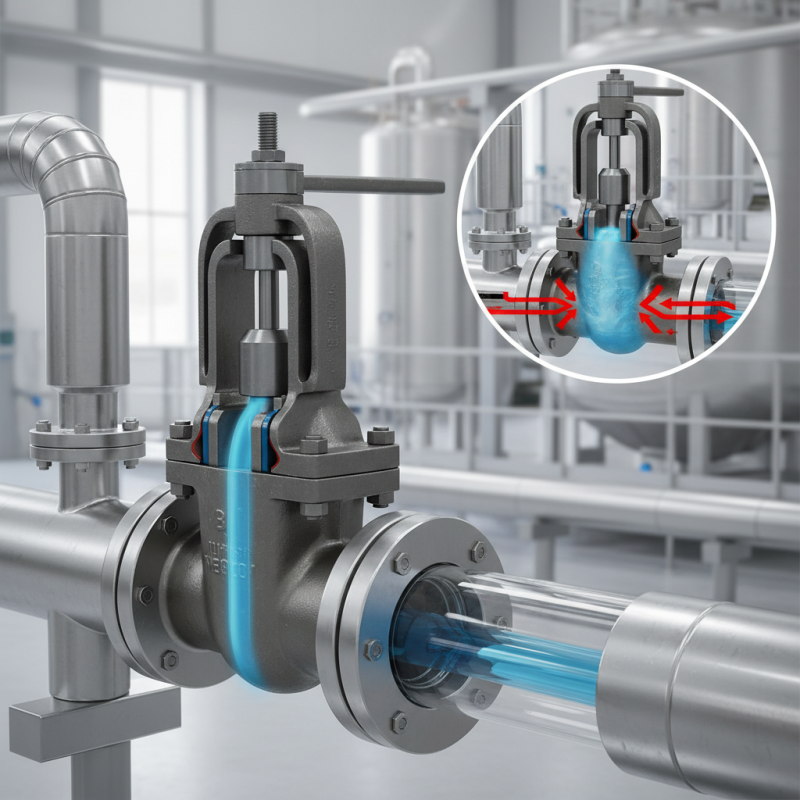
Gate valves are crucial for controlling fluid flow in various applications. They operate on a simple principle. When the gate is raised, fluid can pass through. Lowering the gate stops the flow completely. This straightforward mechanism allows for effective flow regulation.
The design of gate valves includes a wedge-shaped gate. This gate fits tightly between two seats. Fluid pressure helps to create a seal when the gate is closed. This ensures minimal leakage. However, sometimes the seal is not perfect. Wear over time can lead to issues, requiring regular maintenance. The clear visibility of the valve's position is beneficial. Users can instantly see if the valve is open or closed.
Gate valves are versatile but can be ineffective in certain situations. They perform poorly in throttling applications. A partially open gate can impede the flow. This can cause turbulence, leading to increased wear. Understanding these limitations is vital for optimal use. The selection of the right valve for the task is essential. Careful consideration will enhance system efficiency and reliability.
Understanding Gate Valve Performance
Common Applications of Gate Valves in Various Industries
Gate valves are widely used in various industries due to their ability to efficiently control flow. They are commonly found in water supply systems, oil and gas pipelines, and industrial processes. Their design allows for complete closure, making them suitable for on-off service.
In water treatment plants, gate valves isolate sections during maintenance. They ensure proper flow regulation while preventing backflow. In the oil and gas sector, they control the flow of crude or refined products. However, installing them poorly can lead to leaks and inefficiencies.
Tip: Regular maintenance checks are crucial. Inspect seals and operability to ensure they close properly.
In the power generation industry, gate valves manage steam and other fluids. Their robust structure withstands high pressures and temperatures. Still, their efficiency decreases if used frequently, which could lead to slow response times.
Tip: Limit exposure to high cycles. This may prolong their lifespan significantly.
In mining, gate valves sometimes face abrasive materials. They can degrade quickly if not chosen correctly. Think about the environment and material compatibility to avoid premature failures. Making informed choices is essential for longevity.
Maintenance and Troubleshooting for Optimal Gate Valve Performance
Gate valves are essential components in many piping systems. Their primary function is to control fluid flow. However, they require regular maintenance to operate efficiently. A well-maintained valve enhances system performance. This prevents leaks and reduces potential failures.
Routine inspection is crucial. Look for signs of wear or corrosion. Check the valve seats and the stem for damage. If you notice any excessive wear, it's time for repairs. Lubrication is also necessary. A little grease on the stem can prevent it from seizing. This simple step can prolong the valve's life.
Troubleshooting is often needed. If the valve does not open or close smoothly, it might be stuck. Grit or debris could be the cause. Sometimes, a gentle tap can help dislodge stubborn components. Still, if problems persist, replacing the valve may be the best option. Maintenance should be continuous. Don't let neglect lead to bigger issues down the line.