
No Job is Too Big or Too Small!

How to Choose Aluminium Takeaway Containers?

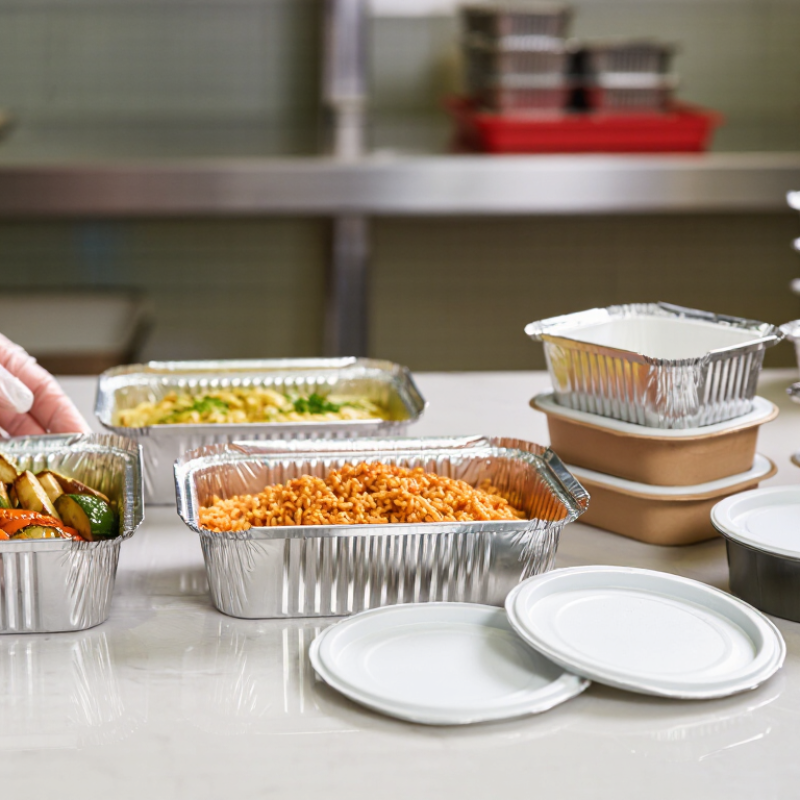
Choosing Aluminium Takeaway Containers is not just a matter of picking a size from a shelf. The right container should suit the food, portion, serving temperature, delivery journey, and packing routine. A shallow tray may work well for grilled vegetables, while a deeper container can help keep sauced rice meals contained. Fit matters, too. A lid that rocks or corners that bend can turn an ordinary order into a messy one.

Packaging specialist Alex Morgan puts the decision this way: “Choose the container for the food’s journey, not just its portion.” That is a useful starting point, but it is not the whole answer. Buyers should compare capacity, rigidity, lid compatibility, stackability, and how easily staff can fill and close each option. Check supplier specifications and confirm that the product is intended for the food and conditions you plan to use it for. Small details count. A few sample packs on a busy prep counter can reveal problems a product sheet will not.

This guide explains how to match container shape and size to different takeaway meals, assess material and closure features, and compare practical costs. It also considers storage space, transport, and the customer’s experience when opening the meal. No single design suits every menu. A container that performs beautifully for one dish may be awkward for another. Testing real portions before placing a large order is sensible, even if it adds one more step.
How to Choose Aluminium Takeaway Containers?

Define Meal Size and Portion Capacity Before Selecting Container Dimensions

How to Choose Aluminium Takeaway Containers?

Define Meal Size and Portion Capacity Before Selecting Container Dimensions

Start with the meal, not the container catalogue. Estimate the usual serving by weight or volume, then check how it sits in the container. USDA FoodData Central lists one cup of cooked long-grain white rice at about 158 grams. A similar volume of another food may weigh quite differently. Millilitres do not equal grams.

For a rice bowl with grilled vegetables and sauce, test the full portion in a sample container. Leave space for the lid, and check whether the sauce shifts during handling. A container that looks spacious when empty can feel cramped once food is packed. Small details matter. Use the actual menu, not a guessed “standard serving.”

USDA data offers a useful reference, but it cannot set your portion size for you. Recipes, cut sizes, and packing methods vary. Measure several real servings during a busy service period, including one that seems unusually large. That part is easy to overlook. Then choose dimensions that fit typical portions without crushing food or wasting excess space. I would still retest after changing a recipe; even a small increase in vegetables can alter how neatly a meal packs.

Check Food-Contact Alloy Suitability Against EN 602:2007

When choosing aluminium takeaway containers, ask which alloy is used and whether its composition meets EN 602:2007. This European standard covers wrought aluminium and aluminium alloys intended for food contact. It sets chemical composition requirements, including limits for certain elements and impurities. Request the alloy designation and supporting technical documents, not just a general claim that the container is “food safe.”

That matters. A compliant alloy is an important starting point, but it does not automatically establish that every finished container is suitable for every meal. Forming, surface treatments, coatings, and the food itself can affect performance.

A container holding tomato sauce or salty food may face different conditions from one holding dry pastries. Check that the supplier’s food-contact information covers the intended use, including contact time and temperature. EN 602:2007 addresses alloy composition; other requirements may apply to the finished article.

Keep records. Match documentation to the actual container specification and batch where possible. If the alloy or coating changes, review the evidence again. It is easy to focus on thickness and price, then overlook the material declaration. That is a practical mistake, though paperwork alone is not proof of real-world performance. Ask clear questions, and investigate any vague answers before ordering.

Compare Foil Gauge, Rim Strength, and Leak Resistance for the Intended Load

How to Choose Aluminium Takeaway Containers?

Foil gauge affects stiffness, heat handling, and resistance to dents. A thicker foil often feels more rigid, but gauge alone cannot predict performance. Container size and shape matter too. A wide, shallow tray may flex more than a smaller one. Check the supplier’s stated gauge, then test the container with the actual portion size. Fill it with hot food and lift it by the rim. I would not rely on gauge alone; it is easy to overvalue one number.

Tips: Press gently around the rim. It should hold its shape when the lid is fitted, without sharp folds or loose corners. For gravy or oily dishes, tilt a filled sample over a tray and check for seepage. Test it after carrying, not just while it sits on a counter.

Match leak resistance to the intended load. Dry foods need less protection than curry, dressing, or food packed with sauce. A tight-fitting lid can help, but it does not make every container leakproof. Leave room below the rim, close the lid evenly, and check that corners are seated. If containers will be stacked, test several filled units together; the bottom one may buckle. Small differences between batches can happen, so inspect a few samples before ordering in quantity.

How to Choose Aluminium Takeaway Containers?

Compare foil gauge, rim strength, and leak resistance for the intended load.

Thickness values are shown in micrometres. The stiffness index is calculated from the ideal plate-bending relationship (thickness³), with 40 μm set to 1.0. It is a theoretical comparison, not a measured container rating: rim strength and leak resistance also depend on container geometry, alloy, forming, seams, and the intended load. Check product-specific test data before choosing.

Verify Oven and Temperature Ratings; Aluminium Melts at About 660°C

When choosing aluminium takeaway containers, check the stated oven-use and temperature ratings, not just the metal. The NIST Chemistry WebBook lists pure aluminium’s melting point at about 660.3°C. That is a material property, not a safe-use temperature for a finished container. Coatings, seams, and lids may have lower limits. Follow the supplier’s rating for the complete item, and check whether it applies to conventional ovens, reheating, or only food storage.

European Aluminium’s food-contact guidance notes that contact conditions, including temperature, duration, and food acidity, matter when assessing aluminium use. A tomato-based dish left hot in a tray is a different case from a dry pastry briefly warmed in one. A common mistake is treating “aluminium” as a complete oven-safety guarantee. It isn’t. I would verify the actual product details rather than infer a rating from the metal alone.

Tips: Look for a clear maximum temperature and oven-use instructions. Confirm whether the rating includes the lid; many lids are not oven-safe. Remove any component the instructions exclude, and don’t use a container with damaged lining.

Choose Recyclable Aluminium: Recycling Uses About 5% of Primary Production Energy

How to Choose Aluminium Takeaway Containers?

When choosing takeaway containers, look beyond shape and price. Recycling aluminium uses about 5% of the energy needed to make primary aluminium, according to the International Aluminium Institute’s aluminium recycling factsheet. That means roughly 95% less energy for the recycling stage. A meaningful saving. European Aluminium’s Environmental Profile Report also describes energy savings of up to 95% when recycled aluminium replaces primary metal.

These figures describe aluminium production, not a guarantee for every used container. A tray covered in food or mixed with other materials may be harder to sort and recover. Choose containers made predominantly from aluminium, with clear material identification and few attached components. A firm rim helps the tray keep its shape during filling and transport. I would not treat a recycling symbol as a promise. Local collection rules matter.

Before ordering, check whether nearby facilities accept aluminium food trays, and ask how they should be prepared. Emptying and lightly scraping a container can reduce residue; avoid assuming every facility requires the same process. Small details count. A practical choice balances sturdy construction with easy separation and local recyclability. The energy advantage is compelling, but it only becomes real when collection and recovery systems can handle the packaging.

How to Choose Aluminium Takeaway Containers? — Choose Recyclable Aluminium

Selection factor Primary aluminium Recycled aluminium What to look for in a takeaway container
Production energy Reference level: about 100 units About 5 units in a commonly cited comparison—roughly 5% of primary production energy Prefer recycled content where its percentage is clearly stated. Actual energy use varies by production method and scrap supply.
Material recovery Made from aluminium produced from ore Made using recovered aluminium scrap Check whether the container is aluminium and follow local recycling rules; acceptance varies by area.
Recycling potential Can be recycled when collected and correctly processed Can be recycled again; aluminium can retain its material properties through recycling Choose a simple, all-aluminium format where possible, and separate non-aluminium parts if required by local guidance.
Food residue Residue may interfere with sorting or recycling Residue may interfere with sorting or recycling Empty the container and remove excess food. Rinse only if local recycling instructions recommend it.
Local collection access Recyclability depends on collection and processing systems Recyclability depends on collection and processing systems Confirm that your local programme accepts aluminium food containers; rules for foil trays can differ between communities.

Note: The energy comparison is an approximate industry benchmark. The “100 versus 5” figures are an indexed illustration of the commonly cited estimate that aluminium recycling uses about 5% of the energy needed to produce primary aluminium; results vary by process and material quality.