
No Job is Too Big or Too Small!

Top Color Coated Steel Coil Manufacturers Worldwide

Choosing the Top Color Coated Steel Coil Manufacturers Worldwide requires more than comparing production volume or export figures. Buyers must examine coating quality, substrate consistency, technical support, and delivery reliability. A bright surface may attract attention, but performance depends on hidden details. These include zinc coating weight, paint chemistry, thickness tolerance, and forming behavior.

This guide evaluates manufacturers through practical purchasing criteria. It considers galvanized and galvalume substrates, polyester, SMP, and PVDF paint systems. It also reviews factory capacity, laboratory testing, certifications, and batch traceability. Reliable producers should provide inspection reports, coating specifications, and clear warranty conditions. Their coils should arrive with stable dimensions, protected edges, and readable identification labels.

Real projects reveal the difference. A roofing coil may face intense sunlight, coastal salt, heavy rain, or repeated bending. Small defects can become visible after cutting or installation. Customer references and independent testing therefore matter. Published rankings can help, but they are never perfectly neutral. Market data changes, and some manufacturers disclose more information than others. That limitation deserves attention.

The companies discussed here are assessed for experience, engineering capability, product consistency, and international service. Their strengths may differ by region, application, and budget. One manufacturer may excel in automotive panels, while another serves construction distributors efficiently. Careful buyers should compare current data before placing large orders. The best choice is rarely the loudest name. It is the supplier that matches verified performance with dependable support.
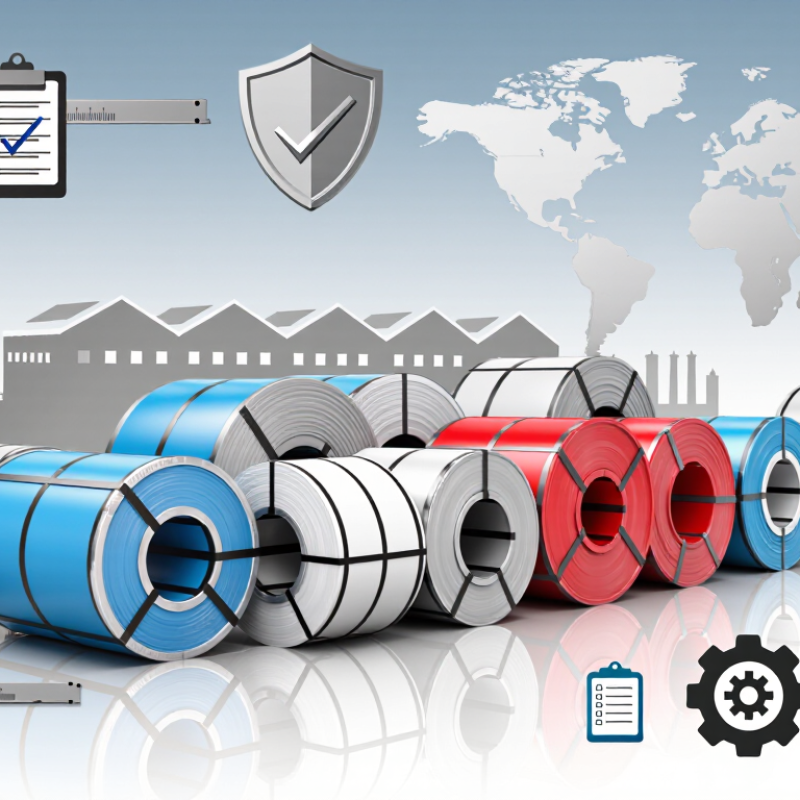
Top Color Coated Steel Coil Manufacturers Worldwide

Definition and Role of Color Coated Steel Coils

Color coated steel coil is flat steel coated with protective and decorative layers before fabrication. The coil usually contains a metallic substrate, a conversion layer, primer, and colored topcoat. During production, rollers apply controlled paint films across the moving strip. Heat then cures the coating in a continuous line. This process creates consistent surfaces for roofing panels, wall cladding, doors, and appliance parts.

Its main role is to protect steel from moisture, ultraviolet exposure, and everyday abrasion. The metallic coating helps resist corrosion at exposed edges and small scratches. The paint layer adds color, gloss, and another barrier against weather. In a coastal project, engineers may specify stronger corrosion resistance than for an inland warehouse. They also check coating thickness, adhesion, bending performance, and color tolerance. Standards such as ASTM and ISO methods can support these inspections, but test results still need practical interpretation.

From site experience, a coil may look excellent under factory lighting yet reveal shade variation after installation. Storage conditions matter too. Trapped condensation between stacked sheets can damage an otherwise sound surface. I have also seen installers blame the coating for scratches caused by rough handling. The material is reliable, not invincible. Small details, including cutting direction, fastener compatibility, and drainage design, often decide its service life. A lower initial price can become expensive when repainting, replacement, or visible fading follows.

Key Factors for Comparing Global Manufacturers

Comparing global color coated steel coil manufacturers requires more than checking price per tonne. The World Steel Association reported 1,888.2 million tonnes of crude steel production in 2023. That scale makes supply consistency important. Examine coating-line width, annual capacity, substrate grades, and realistic lead times. Request recent mill test certificates, coating-thickness readings, and corrosion-test results. Numbers matter.

Coating performance must match the application. ISO 12944 classifies corrosive environments, while EN 10169 covers organic-coated flat steel products. Compare paint chemistry, zinc coating mass, gloss retention, color consistency, and reverse-side protection. The IEA’s Iron and Steel Technology Roadmap estimated steel emissions at about 2.6 gigatonnes of CO2 annually. Ask suppliers to disclose recycled content, energy sources, and product carbon data. Vague claims deserve caution.

Operational evidence separates a reliable producer from a polished brochure. Review inspection plans, packaging photos, edge protection, coil weight limits, and claims records. Check whether specifications remain stable across seasons and export routes. Low bids can become expensive after waviness, blocked coils, or shade variation appears on site. My experience favors landed cost over invoice price. A scorecard helps, but it can hide weak evidence. Independent testing remains worthwhile.

Leading Color Coated Steel Coil Manufacturers by Region

Top Color Coated Steel Coil Manufacturers Worldwide

Asia-Pacific remains the largest manufacturing base for color coated steel coil. The World Steel Association reported about 1.39 billion tonnes of crude steel production in Asia during 2023. This scale supports integrated coating lines, stable substrate supply, and competitive export pricing. Regional manufacturers often serve construction, appliances, roofing, and infrastructure projects. Many facilities use continuous hot-dip galvanizing before applying primer and topcoat layers. The detail matters.

European manufacturers compete through technical consistency and environmental control. Eurofer reports that European steel demand remains closely linked to construction, automotive, and machinery activity. Producers in this region commonly emphasize corrosion categories, coating thickness, low-emission paint systems, and traceable quality records. Buyers should review salt-spray results and warranty conditions carefully. A polished datasheet is not enough.

North American suppliers benefit from strong demand for metal buildings, warehouses, and residential roofing. Industry reports from the American Iron and Steel Institute show the region’s continuing importance in coated flat-rolled steel production. Regional plants usually focus on short delivery cycles, custom widths, and compliance with local building specifications. The Middle East and Southeast Asia are also expanding capacity, supported by urban construction and export-oriented processing. Market estimates vary because some reports combine pre-painted steel with broader coated products. That limitation deserves attention. Production volume alone cannot prove manufacturing leadership; coating uniformity, forming performance, color retention, and dependable delivery remain better purchasing signals.

Production Standards, Coating Systems, and Quality Control

Top Color Coated Steel Coil Manufacturers Worldwide

Reliable color coated steel coil production begins with controlled steel preparation. Producers inspect substrate thickness, zinc coverage, surface cleanliness, and coil flatness before coating. Many plants follow documented quality systems and relevant international standards, but certificates alone cannot prove consistent performance. Operators must still verify each batch.

Coating systems usually include pretreatment, primer, topcoat, and a carefully controlled curing stage. Rollers must maintain even paint thickness across the strip. Oven temperature and line speed need constant adjustment. A small temperature shift can affect adhesion, gloss, and flexibility. Experienced teams use micrometer checks, cross-hatch adhesion tests, bending tests, and color comparisons under standard lighting. Salt spray testing can reveal weaknesses, although it cannot represent every outdoor environment.

Tips: Ask for coating thickness records, substrate data, curing information, and recent test results. Check whether samples match the actual production grade. A polished sample may hide process variation. Batch traceability matters more than attractive brochures. No factory is perfect. Even strong systems can miss a surface defect, especially during fast production. Reliable manufacturers respond with root-cause analysis, corrective action, and clear replacement procedures. Their quality control should be visible in records, inspections, and repeatable results.

Applications, Sustainability, and Future Industry Trends

Top Color Coated Steel Coil Manufacturers Worldwide

Color coated steel coils support roofing, wall panels, appliances, and transport equipment. Their factory-applied finishes improve appearance and help resist moisture, sunlight, and corrosion. Experienced manufacturers control coating thickness, curing temperature, surface preparation, and coil tension. These details affect forming performance and service life.

Sustainability is changing purchasing decisions. Buyers now examine recycled steel content, coating chemistry, energy use, and end-of-life recyclability. Some producers are reducing solvent emissions and using lower-impact coatings. However, “green” claims need evidence. Environmental product declarations, traceable material records, and independent testing provide stronger confidence. No coating system is perfect. Coastal salt, scratches, and poor installation can still shorten performance.

Tips: Compare technical data before price. Check paint warranty conditions, salt-spray results, gloss retention, and minimum bending radius. Ask how production waste is managed. Future industry trends may include smart quality inspection, lower-carbon steelmaking, thinner high-strength substrates, and coatings designed for easier recycling. Digital tracking could connect each coil to its production data. Useful, but only when the information remains accurate. Suppliers should also test real weather exposure, not rely only on laboratory results. That assumption deserves scrutiny.