
No Job is Too Big or Too Small!

What Are the Top Types of GFRP Bars for Global Buyers?

Choosing the right Gfrp Bars is not simply a price comparison. For global buyers, product geometry, resin chemistry, surface texture, and certification can change project performance. These details matter. An experienced purchaser studies the full supply chain, from glass-fiber content and manufacturing consistency to packaging, shipping, and site handling. One attractive quotation may hide incompatible dimensions, unclear test data, or limited technical support. That risk deserves attention.

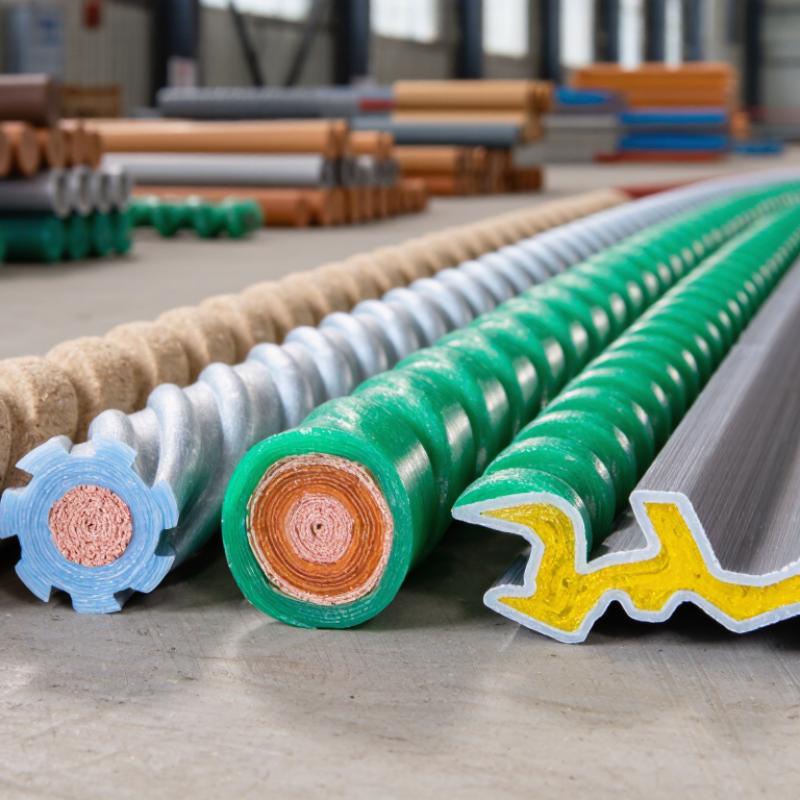
This guide examines the leading GFRP bar types used in foundations, bridges, marine structures, tunnels, and corrosive industrial environments. Common options include sand-coated bars, ribbed bars, helically wrapped bars, and profiles designed for specialized anchoring or improved bond. Each surface provides a different relationship between concrete adhesion, installation behavior, and production cost. Resin selection also matters. Vinyl ester, epoxy, and polyester systems may offer different balances of durability, heat resistance, and price. Buyers should compare declared tensile strength, elastic modulus, glass transition temperature, dimensional tolerance, and bending limitations. Numbers alone are not enough.

Reliable sourcing requires traceable test reports and standards matched to the destination market. ASTM, CSA, ISO, or local specifications may apply, but acceptance depends on the project authority. Ask for records. Check whether bends are factory-made, because field bending can damage the bar or void warranty conditions. A practical comparison should include delivered cost, lead time, minimum order quantity, and replacement support. Still, no universal “best” type exists. Climate, load design, concrete cover, and installer skill can change the answer. That is where careful review—and a little skepticism—protects the buyer.
What Are the Top Types of GFRP Bars for Global Buyers?

GFRP Bar Fundamentals: 1.9–2.1 g/cm³ Density Versus Steel’s 7.85

GFRP bars typically have a density of 1.9–2.1 g/cm³. Steel measures about 7.85 g/cm³. This large difference makes GFRP easier to handle on busy construction sites. A 12-meter bundle may require fewer workers and simpler lifting equipment. That can reduce handling time, especially where access is narrow or remote.

Global buyers usually compare ribbed, sand-coated, and helically wrapped GFRP bars. Ribbed bars offer mechanical interlock with concrete. Sand-coated bars improve surface bonding through their textured finish. Helically wrapped bars can provide additional grip and help control surface damage during handling. However, the lightest option is not automatically the best option. Designers must check tensile strength, elastic modulus, bar diameter, and concrete bond performance.

Density is only one buying factor. In project reviews, I have seen teams focus on weight while overlooking bending limits and storage conditions. GFRP bars should be protected from prolonged sunlight, sharp impacts, and careless stacking. Buyers should request verified test reports, dimensional data, resin information, and production traceability. They should also compare the required strength against local design standards. A practical mistake remains possible: lower transport weight does not guarantee lower project cost. Installation methods, connector details, and site training still affect the final result.

What Are the Top Types of GFRP Bars for Global Buyers?

GFRP bars are commonly supplied with ribbed, sand-coated, or helically wrapped surfaces. These profiles improve concrete bond, while the material density typically remains within the range of 1.9–2.1 g/cm³, compared with steel at 7.85 g/cm³.

Key takeaway: At a typical density of 2.0 g/cm³, GFRP bars are approximately 74.5% lighter by volume than steel reinforcement. Ribbed, sand-coated, and helically wrapped GFRP bars are selected according to the required concrete bond and installation conditions.

Reference values shown: typical GFRP density range of 1.9–2.1 g/cm³ and steel density of 7.85 g/cm³. GFRP density may vary by formulation and manufacturing process.

Ribbed GFRP Bars: 600–1,200 MPa Tensile Strength for Concrete Bond

Ribbed GFRP bars are a practical choice for concrete structures exposed to moisture, salts, or chemical attack.

Their tensile strength commonly ranges from 600 to 1,200 MPa, depending on the glass content, resin system, and manufacturing process. The ribbed surface improves mechanical interlock with concrete, helping transfer tension along the embedded length.

Bond matters most.

Global buyers should examine more than the headline strength.

Rib geometry, rib height, spacing, bar diameter, and surface consistency directly affect anchorage performance. A well-formed rib can reduce slip around the bar, especially in reinforced slabs, bridge decks, and marine elements. However, bond values should come from independent testing, not only supplier brochures. Check test methods, concrete strength, curing conditions, and failure modes before comparing products.

Installation also requires care.

GFRP bars are lighter than steel, but they cannot be bent casually on site. Order the required shapes in advance, protect cut ends, and use approved supports to maintain cover. Design teams should verify development length, serviceability, fire exposure, and local code acceptance.

A higher tensile number is not automatically better. In project reviews, overlooked anchorage details often create more risk than insufficient bar strength.

Do not guess.

Small differences in rib profile may change field performance.

Sand-Coated GFRP Bars: Anchorage Performance Under ACI 440 Design

Sand-Coated GFRP Bars: Anchorage Performance Under ACI 440 Design

Sand-coated GFRP bars rely on surface friction and mechanical interlock for anchorage. The coating should remain evenly bonded during placement and concrete consolidation. Under ACI 440.11-22, GFRP design considers bar rupture, concrete crushing, and development length. It does not assume steel-like yielding. That difference matters.

FHWA technical guidance commonly reports GFRP tensile strengths near 600–1,000 MPa, while elastic modulus often ranges from 40–60 GPa. Strong tension capacity does not guarantee short anchorage. ACI 440.1R-15 explains that development length depends on bar diameter, concrete strength, cover, spacing, and surface profile. Sand texture is important. Concrete must grip it properly.

Field experience shows weak installation control can reduce expected performance. Dust, resin-rich patches, or damaged coating may create local slip. It happens. ASTM A944-style bond testing can compare pullout behavior, while project teams should verify coating integrity before pouring. Designers should also review splice zones, cracks, and concentrated anchorage forces. A sand-coated bar may perform well in laboratory conditions, yet site handling can change the result. A careful inspection record is not excessive; it is evidence.

Helically Wrapped GFRP Bars: Surface Geometry and 75-Year Design Life

What Are the Top Types of GFRP Bars for Global Buyers?

Helically wrapped GFRP bars use a continuous spiral to create mechanical interlock with concrete. Their surface geometry matters more than appearance. A defined wrap can improve bond transfer, reduce reliance on chemical adhesion, and help control bar slip under service loads. However, excessive rib height may obstruct concrete flow around congested reinforcement. That detail is easy to overlook.

FHWA technical guidance, including FHWA-HIF-18-012, notes that GFRP reinforcement weighs roughly one-quarter as much as steel. Installers can carry longer lengths more easily, although cutting still requires dust control and suitable tools. NCHRP Report 907 also emphasizes that FRP design depends on bond, creep rupture, temperature, and environmental exposure—not tensile strength alone. Laboratory numbers need field context.

A 75-year design life should be treated as a verified project requirement, not a universal promise. ACI 440.1R and related design guidance apply environmental reduction factors because moisture, alkalinity, heat, and sustained stress can reduce long-term capacity. Buyers should request accelerated-aging data, tensile-retention results, bond testing, dimensional tolerances, and documented quality controls. The wrap pitch deserves inspection too. Small geometry differences can change concrete consolidation and anchorage behavior. Specifications should identify the exposure class, bar surface profile, resin system, and approved test method. Some published durability claims remain difficult to compare. That deserves skepticism.

What Are the Top Types of GFRP Bars for Global Buyers? - Helically Wrapped GFRP Bars: Surface Geometry and 75-Year Design Life

Evaluation Dimension Typical Value or Configuration Why It Matters to Global Buyers
Bar Type Helically wrapped GFRP bar with a continuous external helical fiber wrap Provides a mechanically interlocking surface for bond with concrete while retaining the corrosion resistance of a glass-fiber-reinforced polymer core.
Core Material Continuous E-glass or equivalent alkali-resistant glass fibers embedded in a thermoset resin matrix The fibers provide tensile capacity, while the resin transfers stress and protects the reinforcement from moisture and alkaline exposure.
Surface Geometry Continuous helical wrap, typically formed as a raised spiral rib or wrapped fiber band around the longitudinal core Improves mechanical anchorage and pull-out resistance compared with a completely smooth GFRP surface.
Nominal Diameter Range Commonly manufactured in approximately 10–32 mm sizes; larger diameters may be available for specialized projects Supports use in slabs, bridge decks, precast elements, retaining structures, marine works, and corrosion-sensitive infrastructure.
Typical Tensile Strength Approximately 600–1,000 MPa, depending on diameter, fiber content, resin system, and test method GFRP bars are commonly selected for their high tensile strength-to-weight ratio; project design values must be taken from verified product testing.
Longitudinal Elastic Modulus Typically approximately 40–60 GPa The lower modulus compared with steel should be considered when checking crack width, deflection, and reinforcement spacing.
Density Approximately 1.9–2.1 g/cm³ The lightweight profile can reduce handling effort, transportation weight, and installation labor compared with conventional steel reinforcement.
Magnetic and Electrical Properties Non-ferromagnetic and electrically non-conductive Suitable for MRI facilities, substations, railway systems, airport security areas, and applications requiring minimal electromagnetic interference.
Corrosion Performance Does not rust like carbon steel; performance depends on fiber type, resin formulation, manufacturing quality, and exposure conditions Particularly valuable in marine, deicing-salt, wastewater, chemical, and coastal environments where steel corrosion is a major durability concern.
Concrete Bond Mechanism Mechanical interlock from the helical wrap, supported by friction and chemical adhesion Bond performance should be verified through pull-out or development-length testing rather than inferred from nominal diameter alone.
Thermal Expansion Anisotropic behavior; longitudinal expansion is generally closer to concrete than transverse expansion Thermal movement should be assessed for large slabs, exposed decks, temperature cycling, and composite structural systems.
Design Life Target 75 years may be adopted as a project design-life target when supported by durability evaluation and applicable design provisions A 75-year design life is not an automatic product guarantee; it depends on exposure, sustained stress, temperature, concrete quality, detailing, and inspection requirements.
Temperature Consideration Use is generally limited by the glass-transition temperature of the resin and the design temperature of the structure Buyers should request resin temperature data and confirm suitability for hot climates, fire exposure, and elevated-service-temperature conditions.
Cutting and Installation Can be cut with diamond-coated or abrasive tools; field bending is generally not permitted Bar schedules, bends, laps, and anchorage details should be finalized before delivery because GFRP bars are typically supplied as straight bars or factory-made shapes.
Quality Documentation Request diameter, mass, tensile strength, modulus, bond, durability, dimensional, and lot-traceability data Consistent documentation helps international buyers compare suppliers and demonstrate compliance with the governing project specification.
Applicable Design References Design should follow the structural code, GFRP reinforcement standard, and project specification applicable in the destination market Requirements differ by jurisdiction, so approval should be based on the exact code edition and intended structural application.

Note: Values shown are representative industry ranges for comparison only. Final design properties, durability verification, and 75-year service-life assessment must be based on project-specific calculations, qualified test reports, and the applicable local or international standard.

Global Buyer Selection: ASTM D7957, ACI 440.11-22, and Bar Diameter

What Are the Top Types of GFRP Bars for Global Buyers?

For global buyers, selection starts with compliance, not appearance. ASTM D7957-18 specifies requirements for solid, round GFRP bars made with continuous fiber reinforcement and thermoset resin. It addresses tensile properties, dimensions, surface condition, and quality testing. FHWA technical guidance commonly reports GFRP densities near 1.5–2.0 g/cm³, compared with approximately 7.85 g/cm³ for steel. That weight difference can simplify handling on remote projects.

ACI 440.11-22 governs GFRP-reinforced concrete design in building applications. It considers tensile rupture, concrete crushing, crack control, development length, and long-term effects. Typical published industry data places GFRP tensile strength around 600–1,000 MPa, while its elastic modulus is often only 35–60 GPa.

Strong does not mean stiff. Deflection may control the design.

Bar diameter needs practical checking. A larger bar carries more force, but it can reduce clear spacing and complicate concrete placement. Smaller bars may require more pieces, longer development zones, or closer spacing. Measure the cover, aggregate size, lap arrangement, and bending details before selecting a diameter. A diameter that fits a laboratory table may not fit a congested beam cage.

Project teams sometimes rely too heavily on nominal strength values. That is a mistake worth revisiting. Always compare the manufacturer’s test certificate with ASTM D7957 and design the reinforcement under ACI 440.11-22.

Article Source: