
No Job is Too Big or Too Small!
Top Medical Injection Molding Companies in 2026
Medical injection molding sits behind many everyday clinical tools: clear syringe barrels, textured instrument handles, and tiny fluid connectors. Demand is rising as healthcare systems adopt more disposable devices and manufacturers pursue precise, repeatable production. Grand View Research estimated the global medical injection molding market at about $21.1 billion in 2023, with growth projected through 2030. These figures are estimates, not a universal scorecard. Market totals can shift with definitions, regions, and product categories.
For buyers, scale alone is a poor guide. A capable supplier must demonstrate process control, material traceability, validated production, and practical support during design transfer. FDA’s Quality Management System Regulation, effective February 2, 2026, aligns U.S. requirements more closely with ISO 13485. That makes documented quality systems especially relevant when evaluating manufacturers. Details matter. A polished sample is not proof of stable output across thousands of parts.
This overview examines leading medical injection molding companies in 2026, focusing on their capabilities, markets, and potential fit for different projects. It considers cleanroom production, tooling expertise, material options, and experience with complex components. No ranking can capture every buyer’s priorities. Some firms publish limited operating detail, and company claims deserve careful verification. That caveat matters. Use the list as a starting point, then assess each supplier against your device requirements, production volumes, and quality expectations.
Medical Injection Molding: Core Processes, Materials, and Device Applications
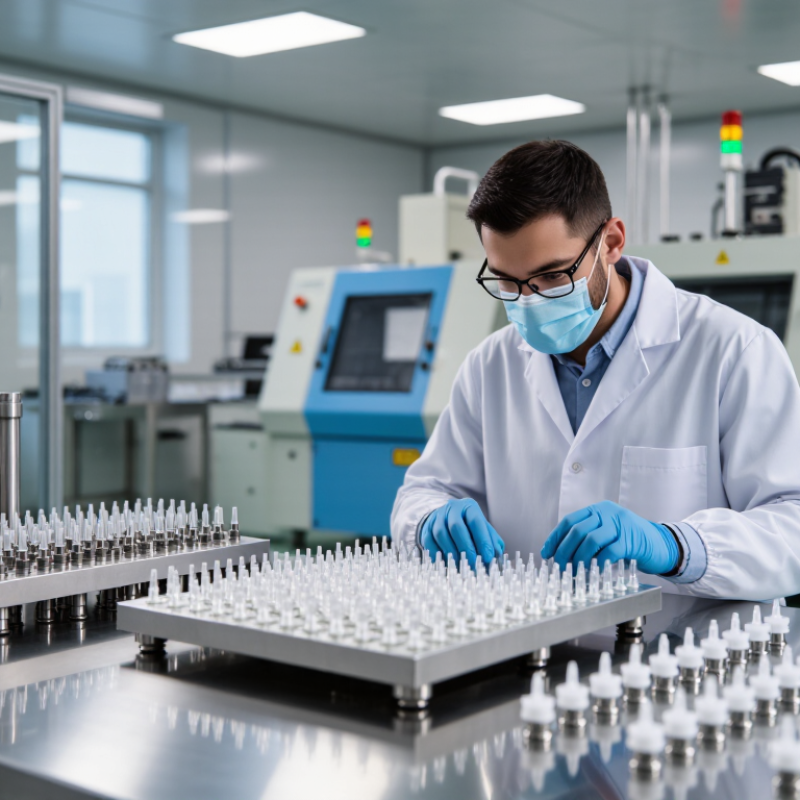
Medical injection molding converts medical-grade polymers into precise, repeatable components. Pellets are dried, melted, injected into a steel mold, cooled, and ejected. For thin connector walls or clear diagnostic windows, small changes in temperature and pressure can affect fit and function. Grand View Research’s Medical Injection Molding Market report estimated a global market value of about USD 21.6 billion in 2023, with a 7.6% compound annual growth forecast for 2024–2030. Growth reflects demand for consistent, high-volume medical components.
Material choice depends on the device’s use and cleaning or sterilization method. Polypropylene suits many fluid-contact parts; polycarbonate can provide impact resistance and transparency. Medical-grade elastomers may be selected for flexible seals. Each choice needs evaluation for chemical exposure, biocompatibility, and performance after sterilization. The label “medical grade” alone is not enough.
Small details matter. Mold design, gate position, cooling, and process monitoring help control flash, sink marks, and dimensional variation. Components such as syringe barrels, diagnostic cartridges, inhaler housings, and fluid connectors rely on these controls. Cleanroom production may be appropriate for some devices, but it does not replace validated processes or traceability. Still, a polished part can hide process drift; ongoing inspection and documented change control remain essential.
Top Medical Injection Molding Companies in 2026 - Medical Injection Molding: Core Processes, Materials, and Device Applications
| Core process | How it works | Common material families | Representative device applications | Key engineering and quality considerations |
|---|---|---|---|---|
| Conventional thermoplastic injection molding | Molten thermoplastic is injected into a closed mold, cooled, and ejected as a solid part. | Polypropylene (PP), polyethylene (PE), polycarbonate (PC), polyamide (PA), and polyether ether ketone (PEEK), where appropriate for the design and intended use. | Syringe components, diagnostic instrument housings, connectors, trays, and reusable device components. | Part geometry, resin grade, sterilization method, and intended patient contact all affect material selection and validation. Control of dimensions, flash, and particulates is important. |
| Micro-injection molding | A specialized form of injection molding used to produce very small or finely featured components; machine, mold, and process control are adapted to the part scale. | Thermoplastics such as PP, PC, and PA; the specific grade must be selected for the application and validated process. | Small connectors, precision fluid-path features, miniature instrument components, and diagnostic-device parts. | Small changes in shot size, tool features, or process conditions can have a substantial effect on the finished part. Measurement methods must suit the part’s scale. |
| Insert molding | A preformed component, such as a metal insert, is positioned in the mold and encapsulated or joined during molding. | Thermoplastics including PP, PC, and PA, selected to suit the insert, use conditions, and required interface. | Fluid connectors, threaded interfaces, electrical components, and reinforced structural features. | Insert position, bonding or mechanical retention, thermal compatibility, and protection of the insert during filling require design and process controls. |
| Overmolding | A second material is molded over or around a previously formed substrate to create a combined component. | Compatible thermoplastic combinations, or a thermoplastic substrate with an elastomeric overmold; compatibility depends on the selected resin grades and part design. | Device grips, seals, protective interfaces, and components combining rigid and flexible features. | Adhesion may rely on material compatibility, mechanical interlocks, or both. Validate the interface, cleaning approach, and sterilization effects for the finished device. |
| Liquid silicone rubber (LSR) molding | Two liquid silicone components are metered and mixed, injected into a heated mold, and cured to form an elastomeric part. | Liquid silicone rubber grades selected for the required mechanical, thermal, and biological evaluation needs. | Seals, gaskets, flexible valves, diaphragms, and other elastomeric device components. | Cure control, material handling, venting, flash, and cleanliness are important process considerations. Suitability for a particular medical use must be established for the specific grade and finished device. |
| Two-component (2K) molding | Two materials are molded in a coordinated sequence, commonly within one tool setup, to create a multi-material part. | Two compatible thermoplastics, or a thermoplastic paired with an elastomeric material, subject to design and process validation. | Integrated rigid-and-soft device parts, sealed housings, and components with distinct functional surfaces. | Material interface strength, shrinkage differences, process sequence, and dimensional stability should be evaluated across the complete molded assembly. |
Selection note: Material and process suitability depends on the specific device, intended use, manufacturing controls, and applicable regulatory requirements. ISO 13485 addresses quality management systems for medical devices; ISO 10993 provides a framework for biological evaluation; and ISO 14644 specifies cleanroom and associated controlled-environment requirements. These standards do not, by themselves, certify a particular molded part or facility.
Related Posts
-

Best Plastic Materials for Sustainable Solutions?
-
How to Optimize Your Process for Polypropylene Injection Molding Success
-

Top 10 Uses of Polypropylene Plastic You Should Know?
-

Best Polypropylene Plastic Suppliers for Your Global Needs?
-

Unlocking the Potential of Polypropylene Plastic for Sustainable Packaging Solutions
-

Top Plastic Profiles for 2026 What Buyers Need to Know