
No Job is Too Big or Too Small!

Top Nylon Ring Nut Manufacturers and Suppliers Worldwide

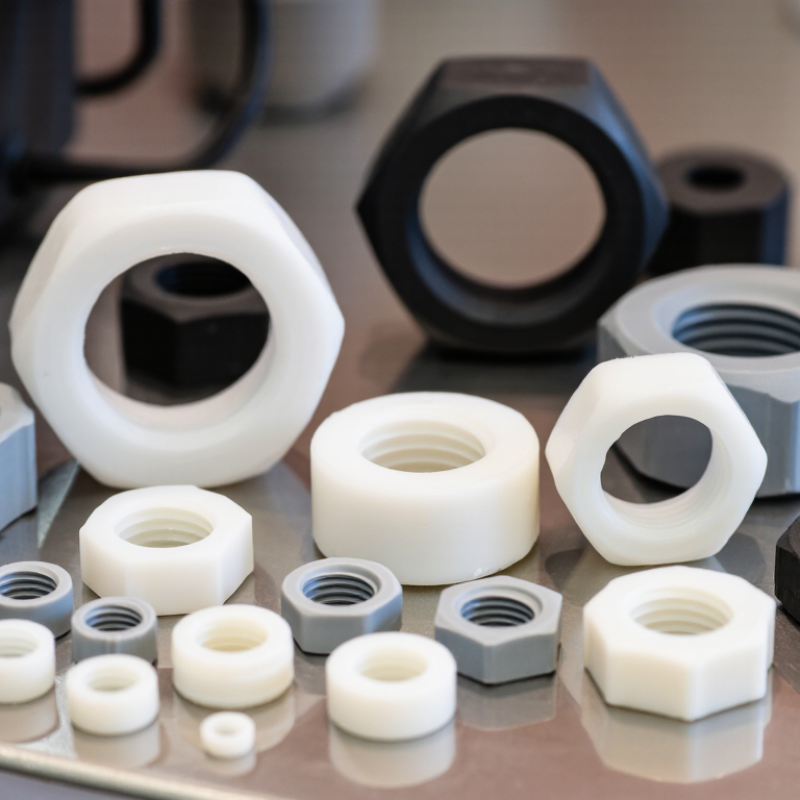
Nylon Ring Nut manufacturers serve demanding markets where light weight, electrical insulation, and corrosion resistance matter. These components appear in control cabinets, appliances, automotive assemblies, and outdoor equipment. Their value is practical. A nylon nut can reduce galvanic corrosion between dissimilar metals and protect finished surfaces from scratches.

Industry data shows why this category deserves careful attention. Grand View Research estimates the global fasteners market reached approximately USD 90 billion in 2023, with continued growth projected through 2030. PlasticsEurope reported global plastics production of about 400 million tonnes in 2022. These figures do not isolate nylon ring nuts, but they reveal the scale of the surrounding supply chain. Material demand is substantial. Product-level transparency remains limited.

This guide examines top Nylon Ring Nut manufacturers and suppliers worldwide through measurable purchasing criteria. These include resin grade, dimensional consistency, thread accuracy, tensile performance, temperature resistance, packaging, and production capacity. Suppliers using PA6 or PA66 should provide clear technical data, batch traceability, and inspection records. ISO 9001 certification can support process reliability, although certification alone never proves product quality. Buyers should also review REACH and RoHS declarations when applicable.

Real performance depends on more than a catalogue photograph. Humidity, overtightening, tool pressure, and repeated assembly can change results. Samples should be tested under actual operating conditions. No supplier is flawless. Public reports often generalize market trends and overlook smaller specialist factories. That limitation deserves attention. A dependable comparison therefore combines published industry evidence, factory experience, independent testing, and transparent communication.
Top Nylon Ring Nut Manufacturers and Suppliers Worldwide

What Nylon Ring Nuts Are and Where They Are Used

Top Nylon Ring Nut Manufacturers and Suppliers Worldwide

Nylon ring nuts are commonly metal nuts fitted with a nylon insert. The insert grips the bolt threads and resists loosening from vibration. Despite the name, they are usually not made entirely from nylon. This distinction matters when engineers check strength, temperature, and chemical exposure. Terminology can vary. In some catalogs, “nylon ring nut” means a nylon-insert locknut rather than a fully plastic nut.

These nuts appear in automotive panels, machine guards, HVAC equipment, appliances, and light structural assemblies. A technician may use an M6 nut on a vibrating access cover, where a plain nut could gradually loosen. The nylon insert also reduces the need for additional locking washers.

However, it is not suitable for every environment. High heat can soften the insert, while oils or solvents may reduce its performance. Repeated removal can weaken the locking action.

When comparing manufacturers and suppliers worldwide, check thread accuracy, material grade, prevailing torque, plating, and inspection records. Suppliers should provide dimensional standards and clear temperature guidance. Small production details matter. An uneven nylon ring can create inconsistent installation torque. That problem may remain unnoticed until assembly rework begins. Buyers should also confirm whether the nut is intended for single installation or limited reuse. In practice, selecting by price alone is a weak decision, even for a simple fastening part.

Key Standards and Features for Comparing Nylon Ring Nut Suppliers

When comparing nylon ring nut suppliers, begin with measurable standards, not polished catalog images. Request dimensional drawings linked to recognized ISO or DIN specifications. Check thread diameter, pitch, height, and ring geometry against stated tolerances. A sample should pass a calibrated go/no-go gauge. Small errors matter. They can cause uneven clamping or damaged threads. Request material data for the nylon insert and metal body. The document should identify polymer grade, moisture condition, and operating temperature.

Reliable suppliers explain test methods, not only test results. Check prevailing torque after installation cycles and tensile performance. For plated parts, review corrosion testing and coating thickness. Test conditions should state temperature, tooling, and sample size. Ask for batch traceability, inspection reports, and corrective-action records. ISO 9001 certification supports process confidence, but it cannot replace product testing. That distinction matters. Packaging also deserves attention. Sealed bags, lot labels, and dry-storage guidance help protect nylon from moisture. Confirm material declarations when RoHS or REACH requirements apply.

Supplier evaluation should include delivery consistency and technical response. Compare promised lead times with historical records. A fast quotation means little if tolerances change between batches. Request pre-production samples and inspect them with assembly-line tools. Visual checks alone can miss distorted rings and incomplete threads. My own checks are not perfect either. That is why repeatable measurements matter. Price deserves scrutiny too. Very low pricing may reflect thinner plating, weaker inserts, or limited inspection. Higher pricing is not proof of quality. Review evidence, record unresolved risks, and require a clear response before approval.

Top Nylon Ring Nut Manufacturers and Suppliers Worldwide

Key Standards and Features for Comparing Nylon Ring Nut Suppliers

How to read this chart: The comparison uses representative ISO 7040 metric nylon-insert hexagon nut sizes. Across-flats width and nominal nut height are key dimensional checkpoints when evaluating supplier drawings, inspection reports, and incoming quality.

Suppliers should clearly identify the applicable standard, thread size, insert material, prevailing-torque performance, corrosion protection, and inspection method. ISO 7040 defines dimensional requirements for metric hexagon nuts with a non-metallic insert; material and operating-temperature suitability should be confirmed separately with the supplier.

Reference basis: ISO 7040, ISO 898-2, and ISO 2320. Dimensions shown are representative nominal values in millimetres and should be verified against the required standard edition and product specification.

How Leading Global Manufacturers Produce Nylon Ring Nuts

Top Nylon Ring Nut Manufacturers and Suppliers Worldwide

Leading manufacturers produce nylon ring nuts through controlled material preparation, precision molding, and repeated inspection. Nylon absorbs moisture quickly, so factories commonly dry polyamide pellets at about 80°C before processing. A dew point near -40°C helps reduce bubbles, brittleness, and unstable dimensions. Injection molding then forms the ring profile, threads, and bearing surfaces in seconds. Mold temperature and cooling time require careful adjustment. Small errors can distort the thread.

The 2024 Plastics—The Facts report records global plastics production at approximately 414 million tonnes in 2023. This scale supports a broad supply chain for engineering plastic components, including nylon fasteners. However, volume alone does not prove quality. Experienced producers measure thread fit, torque resistance, tensile behavior, and dimensional shrinkage. Sampling plans often follow ISO-based quality systems, while digital calipers and optical inspection identify flash around the threads. The inspection is practical.

Manufacturers also test nuts after exposure to heat, humidity, chemicals, and repeated installation. Polyamide grades vary, and glass-fiber reinforcement can improve stiffness while reducing flexibility. That trade-off needs engineering judgment. A supplier may achieve excellent strength but create a nut that is too brittle during assembly. This is where production records, traceability, and documented test results matter. Even advanced factories sometimes revise tooling after field feedback. Reliable production is continuous improvement, not a perfect first attempt.

Regional Overview of Major Nylon Ring Nut Manufacturing Markets

Nylon ring nut production is concentrated across East Asia, Europe, North America, and South Asia. Each region serves different industrial requirements. East Asian manufacturers commonly support high-volume orders for appliances, vehicles, electronics, and general machinery. Their facilities often combine automated molding with optical inspection. Buyers should examine thread accuracy, ring elasticity, moisture control, and batch traceability. Small details matter.

European suppliers usually emphasize documented quality systems, material declarations, and stable performance across demanding applications. Many offer nylon 6 or nylon 6/6 compounds, with options for heat resistance and improved dimensional stability. Regional buyers often request test records for prevailing torque, stripping resistance, and temperature exposure. These documents help, although paperwork alone cannot replace sample testing.

North American production frequently serves maintenance, transportation, construction, and industrial equipment markets. Suppliers may provide imperial and metric sizes, flexible packaging, and shorter regional delivery routes. India and Southeast Asia are expanding their molding capacity, supported by growing automotive and electrical demand. Humidity remains a practical concern during storage and shipping. Sealed packaging can reduce moisture absorption, but it is not a perfect safeguard. Regional comparisons are not always clean. Resin grades, tooling age, inspection methods, and operator training can change performance between factories. Procurement teams should compare physical samples, inspection reports, and production consistency before selecting a long-term supplier.

Factors for Selecting a Reliable Nylon Ring Nut Supplier

A reliable nylon ring nut supplier should prove performance, not only offer a low quotation. Ask for material grade, thread dimensions, temperature limits, and locking-torque data. Samples should fit your mating bolt without cross-threading or excessive resistance. In production, inspect several pieces from each lot. Nylon can absorb moisture, which may affect dimensions and torque.

Quality systems provide useful evidence. The ISO Survey 2023 recorded more than one million ISO 9001 certificates worldwide, showing the system’s broad industrial adoption. However, certification alone does not guarantee consistent nylon parts. Request the supplier’s current certificate, inspection plan, calibration records, and batch traceability. A dependable supplier can explain how it controls molding temperature, shrinkage, flash, and thread accuracy. These details matter more than polished catalog language.

Tips: Test samples after storage and temperature cycling. Check torque retention after repeated installation. Ask for a certificate of conformity with every shipment.

Industry reports can guide screening, but they cannot replace hands-on verification. A 2023 World Bank logistics report highlights major differences in delivery reliability across markets. Therefore, review lead times, packaging, backup production capacity, and export documentation before approving a supplier. Request a small pilot order first. It may feel slower, but it exposes weak inspection practices early. One overlooked issue remains common: suppliers sometimes provide material certificates without linking them to a specific production batch. That gap deserves attention.