
No Job is Too Big or Too Small!

Who Are the Top Stainless Steel Rebar Suppliers in China?

China has a broad stainless steel industry, but identifying the right rebar supplier takes more than comparing prices. Buyers should examine grade range, production capacity, traceability, and experience with project specifications. A reliable supplier can explain its material choices and provide mill test certificates linked to delivered batches. Ask about chemical composition, mechanical properties, bar dimensions, surface finish, and packaging before requesting a firm quotation.

Details matter. This guide looks at leading Chinese suppliers of Stainless Steel Rebar and the evidence buyers can use to assess them. Supplier rankings can change with product focus, export experience, and available stock, so no single list fits every project. Verify company records, certifications, inspection arrangements, and references independently. Check that certificates match the exact grade and shipment, rather than relying on a logo or broad marketing claim. Stainless Steel Reba is a useful search phrase, though the intended product term is usually “stainless steel rebar.” That distinction can affect search results and quotation requests.

For coastal structures, chemical plants, bridges, or other demanding environments, buyers should also confirm corrosion requirements with a qualified engineer. Compare lead times, minimum order quantities, sample policies, and after-sales support in writing. A lower offer may exclude testing or careful packing. It may still be suitable, but only after the scope is clear. The sections ahead explain how to compare suppliers, assess product quality, and ask practical questions before placing an order.
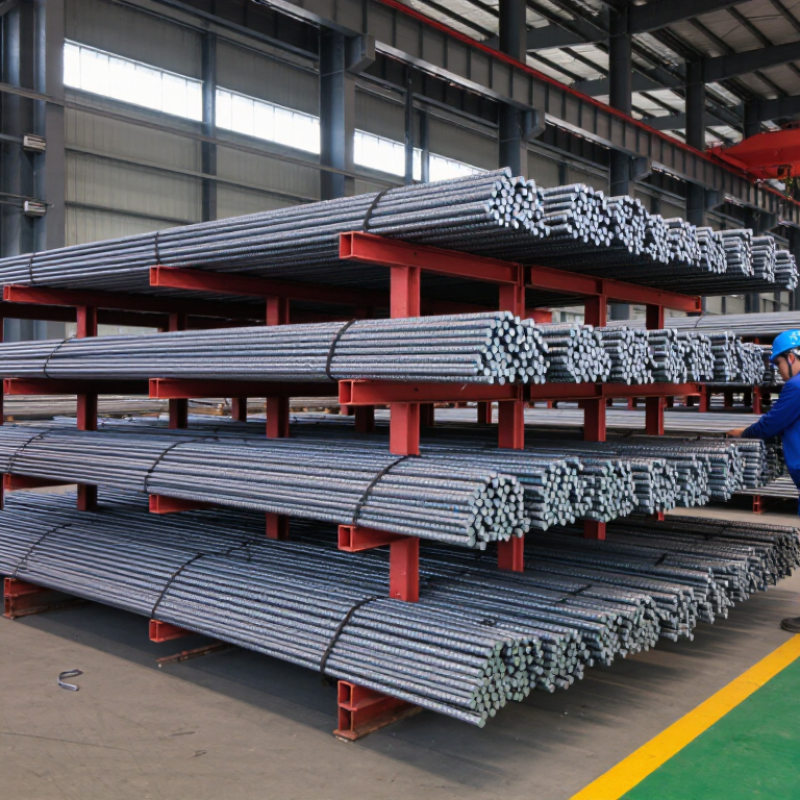
Who Are the Top Stainless Steel Rebar Suppliers in China?

What Qualifies as Stainless Rebar? The ≥10.5% Chromium Threshold

Stainless steel rebar contains at least 10.5% chromium by mass, a threshold used to distinguish stainless steel from ordinary carbon steel. Chromium forms a thin, protective oxide layer on the surface. It can help the bar resist corrosion when concrete cracks or moisture reaches the reinforcement. The layer is not magic. Chlorides, poor detailing, and unsuitable grades can still cause trouble.

For buyers comparing Chinese suppliers, the chromium figure is a starting point, not a complete specification. Ask for a heat-specific mill test certificate showing chemical composition, then check that the reported chromium content meets the required grade. Nickel and molybdenum may also affect performance, while tensile strength, rib geometry, and dimensions matter for structural use. A certificate should match the material being delivered; paperwork alone is not proof. That detail gets missed. Confirm the applicable product standard and testing requirements before placing an order, especially for marine works or de-icing salt exposure. A bar can meet the chromium threshold and still be the wrong choice for a particular project.

China’s Supplier Landscape: Mills, Fabricators, and Exporters

Mills melt and roll steel, so they can provide production records and heat-specific test reports. Their strengths are traceability and control over chemistry and mechanical properties. However, minimum order quantities and lead times may not suit smaller projects. A large mill is not automatically the best fit.

Tips: Ask for the grade, bar size, applicable standard, and recent test reports. Match the paperwork to the heat numbers on the bars. Check samples when practical. Small details matter.

Fabricators cut, bend, or assemble rebar to project drawings, reducing work at the jobsite. Exporters can coordinate packing, shipping, and documents, but may source from several mills. Ask who produced the steel and how each bundle is identified. Confirm packaging protects bars from moisture and handling damage during transit. Compare quotations on the same technical basis, not price alone. Supplier descriptions can be vague; request written confirmation of tolerances, inspection arrangements, and delivery dates. I would not assume every detail is settled until the documents and physical markings agree.

ASTM A955/A955M: The Core Standard for Stainless Reinforcing Bars

For stainless reinforcing bars, ASTM A955/A955M is a central specification to check when evaluating suppliers in China. It covers deformed and plain stainless-steel bars used to reinforce concrete. The applicable edition matters, so buyers should name it clearly in purchase documents.

The standard sets requirements for areas such as bar dimensions, chemical composition, mechanical properties, testing, and marking. Ask for mill test reports linked to the heat number on each bundle. That link helps confirm the delivered bars match the documented material. Check that the report states the grade and test results, rather than relying on a generic certificate. Small detail, big difference.

ASTM compliance does not, by itself, choose the right grade for every structure. Chloride exposure, design requirements, and fabrication conditions still matter. A capable supplier should explain how its production records and inspection process support the specified edition. Buyers can also review sample markings and arrange independent verification when project risk warrants it. I would not treat paperwork as proof without traceability; that part is easy to miss. Some specifications may be interpreted differently, so resolve unclear requirements before production begins.

How to Compare Suppliers: Grades, Test Reports, Traceability, and Capacity

A practical supplier comparison starts with the project specification, not a catalogue label. Stainless rebar grades differ in chemistry, strength, corrosion performance, and applicable standards. Ask each supplier to identify the exact grade and standard offered. Compare yield strength, tensile strength, elongation, bend results, and chemical composition against the required limits. Ask for evidence. A material test report should match the heat number on bundle tags and shipping documents. Check whether reported values are actual test results or only standard minimums. If exposure includes chlorides, discuss the environment with a qualified engineer; “stainless” alone does not define service life.

Reliable traceability links each bundle to a production heat, inspection record, and packing list. Request a sample document set and follow one heat number across every page. For critical orders, independent testing can help confirm paperwork, provided sampling and acceptance criteria are agreed in advance. Capacity needs similar scrutiny. Ask about monthly output for your required diameters, current workload, stock status, and realistic dispatch dates. A supplier may have ample tonnage but limited capacity for small-diameter or mixed-size orders. Request a production schedule, not a broad promise. Price often gets too much attention; documentation gaps may appear only after delivery. This check is not foolproof.

Verifying Top Suppliers Through Certifications and Project Records

Who Are the Top Stainless Steel Rebar Suppliers in China?

A supplier’s ranking means little without evidence behind it. Ask for current ISO 9001 certification, then confirm its scope covers the mill and the relevant production process. For each heat, request a test certificate showing grade, chemical composition, mechanical properties, heat number, and applicable standard, such as ASTM A955/A955M. Match that heat number to bar tags and delivery documents. Small checks matter.

Project records add another layer. Review completed orders for comparable bar grades, diameters, quantities, and delivery conditions. Request redacted inspection records or acceptance documents, then verify dates and product details directly with the project’s procurement or quality team, where possible. A polished case-study page is not the same as a traceable record. This is easy to overlook.

Industry scale is useful context, not proof of a supplier’s quality. The International Stainless Steel Forum’s Stainless Steel in Figures 2024 reports global stainless crude steel production of 58.4 million tonnes in 2023. That figure shows a large, active market, but cannot validate any individual mill. Check certificate validity with the issuing body, and compare a sample batch’s test results against its paperwork. No supplier is flawless; gaps in traceability deserve a clear explanation before an order is placed.

Who Are the Top Stainless Steel Rebar Suppliers in China? - Verifying Top Suppliers Through Certifications and Project Records

Use the criteria below to compare suppliers using independently verifiable documents. No supplier ranking or supplier-specific certification is asserted here.

Verification dimension Evidence to request Relevant standard or reference How to verify What the evidence can establish
Product specification Product datasheet stating stainless grade, bar diameter, tolerances, surface condition, and intended reinforcement use ASTM A955/A955M, stainless steel bars for concrete reinforcement; applicable project specification Compare the stated grade and dimensions with the purchase specification and the applicable edition of the standard Whether the offered product is specified for reinforcing concrete; a standard reference alone does not prove compliance
Chinese product-standard claim Test reports and product documents identifying the claimed Chinese standard and its edition GB/T 33959-2017, Stainless steel bars for the reinforcement of concrete Check the standard designation and scope against an authoritative standards catalogue; confirm that the supplied grade and size are covered Whether the supplier has documented its product against the stated national standard and relevant requirements
Heat and batch traceability Mill test certificate (MTC), heat number, batch identification, and matching product markings or packing list Purchase specification and applicable product standard Match heat and batch numbers across the MTC, tags, invoices, and delivery records; independently confirm report authenticity when possible Whether test results can be linked to the actual material delivered, rather than to an unrelated sample
Mechanical and chemical test results Heat-specific chemical composition and tensile, yield, elongation, and other required mechanical test results Specified product standard and project acceptance criteria Check units, test methods, grade limits, sample identification, and whether the report covers the ordered heat and size Whether the tested material meets the agreed chemical and mechanical requirements
Corrosion-test evidence Test report specifying the method, specimen, grade, and result where corrosion performance is required by the project ASTM A262 for susceptibility to intergranular attack; ASTM G48 for pitting and crevice corrosion testing Confirm the method and acceptance criteria are appropriate to the project; compare the report’s specimen identity with the supplied material Results for the specific test performed; these methods do not, by themselves, establish service life in every environment
Quality management certification Current quality management system certificate showing the certified legal entity and manufacturing-site scope ISO 9001, Quality management systems — Requirements Verify certificate number, validity, certification body, accreditation, site address, and scope with the issuer or its official registry A certified management system within the stated scope; it is not product certification and does not prove a particular batch conforms
Environmental management certification Current certificate identifying the certified entity, site, and scope ISO 14001, Environmental management systems — Requirements with guidance for use Check validity and scope with the certification body or its official registry An environmental management system within the certified scope; it does not certify rebar quality
Laboratory competence Laboratory test report and, when applicable, the laboratory’s accreditation scope for the reported test methods ISO/IEC 17025, General requirements for the competence of testing and calibration laboratories Confirm the laboratory’s accreditation status and that the specific test method is within its accredited scope Competence for tests within the stated accreditation scope; accreditation should not be assumed to cover every test
Project delivery record Redacted purchase orders, delivery notes, inspection records, or completion evidence identifying product type, quantity, and delivery period Project contract requirements and independently checkable delivery documentation Cross-check dates, quantities, product description, and document consistency; obtain a reference contact with the project owner’s permission Evidence of a documented delivery; a reference alone does not establish performance on unrelated projects
Export and shipment documentation Commercial invoice, packing list, bill of lading, and country-of-origin documentation where relevant Applicable customs and contractual documentation requirements Check consistency of shipper, consignee, product description, quantities, and shipment dates across documents Evidence supporting a shipment and its declared details; it does not independently confirm technical conformity

Standards and certificate scopes should be checked against current authoritative sources and the project’s contractual requirements.