
No Job is Too Big or Too Small!

What Are the Top Types of Winch Rocker Switches?

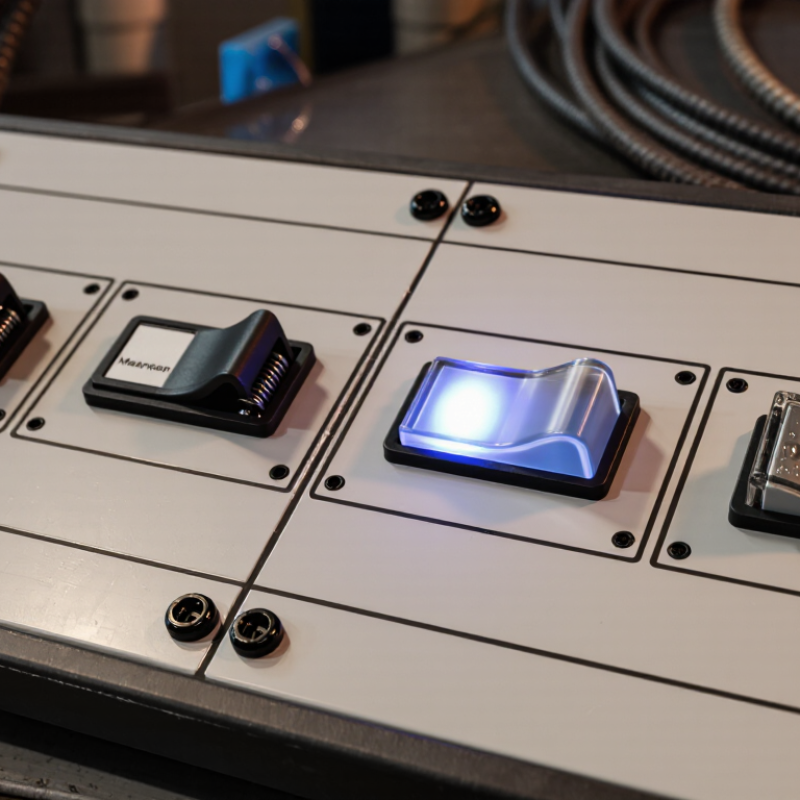
A Winch Rocker Switch may look simple, but its design affects how safely and precisely a winch responds. The right choice depends on the winch’s control circuit, mounting location, and working conditions. This guide compares common Winch Rocker Switch types, including momentary, maintained, illuminated, and sealed designs. Some models combine these features, so product labels do not always describe the whole story.

A momentary switch returns to its neutral position when released. It is commonly used for “in” and “out” control, helping stop input when the operator lets go. A maintained switch stays in position, which may suit other control tasks but requires careful attention. Small details matter. Illumination can make a dash-mounted switch easier to locate in dim light, while a sealed housing can help resist dust and splashes. Yet neither feature replaces correct installation or inspection.

Switch ratings, terminal layout, and compatibility with the winch’s solenoid or control system deserve close review. A switch is not necessarily designed to carry the winch motor’s full current; many control switches operate a relay or solenoid instead. Check the manufacturer’s wiring diagram before connecting anything. That step is easy to overlook. The sections ahead explain how these switch types differ, what their labels mean, and which practical details to verify before choosing one. There is no universal best option. A suitable switch is one that matches the system and the way it will actually be used.
What Are the Top Types of Winch Rocker Switches?

How Winch Rocker Switches Control Motor Direction

A winch rocker switch usually selects direction, not speed. In a common permanent-magnet DC winch, reversing the current through the motor changes its rotation. Press “in,” and the drum winds cable; press “out,” and it pays cable out. Not speed. Direction. Many rocker switches send a low-current command to solenoids or contactors, which handle the motor’s much higher current. Other designs differ, so check the wiring diagram and switch ratings before installation.

Direction control depends on the whole circuit. A crossed control wire, swapped motor lead, or differently oriented drum can make the rocker’s labels misleading. Test briefly with the cable unloaded, and confirm that “in” and “out” match the actual drum movement.

It sounds simple. It isn’t always.

The U.S. Department of Energy’s 2014 report, Improving Motor and Drive System Performance, estimates that motor-driven systems use about 68% of the electricity consumed by U.S. manufacturing. That figure is not specific to winches, but it underscores why sound motor control matters. IEC 60947-5-1 also sets requirements for electromechanical control-circuit devices; it does not replace the winch maker’s wiring instructions.

Momentary Rocker Switches for Hold-to-Run Operation

Momentary rocker switches suit winches that should run only while an operator holds the control. Press one side to spool in, the other to pay out, then release it. The rocker returns to its neutral position. The motion stops. That spring return can reduce the chance of unintended operation, but it does not replace careful control of the load.

Many winch controls use a center-off, momentary-on arrangement. Check the wiring diagram before connecting anything; switch layouts and terminal functions vary. On many installations, the rocker signals a relay or contactor rather than carrying the winch motor’s full current. Confirm the switch’s voltage and current ratings, and use components suited to the circuit. I’ve found that labels alone are easy to misread, especially in a dim vehicle cabin. A quick continuity test can help verify the positions before installation.

During use, keep the cable and load in view, and release the switch before the line reaches its travel limit. Mount the control where it cannot be pressed accidentally, and protect connections from moisture and vibration. A momentary switch still depends on sound wiring and attentive operation. It is a small part, but the details matter.

What Are the Top Types of Winch Rocker Switches? — Momentary Rocker Switches for Hold-to-Run Operation
Switch Type Contact Action Typical Winch Function How It Operates Key Selection Considerations
Dual-Momentary, Center-Off Rocker Momentary ON–OFF–ON Common arrangement for separate IN and OUT commands Press and hold one side to run the winch in that direction; release the rocker to stop the command. Check that the switch returns to the center-off position and is compatible with the winch control circuit.
Momentary Single-Direction Rocker Momentary ON–OFF Single-direction operation, such as a dedicated IN or OUT command The circuit is energized only while the rocker is held in the ON position. A separate control is generally needed for the opposite direction. Confirm the required contact arrangement.
Momentary DPDT Polarity-Reversing Rocker Momentary, center-off; double-pole, double-throw contacts Reversing the polarity supplied to a compatible two-wire DC motor Its contacts can swap motor polarity for forward and reverse operation while the rocker is held. Use only where the winch circuit is designed for direct polarity reversal. Verify the wiring diagram and electrical ratings.
Momentary Control-Circuit Rocker Momentary contact signal Sending IN or OUT commands to a relay or solenoid control system The rocker provides a low-current command; relays or solenoids handle the motor power switching. Confirm the switch contact rating and control-system requirements. Do not assume the rocker can carry motor current.
Illuminated Momentary Rocker Momentary ON–OFF or ON–OFF–ON, with indicator lighting Hold-to-run control with a visible switch indicator The illumination may indicate power, an active command, or another circuit state, depending on wiring. Check the indicator’s voltage and wiring separately; illumination does not by itself confirm that the winch is operating.
Sealed Momentary Rocker Momentary action with a sealed or protected actuator design Winch controls exposed to dust, splash, or outdoor conditions Provides the same hold-to-run action as its underlying contact configuration, with added environmental protection when properly rated. Look for a stated ingress-protection rating and suitable installation conditions; sealing levels vary by product.
Latching ON/OFF Rocker Maintained ON–OFF Usually a power or enable function rather than a preferred directional hold-to-run command The switch stays in its selected position after release, so the circuit can remain energized. Use only when the control design calls for maintained operation and includes suitable safeguards; it is not equivalent to a momentary control.

Latching Rocker Switches for Maintained Control

A latching rocker switch stays in its selected position after you release it. That makes it useful for winch controls where an operator needs to maintain a command, such as extending or retracting a cable. A clear center-off position can help distinguish active directions from rest. Click. The firm movement also gives useful tactile feedback when gloves make small controls harder to feel.

Before installation, check that the switch is rated for the winch circuit’s voltage and current. Many rocker switches operate a relay or contactor rather than carrying the motor’s full current directly. The correct arrangement depends on the equipment design, so follow its wiring diagram and use suitable circuit protection. Label the functions plainly; “IN” and “OUT” are easier to read near a muddy work area than a tiny symbol.

Maintained control has a trade-off: the switch remains engaged until someone moves it back. That can be convenient, but it makes accidental contact worth considering, especially on a crowded panel. Keep the switch accessible without placing it where clothing or tools can bump it. I would not assume a satisfying click proves the circuit is wired correctly. Test each direction with the load secured, and verify that releasing the control behaves as intended. A quick check can prevent confusion later.

Three-Position Rocker Switches with a Center-Off Position

Three-position rocker switches use an in-off-out layout: press one end to run the winch in, the other to run it out, and release both for neutral. Many models are momentary, so the rocker returns to center when released. That matters. A gloved hand can make a brief tap, while a held position can keep the control signal active. Check the switch’s wiring diagram and confirm it matches the winch solenoid or control system. The rocker usually operates a control circuit, not the winch motor directly; confusing those circuits can damage components.

The center-off position prevents the switch from commanding either direction while untouched, but it is not a substitute for electrical isolation during maintenance. Allied Market Research’s 2021 Automotive Switches Market report estimated a $6.4 billion market that year, with a projection of $10.8 billion by 2031. This broader market figure does not measure winch-switch reliability, but it reflects the growing role of switching controls in vehicles. For a practical installation, verify voltage, current rating, terminal layout, and environmental protection against the equipment requirements. A sealed-looking housing is not proof of water resistance. That small assumption is easy to miss.

Illuminated and Weather-Resistant Winch Rocker Switches

An illuminated winch rocker switch is easier to locate in a dim cab or under a dashboard. Its indicator can show when the switch circuit is energized, but it does not always confirm that the winch motor is operating. Check the wiring diagram before relying on the light. Small details matter.

Weather resistance is just as important on an off-road vehicle. Dust, splashes, and damp gloves can reach exposed controls, especially near an open window or console. Look for a stated ingress-protection rating and a design with sealed terminals or a protective boot. “Weather-resistant” alone is vague; it does not mean waterproof. Ratings also depend on correct installation and an intact seal.

Choose a rocker that matches the winch control circuit, panel opening, and expected current or relay arrangement. Many switches operate a control circuit rather than carrying the motor’s full current, but verify this in the product specifications. A snug fit helps keep grit from the edges. After installation, test the indicator and switch with the vehicle safely parked, then inspect the connections for looseness or moisture. I have seen neat-looking panels hide awkward wiring, so leave enough room behind the switch for secure terminals and future checks.