
No Job is Too Big or Too Small!

Why Do Buyers Choose ERW Pipe for Industrial Projects?

Industrial buyers often choose Erw Pipe when a project needs dependable dimensions, broad availability, and controlled costs. Made by forming steel strip into a tube and welding the seam with electrical resistance, it suits many general piping and structural applications. Its consistent outside diameter can simplify fitting installation, while standard sizes are often easier to source than less common alternatives. Practical details count: fewer fit-up adjustments can save time on a busy site.

The choice still depends on the job. For process lines, utilities, or structural supports, engineers should match material grade, wall thickness, diameter, and connection type to the specified service conditions. Weld quality, dimensional tolerances, and inspection records deserve careful review. A low purchase price alone proves little. Not always.

Experienced buyers compare the product’s documentation with project requirements and confirm that the supplier’s testing and traceability meet the applicable specification. They may also check sample surfaces and end preparation before installation; a damaged edge or poor fit can create avoidable rework. These checks are especially useful when delivery schedules are tight. The trade-off is worth noting: ERW pipe can be an efficient option, but it is not automatically right for every pressure, temperature, or corrosion environment. Real project conditions matter. This guide explores why buyers select it, where it performs well, and which checks help make the decision reliable.
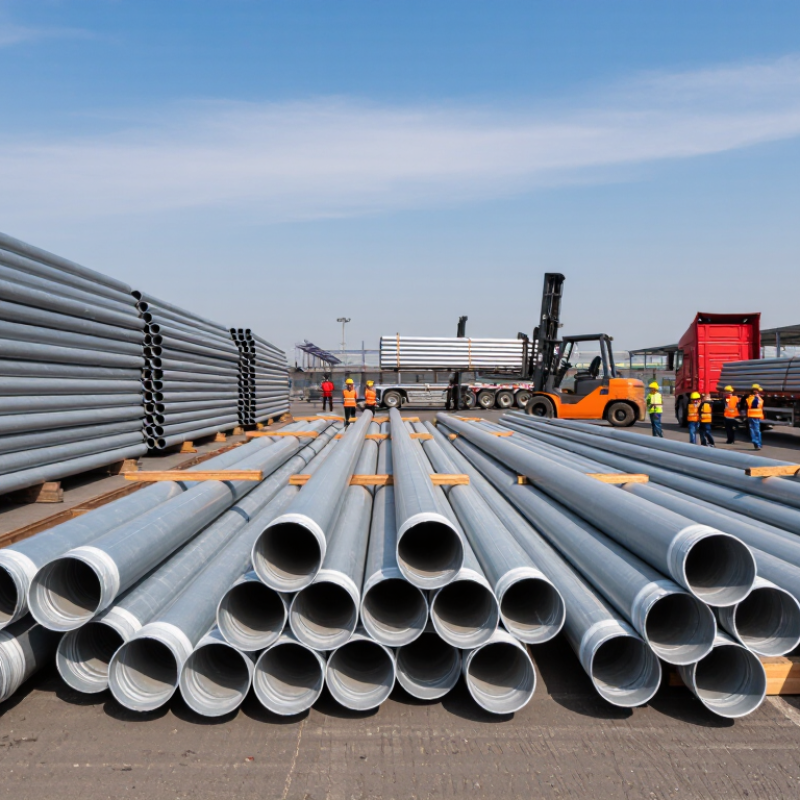
Why Do Buyers Choose ERW Pipe for Industrial Projects?

What ERW Pipe Is and How It Is Made

ERW pipe is formed from flat steel strip or coil, then welded along its length. Production starts with uncoiling and leveling the steel. Roll stands gradually shape it into a cylindrical tube. At the weld station, electrical current heats the strip edges, and pressure joins them without adding filler metal. The seam’s excess material may be trimmed before the pipe is sized, cut, and inspected. Details matter. Wall thickness, steel grade, and welding controls affect whether a pipe suits a particular service.

Tips: Check the project specification before comparing prices. Confirm the required grade, dimensions, testing, and applicable manufacturing standard. A smooth seam alone does not prove the pipe meets requirements; review inspection records and test results.

For industrial buyers, this controlled, continuous process can produce consistent dimensions and useful lengths for fabrication or piping systems. The finished pipe may undergo visual checks and additional tests, such as ultrasonic or hydrostatic testing, depending on its intended use and specification. Not every ERW pipe fits every duty. Temperature, pressure, corrosion exposure, and installation conditions should guide selection. It is worth checking those assumptions early; they are easy to overlook when drawings seem straightforward.

Why Do Buyers Choose ERW Pipe for Industrial Projects? — What ERW Pipe Is and How It Is Made

Topic Typical Details Why It Matters to Buyers
What ERW pipe is ERW stands for electric resistance welded. The pipe is made from flat steel strip or coil that is formed into a round shape and joined along a longitudinal seam. It provides a practical welded-pipe option for many structural, mechanical, water, and low- or moderate-pressure applications, subject to the applicable specification and design requirements.
Steel-strip preparation The coil is unwound, leveled, and slit to the required width. Strip width is selected to suit the finished pipe diameter and manufacturing allowances. Consistent strip quality and dimensions help control pipe geometry, wall thickness, and production efficiency.
Forming A series of forming rolls gradually bends the flat strip into a tubular shape, bringing its two edges together. Continuous roll forming supports repeatable dimensions and efficient production of long lengths.
Welding the seam High-frequency electrical current heats the adjacent edges; pressure from squeeze rolls forges them together. The process normally uses no separate filler metal. A continuous longitudinal weld can be produced at production-line speeds. Weld quality still depends on process control, material condition, and inspection.
Finishing and sizing Excess external weld material may be removed. The pipe is then sized, straightened, cut to length, and finished as required by the order. Finishing helps achieve specified outside dimensions, straightness, and end preparation for fabrication or installation.
Inspection and testing Depending on the product specification, inspection may include dimensional checks, visual examination, weld-seam nondestructive testing, and hydrostatic testing. Buyers should confirm the required inspection method, test frequency, acceptance criteria, and documentation in the purchase specification.
Common dimensional considerations Orders generally identify nominal pipe size or outside diameter, wall thickness or schedule, length, end finish, and dimensional tolerances. Available ranges depend on the mill and governing standard. Clear dimensional requirements reduce fit-up problems and help ensure the pipe suits its intended connections and structural or process loads.
Applicable standards Requirements vary by use. Examples include ASTM A53 for specified steel pipe applications, API 5L for line pipe, and EN 10219 for cold-formed welded structural hollow sections. These standards are not interchangeable. Buyers should select the standard and grade that match the service, design code, and project documentation.
Why buyers consider ERW ERW manufacturing is continuous and well suited to producing consistent lengths and repeatable dimensions in commonly specified sizes and grades. For suitable applications, buyers may benefit from dependable availability and competitive production economics. Selection should also account for pressure, temperature, corrosion, and applicable code requirements.

Details are general industry information. Actual dimensions, grades, testing, and permitted applications depend on the governing standard, manufacturer, and project specification.

Key Properties That Suit ERW Pipe to Industrial Use

Why Do Buyers Choose ERW Pipe for Industrial Projects?

Key Properties That Suit ERW Pipe to Industrial Use

ERW pipe is formed from steel strip, then joined along a straight longitudinal seam using electrical resistance heat. This manufacturing route can produce consistent dimensions and a clean external finish. In a plant, predictable outside diameter helps align pipe sections, supports, and fittings with less adjustment. The smooth inner surface can also help maintain steady flow in suitable applications. Small details matter.

ERW pipe is available in different grades, diameters, and wall thicknesses, so engineers can match it to a project’s operating conditions. Its weld seam must still be suitable for the required pressure, temperature, and service environment. A straight seam alone does not guarantee performance. Buyers should check material certificates, inspection records, and the specified manufacturing standard. Corrosive fluids or demanding service may require additional material or lining considerations.

Tips: Confirm the grade, wall thickness, and inspection requirements before ordering. Check that the pipe’s dimensions match the fittings on site. A mismatch can slow installation, even when the pipe itself meets its specification.

Industries and Projects That Commonly Use ERW Pipe

ERW pipe is used across projects that need consistent dimensions, dependable availability, and practical installation. On building sites, it often serves as structural tubing for frames, canopies, handrails, and equipment supports. It may also carry water or other specified fluids in industrial and municipal systems. Fit matters.

Water utilities use ERW pipe in distribution and service projects when the material and pressure rating match the design. Farm irrigation networks are another common application, with straight pipe runs connecting pumps, filters, and field outlets. Factories use it for low-pressure process lines, machine frames, and material-handling equipment. In transport and energy projects, it can appear in supports, conduits, and selected pipeline applications. Details matter.

The right choice depends on more than diameter. Engineers check wall thickness, steel grade, weld quality, operating pressure, temperature, and exposure to corrosion. An ERW seam is produced by joining formed steel edges with electrical resistance heat, so inspection and manufacturing control matter. That sounds straightforward, but service conditions can complicate the decision. Aggressive fluids or demanding pressure cycles may call for different materials or construction methods. Project teams should verify the applicable specifications and inspection requirements before ordering; a familiar pipe size alone does not prove suitability.

Why Buyers Choose ERW Pipe for Industrial Projects

ERW pipe is commonly used in pipelines and structural applications across energy, water, construction, and manufacturing projects. Grade selection helps buyers match pipe properties to project requirements.

API 5L Minimum Yield Strength by Grade

Values shown are API 5L specified minimum yield strengths, converted to megapascals and rounded. ERW pipe can be manufactured to applicable API 5L requirements; the chart does not represent the capacity of every ERW product. Final grade and pipe selection depend on the project design, service conditions, and applicable standards.

How ERW Pipe Compares with Other Pipe Types

ERW pipe is formed by rolling steel strip into a tube and joining its edges with electric resistance welding. Its straight longitudinal seam is visible during inspection, which can help crews track weld location and condition. In many projects, ERW pipe offers consistent dimensions and a smooth surface. That can simplify fitting and installation. Small details matter.

Compared with seamless pipe, ERW pipe is often a cost-conscious choice for common sizes and defined service conditions. Seamless pipe has no welded seam, which may suit applications with demanding pressure or temperature requirements. But “seamless” does not automatically mean better; material grade, wall thickness, manufacturing quality, and testing all matter. Specification checks are essential.

Spiral-welded pipe is commonly available in larger diameters, while ERW pipe often fits smaller and medium-diameter systems. Compared with some submerged-arc welded pipe, ERW products can offer a compact seam and efficient production. Still, the best option depends on the project’s fluid, operating pressure, corrosion exposure, and inspection plan. A pipe that looks ideal on a drawing may prove less convenient in the field. Engineers should compare certified test data and project requirements, not just price or pipe type.

Factors Buyers Consider When Selecting ERW Pipe

Buyers often start with service conditions, not the price per metre. They match outside diameter, wall thickness, steel grade, and end preparation to pressure, temperature, and connection requirements. ERW pipe can suit many industrial lines, but only when its specified grade and manufacturing controls fit the duty. Fit matters. Ask for material test certificates, weld-seam inspection records, and dimensional tolerances; a smooth surface alone does not prove consistent quality.

Delivery and lifecycle costs matter, too. Compare coating options, corrosion allowance, cut lengths, and availability of replacement sizes. A low quote can become expensive if site crews must rework ends or wait for missing fittings. For carbon reporting, worldsteel’s 2024 Sustainability Indicators report gives a global steelmaking average of about 1.9 tonnes of CO2 per tonne of crude steel. This is an upstream industry benchmark, not an ERW-pipe footprint. Request product-specific environmental data where it affects procurement decisions.

Buyers should also check that the pipe specification aligns with the project’s applicable codes and inspection plan. Confirm test methods, traceability, and acceptance criteria before ordering, especially when several wall thicknesses look similar on a warehouse rack. Not always. The cheapest option may still be right, but only after comparing delivered cost, documentation, and service fit. One detail is easy to miss: confirm whether quoted dimensions are nominal or actual.