
No Job is Too Big or Too Small!

Why Choose 99% Pure Cetearyl Alcohol for Cosmetics?

Cetearyl alcohol often appears as a quiet ingredient on a cosmetic formula sheet. In practice, it can strongly influence texture, stability, and consumer perception. This waxy blend of cetyl and stearyl alcohol helps creams feel smooth, improves viscosity, and supports emulsion structure. It is not the same as drying alcohol used in sanitizers. That distinction matters.

The case for 99% Pure Cetearyl Alcohol begins with formulation control. Higher purity can reduce unwanted odor, color variation, and inconsistent melting behavior. These details become visible when a white cream spreads unevenly or leaves a waxy drag. Suppliers should still provide a certificate of analysis, melting range, acid value, and impurity limits. Purity alone is not the whole answer. Particle form, fatty-alcohol ratio, processing temperature, and storage conditions also affect performance.

Market evidence supports careful ingredient selection. Grand View Research reports continued expansion in the global cosmetics market, driven partly by premium skincare and multifunctional formulations. Cosmetics Europe also highlights rising expectations for product safety, quality, and transparent communication. Meanwhile, the Cosmetic Ingredient Review has evaluated fatty alcohols used in cosmetics and reported favorable safety conclusions under established use conditions. These sources strengthen the professional case, but they do not replace batch testing. A laboratory trial remains essential. Compare two samples in the same emulsion, then measure viscosity, appearance, odor, and separation after heat-cool cycles. That practical step may challenge an easy assumption: 99% Pure Cetearyl Alcohol can improve consistency, yet it cannot rescue poor formulation design.
Why Choose 99% Pure Cetearyl Alcohol for Cosmetics?

What Is 99% Pure Cetearyl Alcohol?

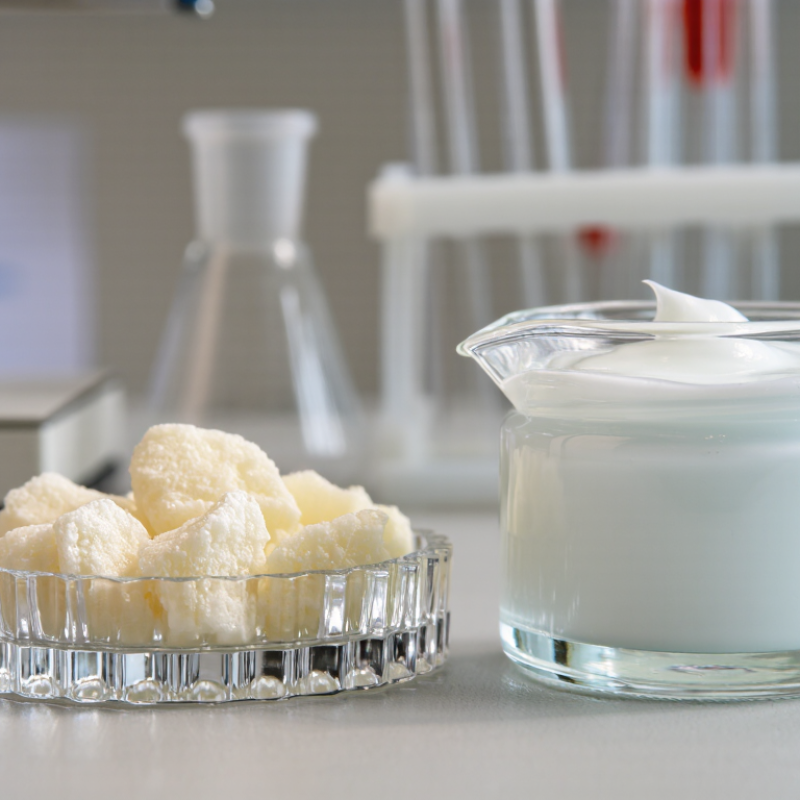
99% pure cetearyl alcohol is a refined blend of cetyl alcohol and stearyl alcohol. It is a waxy, solid fatty alcohol, not the drying alcohol found in sanitizers. Its usual appearance is white flakes or small beads, with a mild fatty odor. A 99% assay generally means the measured cetearyl alcohol content reaches at least 99% under the supplier’s test method. The remaining fraction may include related fatty alcohols or process residues.

The Cosmetic Ingredient Review safety assessment describes cetearyl alcohol as a low-irritation cosmetic ingredient when used as intended. European Chemicals Agency registration data also identify it as a long-chain fatty alcohol with limited water solubility.

In a cream, it can thicken the formula, support emulsion stability, and leave a smooth, cushion-like feel on skin.

Purity helps, but it is not perfection. Particle size, melting range, acid value, iodine value, and storage conditions can change performance. A high assay with poor handling may still create uneven flakes or graininess.

Tips: Check the certificate of analysis before production. Look for assay, melting range, acid value, iodine value, and microbiological limits. Test a small batch at the target heating temperature. I once saw a cream feel heavier after replacing a lower-purity grade, even though the formula percentages stayed unchanged. That result needs investigation, not assumption. Supplier specifications should match the intended product, packaging, and processing method.

How Cetearyl Alcohol Functions in Cosmetic Formulations

Why Choose 99% Pure Cetearyl Alcohol for Cosmetics?
How Cetearyl Alcohol Functions in Cosmetic Formulations

Cetearyl alcohol is a blend of cetyl and stearyl alcohols. It is a fatty alcohol, not a drying solvent. In creams and lotions, it builds body and improves texture. A 99% pure grade can offer more predictable processing and fewer unwanted residues. This matters when batch consistency affects filling, spreading, and stability.

In practical formulation work, cetearyl alcohol often acts as a co-emulsifier. It supports the oil-water interface and helps create a smoother, more stable cream structure. It also increases viscosity without making the formula feel excessively waxy. On skin, it can improve slip and leave a soft, cushioned after-feel. It is useful in conditioners, where it helps reduce drag during combing.

Small changes matter.

The right level depends on the complete formula. Oil type, emulsifier system, water phase, heating profile, and cooling speed can change its performance. A common starting range may be 1–5%, but laboratory testing should guide the final level. Higher amounts can create a richer texture, though they may also feel heavy or draggy. I have seen formulas become stable but less pleasant after increasing the wax phase. That result is easy to overlook. Purity supports consistency, but it does not guarantee a perfect sensory profile. Check identity, specification data, odor, color, and batch performance before approval.

Benefits of Using 99% Pure Cetearyl Alcohol

Why Choose 99% Pure Cetearyl Alcohol for Cosmetics?

Benefits of Using 99% Pure Cetearyl Alcohol

Cetearyl alcohol is a blend of cetyl and stearyl alcohols. It is not the drying alcohol many consumers fear. In creams, it supports emulsion stability, texture, and skin conditioning. The EU CosIng database recognizes these functions. The Cosmetic Ingredient Review Expert Panel also found fatty alcohols safe in current cosmetic uses. Still, purity matters.

A 99% pure grade offers stronger batch consistency. It can create a smooth, dense cream instead of a waxy or uneven texture. It also helps formulators control melting behavior, viscosity, and sensory feel. Less uncharacterized residue may reduce unwanted odor or color changes. That matters in white lotions and fragrance-sensitive formulas. Small differences become visible.

Quality control remains essential.

A certificate of analysis should confirm assay, acid value, iodine value, melting range, and contamination limits. ASTM and ISO testing principles can support these checks, but methods must match the raw material. Purity alone does not prove better skin performance. A 99% grade may still feel too heavy in a light gel-cream. Formulators should test it across temperature cycles, storage periods, and repeated application. In practice, the best result comes from purity plus evidence, not from a percentage printed on a specification sheet.

Why Choose 99% Pure Cetearyl Alcohol for Cosmetics?

Typical cosmetic use levels for cetearyl alcohol vary by product type and formulation design. Its high purity helps provide more consistent thickening, emulsion support, emollience, and hair-conditioning performance.

The ranges shown are typical formulation-use ranges; the final concentration depends on the product format, phase structure, and desired sensory profile.

Safety, Purity, and Skin Compatibility Considerations

Why Choose 99% Pure Cetearyl Alcohol for Cosmetics?

Safety, purity, and skin compatibility deserve more attention than a high purity number alone. Cetearyl alcohol is a blend of fatty alcohols, mainly cetyl and stearyl alcohol. It helps creams feel smooth, improves body, and supports emulsion stability. Unlike drying alcohols, it is generally considered gentle in well-designed formulations. Still, 99% purity does not automatically guarantee complete safety. The remaining fraction matters. Trace impurities may affect odor, color, stability, or skin tolerance.

In practical formulation work, I would review the certificate of analysis, specification sheet, and safety data before approval. Check identity, assay, melting range, acid value, color, and microbial limits where relevant. Supplier testing should be supported by reliable laboratory methods. Skin compatibility also depends on concentration, product pH, preservatives, fragrance, and application area. A rich facial cream may feel comfortable on dry skin but feel heavy on oily skin. Sensitive users can still react, although cetearyl alcohol is usually well tolerated. The purity claim sounds reassuring, but it is not the whole argument.

Tips: Select material with consistent batch records and clear impurity limits. Run stability testing under heat and cool conditions. Evaluate texture after repeated application, not only after one laboratory test. Consider a controlled patch assessment for the finished product. Do not rely on raw material purity alone. I would also question unexplained changes in odor or color, even when the assay remains high. That small detail can reveal a larger quality issue.

Applications Across Skincare, Haircare, and Personal Care Products

Why Choose 99% Pure Cetearyl Alcohol for Cosmetics?

Cetearyl alcohol supports modern skincare, haircare, and personal care formulas. It is a waxy blend of cetyl and stearyl alcohols, not a drying solvent. At 99% purity, it offers more predictable texture and fewer unwanted residues. This matters when a cream must spread evenly across dry cheeks or sensitive skin. The Cosmetic Ingredient Review’s safety assessment reports fatty alcohols as safe in cosmetic use when properly formulated. Grand View Research valued the global skincare market at approximately USD 155.7 billion in 2023, showing strong demand for reliable texture ingredients.

In skincare, cetearyl alcohol thickens emulsions and helps stabilize oil and water phases. It can create a smooth, cushion-like finish in lotions, creams, and cleansing products. In haircare, it improves slip and reduces the rough feel after shampooing. Conditioners often rely on this structure to coat strands without excessive heaviness. Personal care products, including body creams and shaving formulas, benefit from its soft, creamy consistency. Small details matter. A precise certificate of analysis should confirm purity, melting range, and acid value. Purity alone cannot rescue poor emulsification. I have seen formulas feel elegant in the beaker, then separate after heat cycling. That risk deserves testing. Think less, measure more.

Why Choose 99% Pure Cetearyl Alcohol for Cosmetics? — Applications Across Skincare, Haircare, and Personal Care Products

Product Area Typical Product Examples Primary Formulation Function Typical Use Level Key Product Benefits Formulation Considerations
Moisturizers & Creams Face creams, body lotions, hand creams, night creams Emollient, consistency agent, viscosity modifier, and oil-in-water emulsion stabilizer Approximately 1–5%; higher levels may be used when a richer, waxier texture is required Improves spreadability, gives the formula a smooth cushion, and helps create a stable cream structure Usually added to the heated oil phase and melted before emulsification. Excessive levels may produce a heavy or waxy after-feel.
Cleansers Cleansing creams, cold creams, cleansing balms, facial cleansing lotions Emollient, texture enhancer, and co-structurant for oil-based cleansing systems Approximately 1–10%, depending on the product format and desired firmness Provides body and glide while helping reduce the stripped feeling associated with some cleansing systems Requires adequate heating and dispersion. The final level should be balanced with oils, surfactants, and other waxes.
Hair Conditioners Rinse-off conditioners, deep conditioners, conditioning masks Fatty alcohol, viscosity builder, emulsion stabilizer, and texture modifier Approximately 1–5%; commonly combined with cationic conditioning agents Creates a creamy consistency and contributes to smooth, lubricated hair feel during rinsing It is not a volatile alcohol and is chemically different from drying short-chain alcohols such as ethanol. Compatibility with the cationic system should be checked.
Shampoos & Co-Washes Cream shampoos, low-lather cleansers, co-washing products Viscosity modifier, emulsion stabilizer, and sensory conditioner Approximately 0.5–3%, subject to surfactant system and target viscosity Supports a richer appearance and can improve the creamy sensory profile of mild cleansing products May reduce clarity in transparent formulas. Compatibility testing is needed with surfactants, salts, and polymers.
Hair Styling Products Hair creams, leave-in conditioners, curl creams, smoothing creams Emollient, consistency agent, and sensory modifier Approximately 0.5–4% Helps provide slip, softness, and a more substantial cream texture without acting as a film-forming hair fixative Use level should be adjusted according to hair type and desired finish; high levels can reduce lightness on fine hair.
Body Butters & Balms Body butters, barrier balms, foot creams, protective ointments Structuring agent, emollient, and consistency modifier Approximately 2–10% Increases firmness and improves the payoff and cushion of anhydrous or semi-solid products Works synergistically with vegetable oils, esters, and other waxes. Cooling conditions can affect crystal structure and final hardness.
Shaving Products Shaving creams, shaving lotions, post-shave balms Emollient, texture enhancer, and emulsion stabilizer Approximately 1–5% Supports a dense, creamy texture and contributes to comfortable skin feel during and after shaving Evaluate lubricity, rinseability, and compatibility with surfactants or conditioning ingredients used in the base.
Hand & Foot Care Hand creams, heel creams, cuticle creams, intensive repair creams Emollient, viscosity modifier, and cream-structure builder Approximately 2–8% Provides a rich, protective feel and helps create formulas suitable for dry or rough skin areas Higher concentrations may be appropriate for intensive products but should be tested for drag, residue, and absorption speed.
Makeup & Color Cosmetics Cream blushes, foundation emulsions, concealers, lip-care formulas Texture modifier, emollient, and suspension-supporting structurant Approximately 0.5–5%, depending on the format Can improve cream body, application slip, and the uniformity of semi-solid color products Assess pigment dispersion, payoff, rub-out, and compatibility with oils, esters, powders, and colorants.
Personal Care Products Deodorant creams, intimate-care emulsions, massage creams, protective lotions Emollient, viscosity modifier, and emulsion stabilizer Approximately 1–5% Contributes to a smooth, creamy texture and helps improve application comfort Finished-product safety, preservative performance, pH, and site-specific tolerability must be evaluated.
Raw Material Profile Cosmetic-grade cetearyl alcohol with approximately 99% purity Blend of long-chain fatty alcohols, primarily cetyl alcohol and stearyl alcohol; nonionic functional ingredient Selected according to the formula’s required texture and structure High purity can support more predictable odor, appearance, melting behavior, and batch-to-batch formulation performance Actual composition, melting range, acid value, hydroxyl value, color, and impurity limits should be confirmed using the supplier’s current specification and certificate of analysis.
Processing Guidance Emulsions, creams, conditioners, balms, and semi-solid products Heat-phase processing and structured cooling Commonly melted in the oil phase before emulsification Promotes uniform incorporation and helps minimize undissolved particles or an uneven final texture Because the exact melting range depends on composition and grade, follow the raw-material specification rather than relying on a single universal processing temperature.