
No Job is Too Big or Too Small!

Why Choose Commercial Trash Cans for Your Business?

Why Choose Commercial Trash Cans for Your Business?

A business’s waste system influences cleanliness, safety, customer confidence, and daily efficiency. Commercial Trash Cans provide stronger construction for demanding environments, including restaurants, offices, schools, hospitals, and retail stores. Their larger capacities reduce overflow during busy periods. Their durable materials also withstand frequent use, moving, and cleaning.

William McDonough, a leading sustainable-design authority, states, “Waste equals food.” This idea encourages businesses to view waste collection as part of a resource-conscious system. Choosing the right Commercial Trash Cans can support better sorting, cleaner collection points, and more efficient disposal routines. A clearly labeled bin near a coffee station can separate cups, food scraps, and general waste. Small details matter.

Placement matters, too.

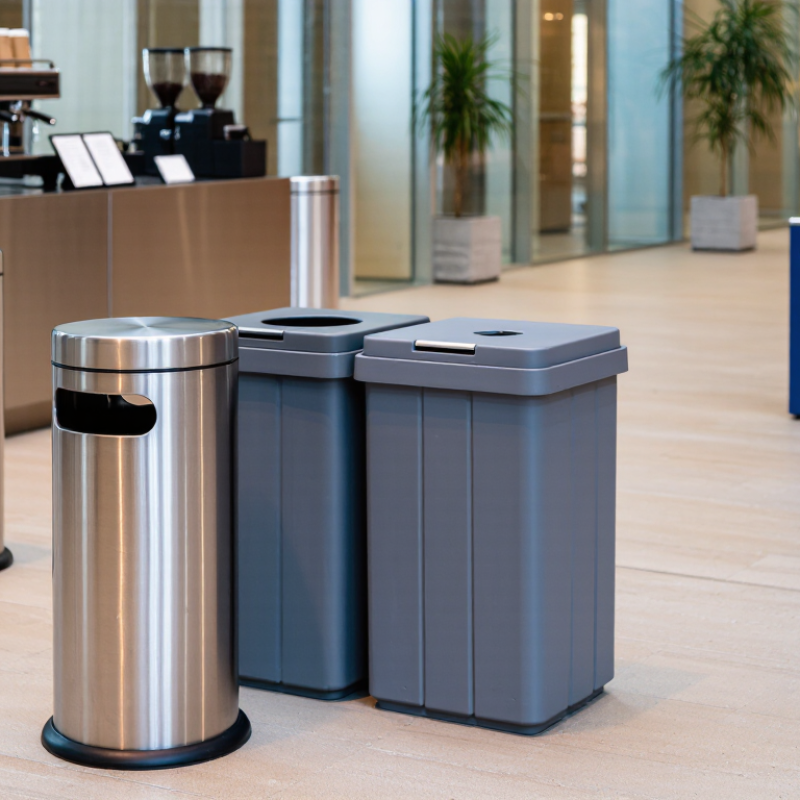
A poorly positioned container may block a walkway or invite spills. A well-planned unit can remain accessible without becoming a visual distraction. Businesses should consider capacity, lid design, mobility, cleaning requirements, and local collection practices before purchasing. Stainless steel may suit visible indoor areas, while heavy-duty plastic can perform well in loading zones.

No container solves poor habits alone. Staff training remains necessary. Customers may still place recyclable items in general waste. That is an honest limitation. However, practical design can reduce confusion and improve consistency.

This guide explores how Commercial Trash Cans support hygiene, appearance, operational control, and responsible waste management. It also examines where common purchasing decisions fail, because the cheapest option is not always the most economical one.

Why Choose Commercial Trash Cans for Your Business?

What Are Commercial Trash Cans and How Do They Differ?

Commercial trash cans are purpose-built containers for busy workplaces, not simply larger household bins. They typically use thicker plastic or metal, reinforced rims, secure lids, and casters. These features tolerate repeated handling, wet waste, and crowded service areas. A household bin may flex, tip, or crack under the same routine.

Scale explains the difference. The U.S. Environmental Protection Agency reported 292.4 million tons of municipal solid waste generated in 2018, or about 4.9 pounds per person daily. The World Bank’s What a Waste 2.0 report projects global waste could reach 3.40 billion tonnes annually by 2050. Those figures include many sources, but they reveal the pressure placed on collection systems. Commercial containers support predictable volume, safer movement, and cleaner separation of food, recyclables, and general waste. Still, bigger is not always better. An oversized can can encourage overfilling and difficult lifting. This is where specifications matter.

Tips: Measure the busiest disposal point for one week. Check opening size, liner fit, wheel quality, cleaning access, and lid clearance. Choose hands-free operation near food preparation areas. Leave space around the container. Small details prevent spills. Review the setup after real use; staff behavior may expose flaws that a product sheet misses.

How to Assess Your Business’s Waste Disposal Needs

Why Choose Commercial Trash Cans for Your Business?

Choosing a commercial trash can starts with measuring your actual waste, not guessing. The U.S. Environmental Protection Agency reported 292.4 million tons of municipal solid waste in 2018. That equals about 4.9 pounds per person each day. A busy café, warehouse, or office can produce very different waste patterns. Track discarded materials for one working week. Record food scraps, packaging, paper, and general waste separately. Note peak periods, such as lunch hours or shipping days. A small bin may overflow quickly, while an oversized container wastes floor space and liner material.

Container placement also affects disposal performance. Put cans near preparation areas, loading zones, restrooms, and employee break rooms. Use lidded units where odors, moisture, or pests may become concerns. Select durable materials and stable bases for high-traffic locations. The United Nations Environment Programme projects global municipal waste could reach 3.8 billion tonnes by 2050. Better sorting and capacity planning are becoming operational necessities, not optional improvements. Still, every assessment has uncertainty. Employee habits change, and one unusual week can distort your estimate.

Tips: Weigh collected waste when possible. Compare weekday and weekend volumes. Ask staff where overflow occurs. Check whether openings match the materials discarded. Review local collection requirements before purchasing. Leave some capacity for seasonal increases, but avoid choosing the largest can automatically. That choice feels safe. It may not be efficient.

Which Materials and Designs Best Suit Commercial Use?

Commercial trash cans endure heavier use than household bins, so material choice matters from the first purchase. In busy kitchens, stainless steel handles moisture, frequent washing, and accidental impacts. It also gives staff a clean, professional surface. Galvanized steel offers strong corrosion resistance, though damaged coatings can expose vulnerable areas. High-density plastic weighs less and resists dents, making it practical for offices, schools, and outdoor collection points.

Design should follow the waste stream, not appearance alone. A foot pedal keeps hands cleaner near food preparation areas. Tight-fitting lids help control odors, while swing or flared openings can speed disposal in public spaces. Removable liners reduce cleaning time. Casters are useful for large containers, but small wheels may struggle across uneven floors. Measure doorways and service corridors before ordering.

I once underestimated this detail, and a well-built bin became awkward to move.

Capacity must match collection schedules and peak activity. A café may need several smaller cans instead of one oversized unit. Rounded corners simplify wiping, while smooth interiors prevent residue from hiding in seams. Ventilation can make full liners easier to remove, but it may also release odors. That trade-off deserves testing.

Choose durable construction, clear waste labels, and stable bases. Check local sanitation, accessibility, and fire-safety requirements before installation. A cheaper bin can become expensive when pedals fail, lids loosen, or replacement parts are difficult to find.

How Do Commercial Trash Cans Improve Hygiene and Safety?

Why Choose Commercial Trash Cans for Your Business?

How Do Commercial Trash Cans Improve Hygiene and Safety?

A commercial trash can controls waste where people eat, work, and move. Its smooth, nonabsorbent surface is easier to disinfect after spills. OSHA’s sanitation standard requires workplace waste receptacles to remain sanitary and easy to clean. That detail matters near sinks, food counters, and shared equipment.

Lids also reduce contact with discarded tissues, packaging, and food scraps. A foot-operated model limits hand contact, although it is not perfect. The CDC reports that proper hand hygiene can reduce respiratory illnesses by 16–21%. A cleaner disposal point supports that habit. It does not replace handwashing.

In a busy break room, a loose liner can leak beneath a table within minutes. A stable, well-sized container keeps waste inside and reduces trip hazards around overflowing bags. The U.S. Environmental Protection Agency reported 292.4 million tons of municipal solid waste generated in 2018, or about 4.9 pounds per person daily. That volume makes capacity planning important. Yet larger is not always safer. Staff may delay emptying it when the container feels only half full. Regular inspections, sealed liners, and clear placement work better than equipment alone. The weak point is often routine, not the can.

Why Choose Commercial Trash Cans for Your Business?

Commercial trash cans provide durable, controlled containment for high-volume waste. Separating waste streams and using covered containers can help reduce exposure to odors, pests, spills, and sharp or contaminated materials.

The chart shows U.S. municipal solid waste generation by material in 2018, measured in million tons. High-volume waste streams such as paper, food, and plastics demonstrate why businesses benefit from appropriately sized, durable, and easy-to-clean commercial containers.

Source: U.S. Environmental Protection Agency, Advancing Sustainable Materials Management: 2018 Fact and Figures.

How to Choose the Right Size, Placement, and Maintenance Plan

Why Choose Commercial Trash Cans for Your Business?

How to Choose the Right Size, Placement, and Maintenance Plan

Commercial trash cans help businesses manage heavier daily waste safely and consistently. Residential bins often crack, tip, or overflow under constant use. In a busy café, a 32-gallon can may fill before lunch. A small office may need only 20 gallons near the break room. Choose capacity from actual waste volume, not guesswork. Track discarded bags for one week. Add about 15 percent room for busy days. This small buffer prevents messy overflows.

Placement affects cleanliness as much as size. Put cans beside exits, preparation areas, restrooms, and employee gathering points. Keep them visible, but never block walkways, doors, or emergency access. A covered can works well outdoors and reduces rainwater and odor problems. Inside, a smooth, nonporous surface makes wiping faster. I have found that one large can is not always better. People may leave waste nearby when the can feels too far away. Test the layout for several days, then adjust. Even experienced managers miss this detail.