What Is the Best Plastic Material for 2026?
“What is the best plastic material for 2026?” sounds like a simple question. It isn’t. A material that performs well in a lightweight phone housing may fail in a hot engine compartment or a repeatedly flexed hinge. The right choice depends on the part, its working conditions, manufacturing method, and expected service life. There is no universal winner.
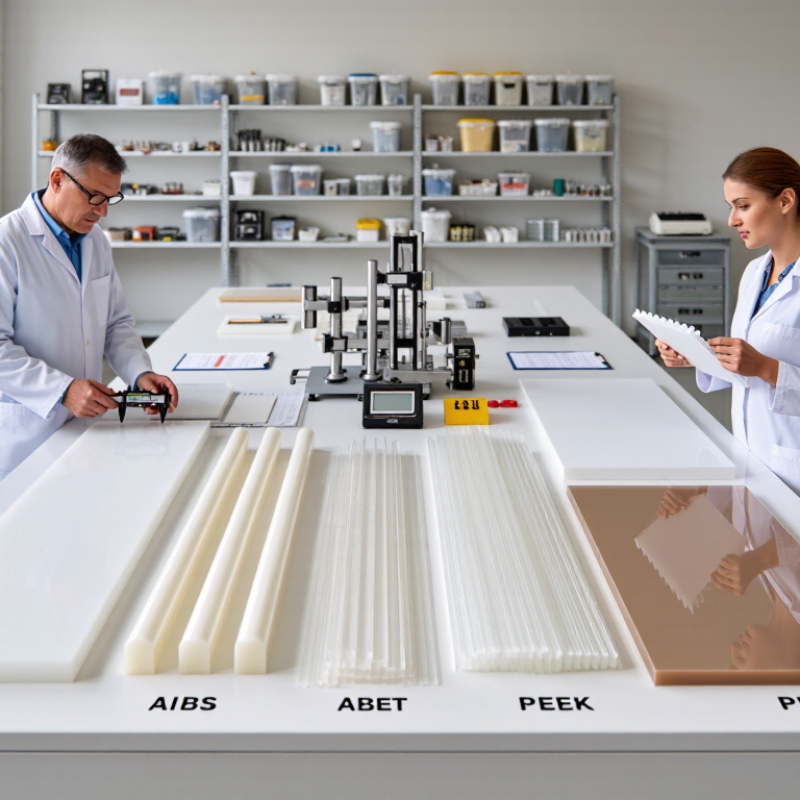
This guide compares common options such as polypropylene, ABS, polycarbonate, nylon, and PEEK. Each brings trade-offs in strength, heat resistance, chemical compatibility, weight, cost, and ease of processing. A clear polycarbonate panel, for example, may suit an application needing impact resistance and visibility. A nylon component may be more appropriate where wear matters, though moisture can affect its dimensions. Details matter.
The best plastic material is the one that meets defined requirements with evidence, not the one with the most impressive headline property. Start with temperature ranges, loads, exposure, tolerances, and production volumes. Then review current supplier datasheets and test representative parts under realistic conditions. Small differences between grades can change the result. This comparison has a blind spot, too: real components rarely behave exactly like neat datasheet examples. That deserves attention. Material selection should also consider repair, recycling options, and the consequences of premature failure. Some choices will remain compromises. The aim here is to make those compromises visible, so engineers, buyers, and product teams can choose with clearer expectations in 2026.
Define the Best Plastic for 2026 by Load, Heat, Safety, and Total Cost
What Is the Best Plastic Material for 2026?
Define the Best Plastic for 2026 by Load, Heat, Safety, and Total Cost
There is no single best plastic for every job in 2026. Start with the actual load: a steady clamp can cause creep over time, while a sudden impact may crack a stiff material. A small test part can reveal problems that a data sheet cannot. It depends.
Heat matters beyond melting point. Check the material’s rated continuous-use temperature, then consider brief heat spikes, friction, and nearby chemicals. A plastic gear near a warm motor faces different conditions from a cold-water pipe support. Nylon may suit wear-heavy parts, while polypropylene can handle many chemical exposures, but moisture, stress, and grade affect performance.
Safety belongs in the specification, not as an afterthought. For food, medical, or other sensitive contact, verify documentation for the exact grade and intended use.
Then calculate total cost: include machining, installation, maintenance, downtime, and likely replacement—not just price per kilogram. A cheaper sheet can become costly if it warps or wears early. Compare candidates under realistic conditions, and record what the test missed. Measure twice.
Market Baseline: Plastics Europe Estimates 413.8 Mt of Global Output in 2023
What Is the Best Plastic Material for 2026?
Market Baseline: Plastics Europe Estimates 413.8 Mt of Global Output in 2023
Plastics Europe estimates that global plastics production reached 413.8 million tonnes in 2023. That figure gives buyers a useful baseline, but it does not identify one universally “best” material. Production volume is not the same as environmental impact, product quality, or suitability for a specific job. A lightweight food container and a durable outdoor fitting face very different demands.
Material choice starts with the real operating conditions. Consider heat, impact, moisture, contact with chemicals, expected service life, and whether the part must flex or hold its shape. For example, a clip that bends repeatedly needs different properties from a rigid panel exposed to sunlight. Check technical data sheets and test samples under realistic conditions. Small details matter. The data can still leave questions; comparing materials across uses is not always straightforward.
Tips: Write down the product’s must-haves before comparing resin options. Ask for verified performance data, including recycled-content details where relevant. Then test a small sample in the actual application. A spreadsheet helps, but it cannot replace a physical trial.
Compare Density: PP at 0.90–0.91 vs. HDPE at 0.94–0.97 g/cm³
For many lightweight parts, density offers a useful first comparison. Polypropylene (PP) commonly measures about 0.90–0.91 g/cm³, while high-density polyethylene (HDPE) is often around 0.94–0.97 g/cm³. Exact values vary by grade, additives, and test conditions. Still, the difference is practical: a same-volume PP part may weigh roughly 3–7% less than an HDPE part. That matters in a hand-held container, a moving lid, or a long production run. Small savings add up.
But density does not decide performance alone. PP often suits hinges and warm-fill components because many grades tolerate repeated flexing and higher service temperatures. HDPE tends to offer strong impact resistance and works well in bottles, bins, and outdoor fittings. It may feel a little heavier in the hand. Check the actual datasheet, not just the polymer name; fillers can change density, and part shape matters too. Easy to overlook. A thin HDPE wall may use less material than a thick PP wall. For a fair comparison, check molded-part weight, stiffness, temperature limits, and drop-test results under real use conditions. Density is a useful starting point, not a verdict.
Match Heat Demands: PP Melts at 160–170°C; PET at 250–260°C
What Is the Best Plastic Material for 2026?
Match Heat Demands: PP Melts at 160–170°C; PET at 250–260°C
Heat requirements can quickly narrow your material choices. Polypropylene (PP) typically melts around 160–170°C, while polyethylene terephthalate (PET) melts around 250–260°C. That gap matters when parts face hot filling, heated equipment, or repeated temperature changes. Small difference? Not here.
Melting point is not the same as a safe working temperature. A plastic part can soften, warp, or lose strength well below its melting point, especially under load. Resin grade, wall thickness, processing, and exposure time all affect performance. PET’s higher melting range may suit demanding heat processes, but it does not automatically make PET the right choice. PP can be a practical option when moderate heat resistance, low weight, and flexibility matter more. Check technical data for the exact grade, then test a representative part under real conditions. A brief heat test alone may miss slow deformation.
Tips: Record the part’s temperature, load, and exposure time during testing. Compare those results with supplier data. Leave a safety margin; a borderline result deserves another test.
Assess Circularity: OECD Found Only 9% of Plastic Waste Was Recycled in 2019
What Is the Best Plastic Material for 2026?
Assess Circularity: OECD Found Only 9% of Plastic Waste Was Recycled in 2019
The OECD estimated that just 9% of plastic waste was recycled in 2019. That figure changes how we should judge the “best” plastic. A resin may perform well in a product, yet its usefulness fades if local systems cannot sort and process it. The material alone cannot guarantee circularity.
Consider a clear drink bottle beside a greasy food tray. Both are plastic, but residue, labels, color, and mixed layers can affect sorting and recycling. Simple, single-material designs are often easier to process. They still need collection, suitable facilities, and buyers for recycled feedstock. Without those steps, recyclability on paper may mean little.
A better choice depends on the job. A durable container designed for repeated use may reduce waste when people actually reuse it. For short-lived packaging, using less material and making components easy to separate can help. I find the “best material” question a little too neat; real disposal systems are uneven, and consumer habits are hard to predict. That uncertainty deserves attention. Before choosing a plastic, ask what happens to it after use in the places where it will be sold.