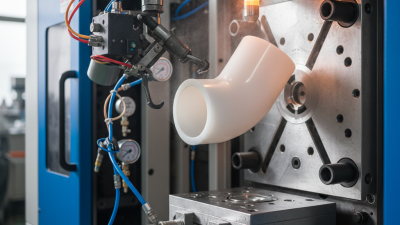
In 2026, the landscape of design for injection molding is evolving. This approach focuses on optimizing designs, ensuring efficiency, and reducing costs. Designers must consider both aesthetics and functionality in their projects.
A few key factors are essential for success. Materials choice plays a vital role, affecting durability and production speed. Complex shapes can enhance product appeal but may complicate the molding process. Balancing these elements often requires creativity and experimentation.
Mistakes in design can lead to costly revisions and delays. Reflecting on past projects reveals the importance of thorough planning. Emphasizing practical prototypes is crucial. Embrace feedback and adapt designs accordingly. In this dynamic field, continuous learning is essential.

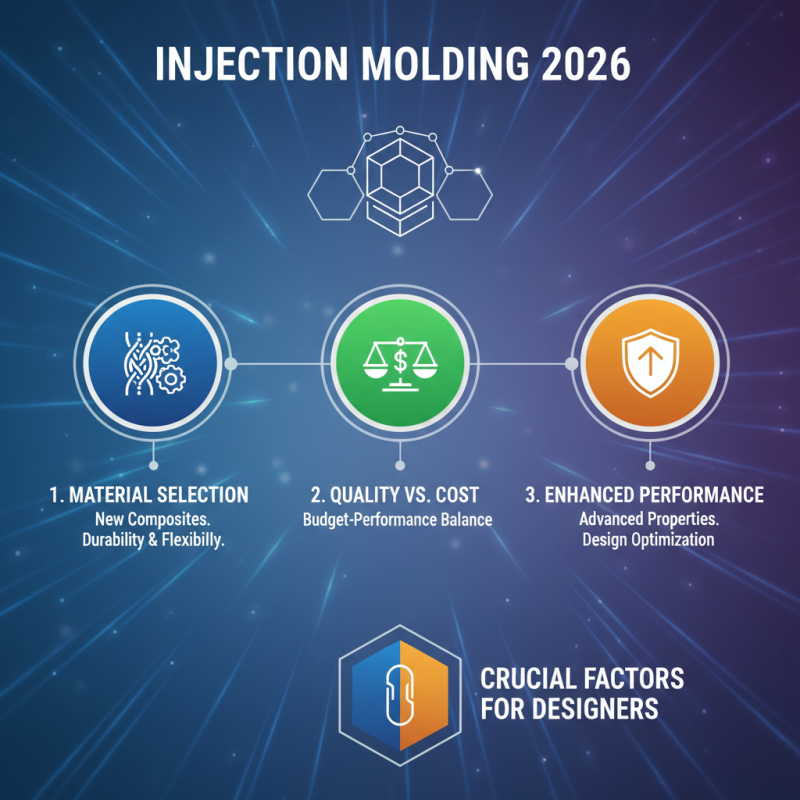
When considering injection molding in 2026, designers need to focus on multiple crucial factors. Material selection stands out. The right material can enhance durability and flexibility. New composites may offer better performance, but they can be costly. Balancing quality and budget is vital.
Another key aspect is part geometry. Complex shapes can lead to challenges during molding. It's essential to ensure design for manufacturability. Thin walls may save material but could cause weaknesses. Testing different designs is crucial to find the right balance.
Finally, it’s important to think about environmental impact. Sustainable materials are trending. However, not all are suitable for every application. Designers must consider lifecycle and recycling potential. It’s a learning curve, where trial and error proves beneficial. Adjustments may be necessary.
In 2026, the landscape of injection molding is set to change significantly due to the advent of advanced materials. These materials promise enhanced efficiency, offering lighter, stronger, and more versatile options for manufacturers. For instance, new polymer blends can reduce cycle times while maintaining durability. This shift allows for rapid prototyping and lower production costs.
However, adapting to these materials can be tricky. Not all machines are equipped to handle the changes. This may lead to inefficiencies if equipment is not updated. Additionally, the processing parameters for these new materials can differ from traditional ones. It often requires extensive testing to find the optimal conditions. Companies might face delays as they troubleshoot these adjustments.
Moreover, there’s also the risk of overloading the capabilities of these advanced materials. While they can perform better, pushing them beyond their limits can result in failures or subpar products. Finding the right balance between material capabilities and design requirements is a constant challenge. Emphasizing education and training on these innovative solutions is crucial for success in injection molding.
In 2026, the role of CAD software in injection mold design will be more crucial than ever. This technology allows for precise modeling of components. Designers can visualize the mold before any physical work begins. CAD also expedites the modification process. Adjustments that once took days can now be made in hours.
However, even with advanced tools, challenges persist. Designers sometimes overlook the intricacies of material flow. A small error can lead to defects in the final product. Mold drafts may not always be optimized, resulting in difficult releases. Reflection on these common pitfalls is essential. Designers should seek feedback, refine their methods, and improve their designs.
Additionally, ensuring scalability in design remains a challenge. A mold that works for a small batch might not suit mass production. Designers need to factor in variations in material behavior as well. CAD can offer simulations, but real-world testing is irreplaceable. Balancing innovation and practicality can lead to better outcomes in injection molding projects.
As sustainability becomes a priority in the injection molding industry, companies are adjusting their design strategies to minimize environmental impact. The global market for sustainable materials is projected to reach over $500 billion by 2026, pushing manufacturers to reconsider traditional processes. Adopting eco-friendly materials can lead to significant reductions in energy consumption and waste.
Tip: When designing for injection molding, consider using biodegradable polymers. These materials perform similarly to conventional plastics but decompose more easily in the environment.
Reducing the carbon footprint is also essential. A recent study highlighted that injection molding processes can account for up to 50% of a product's lifecycle emissions. Designers should focus on lightweight structures to decrease material usage and energy demands.
Tip: Engage in design for manufacturing (DFM) principles. Simplifying the part geometry can reduce cycle times, which lowers energy consumption.
Of course, implementing these strategies isn't without challenges. Transitioning to sustainable materials may limit product options or require new processes. Designers need to evaluate trade-offs cautiously and continue innovating while addressing these complexities.
Emerging technologies in injection molding are transforming the production landscape for 2026. Additive manufacturing, for instance, allows for complex designs that traditional molding struggles to achieve. This method can reduce material waste and shorten production times. Using 3D printing in conjunction with injection molding enables a more flexible design approach, yet precision remains a challenge.
Another notable trend is the integration of smart sensors. These sensors collect real-time data during the molding process. They help predict potential defects and monitor quality. While this technology enhances efficiency, it also requires skilled personnel to interpret the data effectively. The need for continuous improvement remains critical.
Sustainability is gaining traction in this field. Biodegradable materials are becoming more common, but they often present durability challenges. Balancing environmental concerns with product longevity prompts ongoing reflection. Companies must consider both innovation and practicality in their design processes. This thoughtful approach can propel the industry forward, even as it faces hurdles.