What Are the Top Plastic Angle Types for Buyers in 2026?
Plastic angles look simple: two legs meeting at a corner. Yet the right profile can protect a pallet edge, finish a wall, or reinforce a cabinet. Buyers in 2026 will compare more than shape. Material, dimensions, impact resistance, installation, and end use all matter. Common choices include rigid PVC, polyethylene, polypropylene, and flexible PVC profiles. Not every option suits every job. A thin trim piece cannot replace a load-bearing component.
Demand signals offer useful context, but they need careful interpretation. The OECD’s Global Plastics Outlook (2022) reports that global plastics production rose from 234 million tonnes in 2000 to 460 million tonnes in 2019. It also estimates that only 9% of plastic waste was ultimately recycled in 2019. These figures describe plastics broadly, not plastic angle sales. They do, however, underline why buyers should ask about recycled content, durability, and disposal rather than relying on appearance alone. A glossy finish proves little.
This guide compares the leading plastic angle types by application, performance, and purchasing considerations. Expect practical checks: measure both legs, inspect the corner radius, and confirm whether the profile must resist moisture, sunlight, or repeated knocks. Request a sample when tolerances matter. Small differences can complicate installation. Product claims also deserve scrutiny; test methods and conditions should be clear. The best choice is not always the cheapest or strongest. It is the profile that fits the real task, with evidence to support the decision.
How Plastic Angle Profiles Are Classified by Shape, Resin, and Application
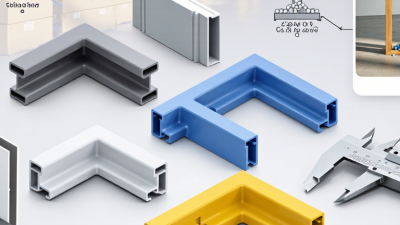
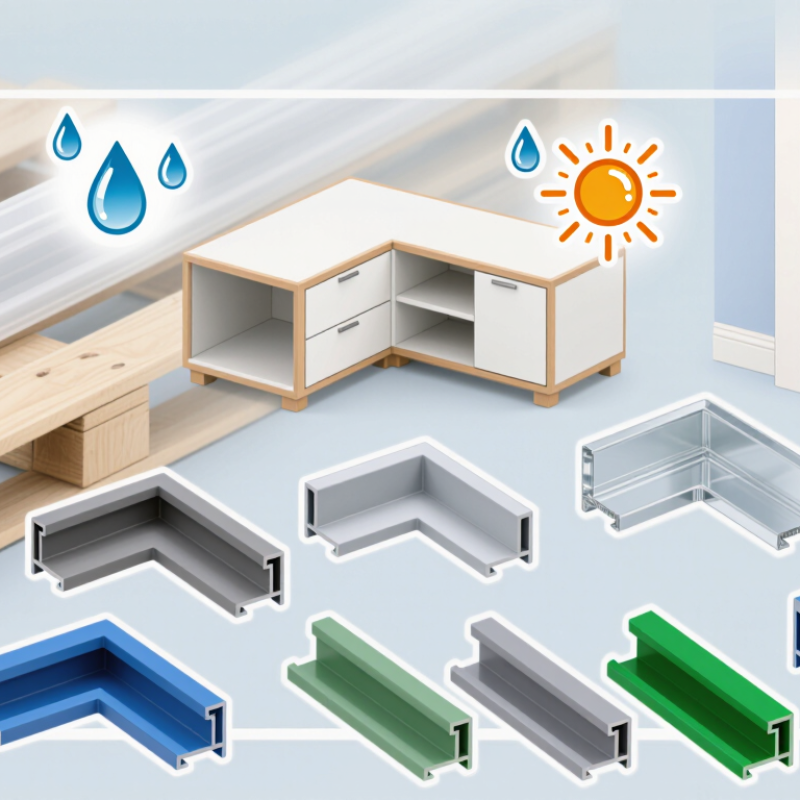
Plastic angle profiles are easiest to compare by shape, resin, and working conditions. Equal-leg L profiles protect two edges of similar width. Unequal-leg profiles cover one broad face and a narrower return. Rounded corners feel smoother in hand; square corners sit neatly against cabinet panels or crate edges. Measure both legs, not only the visible face.
Resin affects flexibility, impact resistance, and performance outdoors. PVC is common for rigid trim and general edge protection. ABS can suit applications needing impact resistance and a clean finish. Polypropylene and polyethylene profiles are useful where moisture resistance and some flexibility matter. Polycarbonate may be selected when toughness and light transmission are priorities, though it can cost more. Check the product’s temperature range and any stated chemical resistance; resin names alone do not guarantee performance.
Match the profile to its actual job. A thin L trim may tidy a display edge, while a thicker section can shield a repeatedly handled panel. For outdoor use, ask about UV exposure and color stability. For food-contact or other specialized settings, request relevant test documentation rather than relying on a sales description. There is no flawless shortcut. A profile that fits on paper may flex too much in use, so test a sample against the real edge, fastener, and installation method.
Top Plastic Angle Types for Buyers in 2026
Typical density ranges for common thermoplastics used in angle profiles, grouped by resin. Density is a material property—not a measure of quality or market share.
How to choose: L-shaped profiles are commonly used as corner guards, edge trims, and framing. PVC is a frequent choice for building trim; PP and HDPE suit applications where moisture or chemical resistance matters; ABS is used where impact resistance is useful; and polycarbonate can be considered when transparency and impact performance are priorities. Actual properties vary by grade, formulation, and manufacturing process. The chart shows representative material density ranges, not a product ranking.
PVC Angles: Typical Density of 1.3–1.45 g/cm³ and Rigid Edge Protection
PVC angles are a practical choice when exposed corners need firm, lightweight protection. Their typical density is about 1.3–1.45 g/cm³, though the exact figure varies with formulation and manufacturing. Check the supplier’s technical data before comparing products. Density alone does not tell you how well an angle will resist impact or stay in place.
On a warehouse pallet, a rigid PVC angle can shield carton edges from straps, bumps, and stacking pressure. It is easy to cut to length with a fine-tooth saw, and its straight profile helps distribute strap tension across a wider area. A useful starting point. Match the angle’s leg size and wall thickness to the load; thin sections may flex under tight banding, while oversized sections can add needless bulk. Not always an obvious trade-off.
PVC can become less flexible in cold conditions, so test samples in the temperature range where goods will be stored or shipped. Inspect cut ends for cracking, and check that the angle does not slide when straps are tightened. I would not assume every product in this density range performs alike. A small trial with the actual carton, strap, and stacking pattern can reveal details a datasheet misses.
HDPE and PP Angles: Compare Densities of 0.94–0.97 and 0.90–0.91 g/cm³
HDPE and PP angles differ in density, weight, and handling. Typical HDPE grades fall around 0.94–0.97 g/cm³, while PP commonly measures 0.90–0.91 g/cm³. The University of Cambridge’s Materials Data Book lists representative values near 0.95 for HDPE and 0.90 for PP. These are useful benchmarks, not guarantees: fillers, copolymer content, and grade selection can shift actual measurements. ASTM D792 provides a standard method for measuring plastic density.
For buyers, that difference can matter when angles protect pallet corners or stabilize stacked cartons. At equal dimensions, a PP angle will usually weigh less, while HDPE may suit applications where toughness and impact resistance are priorities. But density alone is an imperfect shortcut. I would check the actual product datasheet and test a sample under real load, especially in cold storage or damp shipping conditions. A lighter part is not automatically a cheaper or better choice.
Tips: Ask suppliers for density measured by ASTM D792, plus wall thickness and impact data. Compare samples at the same dimensions; otherwise, the weight comparison can mislead. Check the grade, too. A small detail, but an easy one to overlook.
ABS and Acrylic Angles: Compare Impact Performance Using ASTM D256
For buyers comparing plastic angles in 2026, impact resistance can matter at exposed corners, loading bays, and machine guards. ASTM International’s D256 method measures notched Izod impact strength; it does not guarantee how a finished angle will perform. Public CAMPUS records and resin technical data sheets commonly show ABS around 200–400 J/m, while acrylic (PMMA) often falls near 16–32 J/m. These are screening ranges, not universal specifications. Small details matter.
That gap suggests ABS may better tolerate knocks from carts or dropped tools, while acrylic suits applications where clarity and a crisp edge matter more than impact toughness. But compare like with like: notch geometry, specimen thickness, conditioning, and test temperature can shift reported results. A cold store, for example, may produce a different outcome from a warm indoor test. Also, D256 uses standardized specimens, not complete angle profiles; corner shape and mounting can concentrate stress. One easy mistake is treating a resin datasheet value as a direct prediction for a fabricated part. Request test conditions and, where failure is costly, test the actual angle design.