Injection molding materials are the substances melted, shaped, and cooled to create repeatable plastic parts. They influence strength, flexibility, surface finish, weight, cost, and service life. The choice reaches far beyond selecting a familiar resin name.
Common options include thermoplastics, thermosets, and elastomers. Thermoplastics such as polypropylene, ABS, nylon, polycarbonate, and PEEK can be reheated and reshaped. Thermosets cure permanently, while elastomers provide rubber-like flexibility. Each family behaves differently inside the barrel, mold, and cooling system.
As plastics engineer and author John P. Beaumont explains, “The mold is the heart of the injection molding process.” His observation also highlights a practical truth: the material and mold must work together. A glass-filled nylon part may need a different gate design, drying routine, and cooling strategy than an unfilled polypropylene part. Small changes matter. Moisture can create silver streaks, bubbles, or brittle sections. Excessive heat can damage sensitive polymers. Poor cooling can leave visible warpage on a flat panel.
Material datasheets provide useful processing windows, but they are not perfect instructions. Actual results depend on machine condition, mold geometry, colorants, additives, and production speed. Even experienced teams sometimes adjust temperatures or holding pressure after inspecting the first molded parts. That is normal, not a failure.
This guide explores what injection molding materials are, how they differ, and where each material performs best. It also considers recyclability, fiber reinforcement, food-contact requirements, and long-term durability. The goal is practical understanding, not a one-material-fits-all answer.
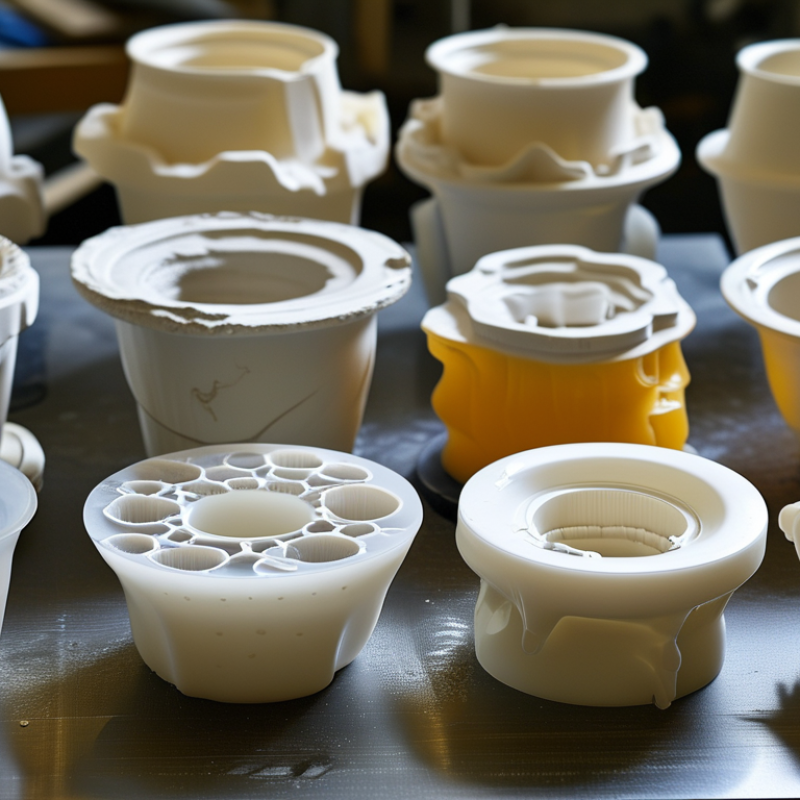
Injection molding materials are substances heated, shaped, and cooled inside a mold. They are commonly thermoplastics, thermosets, elastomers, or reinforced compounds. Their main role is to form a product with repeatable dimensions, surface quality, and mechanical performance. In a molding workshop, small pellets enter a heated barrel. The material melts, flows through a nozzle, and fills the cavity. Cooling then locks the intended shape in place.
Material selection influences nearly every production decision. A heat-resistant polymer may suit an automotive housing, while a flexible elastomer may fit a seal. Reinforcing fibers can improve stiffness, but they may also increase tool wear or create visible flow marks. Moisture-sensitive materials require careful drying before molding. Otherwise, bubbles, weak areas, or rough surfaces may appear. No material is perfect. A strong grade can still produce poor parts when temperature, pressure, or cooling time is poorly controlled. This is where practical testing matters more than a data sheet alone.
Tips: Check the material’s drying needs, shrinkage behavior, operating temperature, and recycled-content limits. Ask for a technical data sheet and compare it with real production conditions. Inspect early samples closely. Small warping may reveal a larger process problem. Also, review the application honestly; laboratory results cannot represent every impact, chemical exposure, or outdoor condition.
Injection molding materials mainly fall into thermoplastics, thermosets, elastomers, and reinforced compounds. Thermoplastics soften when heated and harden when cooled, allowing repeated processing. Common families include polypropylene, polyethylene, ABS, polyamide, and polycarbonate. They suit housings, medical components, caps, and automotive parts. PlasticsEurope reported global plastics production of about 414 million tonnes in 2023, showing the scale of material demand. However, production volume does not equal suitability.
Thermosets cure permanently during molding. They resist heat and dimensional change, but recycling is difficult. Elastomers provide rubber-like flexibility for seals, grips, and vibration-control parts. Reinforced materials add glass or mineral fibers, improving stiffness while increasing tool wear. The U.S. Department of Energy notes that lightweight polymer components can support vehicle energy-efficiency goals, but performance depends on design and processing conditions. A stronger material is not always the better choice.
Bio-based and recycled thermoplastics are gaining attention, although their quality can vary between suppliers and production batches. Recent circular-plastics reports from the OECD highlight low global recycling rates and the need for better material recovery systems. Engineers should check melt temperature, moisture sensitivity, shrinkage, impact strength, and end-of-life options before approval. Small trials matter. A data sheet cannot predict every weld line, burn mark, or warpage problem. Material selection remains a practical compromise between cost, performance, reliability, and environmental responsibility.
Injection molding materials must balance flow, strength, heat resistance, and dimensional stability. Melt flow affects how completely the material fills thin ribs, corners, and deep cavities. A material flowing too easily may produce flash around the parting line. A material flowing poorly can leave short shots or visible weld lines.
Strength matters after cooling. Stiff materials support loads, while impact-resistant grades tolerate drops and sudden force. Thermal stability is equally important during repeated heating. Excessive heat can cause discoloration, brittleness, or unwanted gas. Moisture also deserves attention. Some polymers absorb water and require controlled drying before processing. Otherwise, bubbles and silver streaks may appear on the surface. Chemical exposure, surface finish, shrinkage, and cycle time should be evaluated together, not separately. A material that looks ideal on a data sheet may perform poorly in a real mold.
Tips: Check the material’s processing range, drying requirements, expected shrinkage, and end-use temperature. Test sample parts under realistic loads. Small trials reveal problems early. Do not rely on one property alone. Mold design, gate location, cooling balance, and processing settings can change the final result. Even experienced teams sometimes overlook moisture or uneven cooling. That mistake is worth reviewing before full production.
What Are Injection Molding Materials?
How Materials Are Selected for Different Products
Material selection begins with the product’s working conditions, not its appearance. A food container may need chemical resistance and a clean surface. An outdoor housing may require ultraviolet stability, impact strength, and low moisture absorption. For a flexible seal, elastomers can perform better than rigid plastics. Engineers also review temperature, load, wall thickness, cycle time, and expected service life.
A practical trial often reveals problems that calculations miss. A material may fill a thin rib well but warp near a thick corner. Another may provide excellent strength but leave visible flow marks. Recycled content can reduce environmental impact, yet it may change color, shrinkage, or consistency. That trade-off deserves careful testing. The first trial is rarely perfect.
Tips: Compare several grades under real processing conditions. Check the supplier’s technical data, but do not treat it as a guarantee. Test molded samples for impact, heat, moisture, and dimensional stability. Keep records of drying time, mold temperature, injection speed, and cooling time. Small process changes matter.
| Material | Material Type | Typical Density (g/cm³) |
Typical Continuous Use Temperature |
Typical Mold Shrinkage (%) |
Key Advantages | Common Product Uses | Important Selection Considerations |
|---|---|---|---|---|---|---|---|
| Polypropylene (PP) | Thermoplastic | 0.90–0.91 | Approximately 80–100°C | 1.0–2.5 | Low density, good chemical resistance, excellent fatigue resistance, low cost | Living hinges, storage containers, caps, automotive interior parts, household products | Suitable for lightweight parts and repeated flexing; account for relatively high shrinkage and limited high-temperature performance |
| Polyethylene (PE) | Thermoplastic | 0.91–0.97 | Approximately 60–90°C | 1.5–3.5 | Good impact strength, moisture resistance, chemical resistance, and processability | Bottles, closures, bins, toys, pipe fittings, industrial containers | Choose the density grade according to stiffness, impact requirements, and environmental stress-cracking resistance |
| ABS | Thermoplastic | 1.03–1.07 | Approximately 70–85°C | 0.4–0.8 | Good impact resistance, rigidity, dimensional stability, and surface appearance | Enclosures, instrument panels, consumer products, appliance components, housings | Good general-purpose choice when appearance and toughness are both important; outdoor use may require UV stabilization |
| Polycarbonate (PC) | Thermoplastic | 1.20–1.22 | Approximately 115–130°C | 0.5–0.8 | Very high impact strength, transparency options, good dimensional stability, heat resistance | Safety shields, optical covers, electrical housings, lighting components, protective equipment | Requires careful drying before molding; check chemical compatibility and stress-cracking risk |
| Polyamide (PA 6/PA 66) | Engineering Thermoplastic | 1.12–1.15 | Approximately 90–120°C, depending on grade | 0.8–2.0 | High strength, wear resistance, fatigue resistance, and useful temperature performance | Gears, bushings, fasteners, brackets, cable ties, automotive and machinery parts | Moisture absorption can change dimensions and mechanical properties; glass fiber improves stiffness but increases anisotropic shrinkage |
| Polyoxymethylene (POM) | Engineering Thermoplastic | 1.40–1.43 | Approximately 85–105°C | 1.5–2.5 | Low friction, good dimensional stability, stiffness, fatigue resistance, and machinable-like precision | Gears, rollers, valve components, pump parts, precision mechanisms | Avoid strong acids and oxidizing environments; proper venting and processing control are important |
| Polybutylene Terephthalate (PBT) | Engineering Thermoplastic | 1.30–1.33 | Approximately 100–120°C | 1.0–2.0 | Good electrical insulation, chemical resistance, stiffness, and dimensional stability | Electrical connectors, sensor housings, automotive components, appliance parts | Select a stabilized grade for heat, hydrolysis, or outdoor exposure; drying may be required |
| Polyetheretherketone (PEEK) | High-Performance Thermoplastic | 1.30–1.32 | Approximately 240–260°C | 1.0–1.5 | Excellent chemical resistance, wear resistance, mechanical strength, and high-temperature performance | Aerospace, medical, semiconductor, chemical-processing, and high-temperature mechanical parts | High material and tooling costs; requires high processing temperatures and carefully controlled molding conditions |
| Thermoplastic Elastomer (TPE) | Elastomeric Thermoplastic | 0.90–1.25 | Approximately 60–120°C, depending on formulation | 1.0–2.5 | Flexible, soft-touch, recyclable in many formulations, and suitable for overmolding | Seals, grips, gaskets, flexible buttons, vibration isolators, wearable components | Select hardness, compression-set resistance, chemical compatibility, and bonding performance for the application |
| Liquid Silicone Rubber (LSR) | Thermoset Elastomer | Approximately 1.05–1.20 | Approximately 150–200°C | 2.0–4.0 | Excellent temperature flexibility, weather resistance, electrical insulation, and biocompatibility options | Medical seals, membranes, infant-care products, keypads, gaskets, and kitchen components | Requires specialized metering and curing equipment; control flash, venting, and parting-line design carefully |
| Glass-Filled Engineering Polymer | Reinforced Thermoplastic | Typically 1.30–1.70 | Often 100–150°C, depending on base resin | 0.2–1.0 | Higher stiffness, strength, and reduced shrinkage than the unreinforced resin | Structural brackets, housings, supports, automotive parts, electrical components | Fiber orientation can cause warpage and directional properties; use appropriate gate location and mold-flow analysis |
Note: The values shown are typical engineering ranges for unfilled or commonly reinforced grades. Actual performance depends on formulation, additives, moisture content, part geometry, processing conditions, testing method, and service environment.
Injection molding materials perform reliably only when preparation matches the resin’s behavior. Pellets may look dry, yet hygroscopic polymers can absorb moisture during storage. That moisture can create silver streaks, bubbles, brittleness, or hydrolytic degradation. A sealed hopper is not enough.
Material preparation starts with controlled storage, correct drying, and accurate batching. Operators should follow the supplier’s drying temperature, time, and dew-point requirements. Overdrying can also damage some polymers. Use clean containers and verify pellet temperature before feeding. In production, a moisture analyzer offers stronger evidence than visual inspection. Material handling deserves discipline.
Blending virgin resin, regrind, colorant, and additives requires stable ratios. Excessive regrind may reduce impact strength or alter shrinkage. The PlasticsEurope report Plastics—The Fast Facts 2024 recorded global plastics production at 413.8 million tonnes in 2023. This scale increases pressure to use recycled feedstock, but recycled content needs testing, not assumptions. Batch-to-batch variation remains a practical concern. It is easy to overlook.
During processing, temperature profiles should reflect the material, part geometry, and residence time. Excessive heat can cause discoloration, gas formation, or molecular breakdown. A barrel purge may remove contamination, but it cannot repair degraded resin. Check melt pressure, screw recovery, mold filling, and molded-part weight together. The Society of Plastics Engineers identifies process control and material consistency as key factors in repeatable injection molding. In my view, the weakest point is often documentation: one missing drying record can explain an entire afternoon of unstable parts.
Different thermoplastics require different melt-processing temperatures. The ranges below represent typical injection molding conditions and may vary by grade, moisture content, mold design, and machine settings.