
No Job is Too Big or Too Small!
How to Choose a PVC Injection Molding Supplier in 2026?
Choosing a PVC injection molding supplier in 2026 requires more than comparing prices on a spreadsheet. The right partner must understand material behavior, mold design, production control, and long-term product performance. A reliable supplier should explain these details clearly, not hide behind technical language.
Look for evidence from real projects. Ask to inspect sample parts, mold trial reports, dimensional records, and material certificates. A capable factory can show how it controls wall thickness, weld lines, flash, shrinkage, and color consistency. These small details matter when a component must fit tightly inside a housing or survive repeated handling. Factory experience also matters. A supplier familiar with your product category may identify risks before production begins.
Price is only one signal. Sometimes, the cheapest quotation wins attention. It may also conceal weak inspection procedures, unclear tooling ownership, or unstable production capacity. Ask how the supplier handles design changes, rejected parts, maintenance, and delivery delays. Request measurable answers. For example, who approves the first article, and what happens when dimensions drift?
Communication deserves practical testing. Send a drawing and observe the response. Do they ask useful questions about tolerances, resin grade, surface finish, and expected volume? Or do they reply with a vague number?
No supplier is perfect. Your evaluation should still reveal whether the company is honest, technically prepared, and accountable. With careful verification, pvc injection molding can become a controlled manufacturing advantage rather than an expensive source of uncertainty.
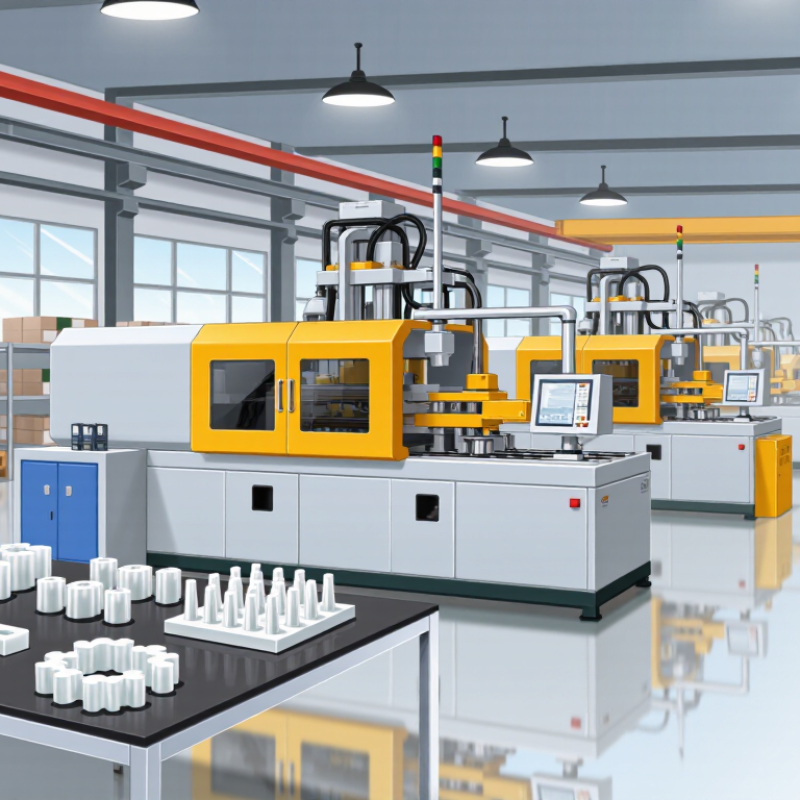
Define Your PVC Injection Molding Requirements
Define Your PVC Injection Molding Requirements
Start with the part. Describe its function, dimensions, wall thickness, and expected service conditions. Include a clear drawing with tolerances, draft angles, and critical inspection points. Do not guess. A small change in wall thickness can affect filling, cooling, warpage, and cycle time.
Specify the PVC grade and performance needs before comparing suppliers. Consider flexibility, hardness, color, chemical exposure, temperature range, and flame behavior where applicable. Explain whether the part needs a smooth surface, texture, inserts, or post-molding assembly. State the expected annual volume and launch schedule. These details influence mold design, machine capacity, and production cost.
Ask potential suppliers how they will validate the process. Reliable evidence may include material certificates, dimensional reports, mold-flow analysis, sample approvals, and documented process controls. Clarify how they manage flash, sink marks, weld lines, and odor during production. In practice, requirements often change after the first trial. That is normal, but uncontrolled changes create risk. I have seen projects over-focus on unit price while ignoring mold maintenance and inspection time. A better specification records both measurable targets and acceptable limits. Leave room for review, but not for vague promises.
| Requirement Dimension | Requirement to Define | Recommended Specification or Target | Why It Matters When Selecting a Supplier | Evidence to Request | Priority |
|---|---|---|---|---|---|
| Part Function | End use, load conditions, pressure, temperature, chemical exposure, and expected service life | Document operating conditions before requesting quotations; identify all fluids, cleaning agents, UV exposure, and mechanical loads | PVC performance depends on formulation, wall design, temperature, and chemical environment. A supplier must understand the application before recommending a material or process | Application brief, operating-condition sheet, service-life target, and risk assessment | High |
| PVC Material Type | Rigid PVC or flexible PVC, compound grade, additives, color, and regulatory requirements | Define hardness, color tolerance, flame-retardancy needs, UV resistance, and applicable market regulations | Rigid and flexible PVC require different formulations and processing conditions. Material consistency directly affects dimensional stability, appearance, and durability | Technical data sheet, safety data sheet, certificate of analysis, and regulatory declarations | High |
| Part Geometry | Overall dimensions, wall thickness, ribs, bosses, undercuts, threads, inserts, and draft angles | Provide a 3D CAD model and 2D drawing with critical dimensions and tolerances; identify cosmetic and functional surfaces | Geometry determines mold complexity, filling behavior, cooling time, shrinkage risk, and the type of tooling required | CAD files, drawings, tolerance table, and design-for-manufacturing review | High |
| Dimensional Control | Critical dimensions, allowable variation, flatness, concentricity, and fit requirements | Separate critical-to-function dimensions from non-critical dimensions; specify measurement method and inspection frequency | Overly tight tolerances can increase tooling and production costs, while insufficient control can cause assembly or sealing failures | Inspection plan, capability study, sample measurement report, and calibrated equipment records | High |
| Annual Volume | Expected annual demand, monthly forecast, launch quantity, and peak demand | State forecast volume and expected order pattern; distinguish prototype, pilot, and serial-production quantities | Volume affects mold-cavity count, automation level, equipment selection, unit cost, and production capacity planning | Demand forecast, capacity plan, production schedule, and quotation assumptions | High |
| Batch Size | Minimum order quantity, standard lot size, and inventory expectations | Define acceptable lot size, delivery frequency, safety-stock responsibility, and maximum storage period | Small batches may require flexible scheduling, while large batches may justify dedicated tooling, automation, or warehouse planning | MOQ policy, lead-time table, inventory proposal, and replenishment model | Medium |
| Tooling | Mold life, cavity count, steel selection, hot or cold runner design, maintenance, and ownership | Define expected shots, replacement-part responsibility, preventive-maintenance intervals, and tool-storage conditions | PVC processing can require corrosion-resistant tooling practices and careful temperature control. Clear tooling terms reduce lifecycle and ownership risks | Mold design review, tool specification, maintenance schedule, ownership clause, and spare-parts list | High |
| Cycle Time | Target cycle time, cooling time, setup time, and changeover requirements | Request a validated cycle-time estimate based on actual part geometry, material, mold design, and machine size | Cycle time influences capacity, energy consumption, labor requirements, and the final unit price | Process simulation, trial report, cycle-time study, and machine utilization plan | Medium |
| Surface Appearance | Gloss, texture, weld-line visibility, gate marks, flow marks, flash, color consistency, and allowable defects | Define approved master samples, defect limits, inspection lighting, and cosmetic acceptance criteria | Appearance requirements are subjective unless they are converted into measurable standards and visual references | Approved samples, visual standard, defect catalog, and first-article inspection report | High |
| Color Control | Color reference, color tolerance, batch variation, and regrind policy | Use a defined color reference and specify acceptable color difference or visual tolerance where applicable | PVC color can vary with pigment dispersion, processing temperature, material batches, and recycled-content practices | Color standard, color measurement records, retained samples, and batch traceability documents | Medium |
| Quality Standard | Inspection stages, sampling method, acceptance criteria, traceability, and nonconformance handling | Define incoming, in-process, final, and pre-shipment checks; include a documented corrective-action process | A supplier with a repeatable quality system is more likely to maintain stable production across multiple lots | Quality manual, control plan, inspection records, corrective-action examples, and audit results | High |
| Regulatory Compliance | Market-specific requirements for chemical content, safety, food contact, electrical use, or environmental restrictions | Identify the destination market and applicable regulations before material approval and production release | Compliance obligations vary by application and market. The molding supplier must be able to control and document material conformity | Declarations of conformity, material certifications, restricted-substance statements, and test reports | High |
| Production Equipment | Machine type, clamping force, shot capacity, injection control, temperature control, and automation | Confirm that the supplier’s equipment can meet the part size, material requirements, tolerance, and expected output | Correct machine selection affects filling, packing, dimensional consistency, cycle time, and process stability | Equipment list, machine specifications, process capability data, and production-line photos or audit access | High |
| Development Stage | Prototype, design validation, pilot production, or full-scale production | Define the required sample quantity, approval milestones, and transition criteria for each stage | A supplier experienced in both sampling and serial production can reduce transfer risks between development phases | Project schedule, sample plan, trial-molding report, first-article process, and engineering-change procedure | High |
| Lead Time | Design review, mold fabrication, sampling, approval, production, and shipping lead times | Request separate lead times for tooling, first samples, corrections, and repeat production | Breaking the schedule into measurable stages exposes hidden delays and supports realistic launch planning | Integrated project timeline, milestone commitments, capacity confirmation, and escalation procedure | High |
| Cost Structure | Tooling cost, piece price, material cost, packaging, inspection, freight, and change fees | Request a fully itemized quotation with assumptions, validity period, volume tiers, and tooling amortization method | A transparent cost structure makes supplier comparisons more accurate and reduces unexpected charges during production | Itemized quotation, cost-breakdown sheet, payment terms, price-adjustment clause, and tooling invoice | High |
| Packaging | Protection from deformation, contamination, scratching, moisture, and transit damage | Define packaging quantity, labeling, palletization, cleanliness requirements, and packaging validation method | PVC parts can be damaged or distorted during handling and transportation if packaging is not designed for the part geometry | Packaging drawing, packing specification, transit test results, and sample-packed shipment | Medium |
| Supply Continuity | Material availability, backup equipment, disaster recovery, maintenance planning, and subcontractor control | Confirm alternative material sources, capacity backup, critical-spare strategy, and communication process for disruptions | Continuity planning reduces the risk of production stoppages caused by material shortages, equipment failure, or unexpected demand changes | Business-continuity plan, approved material-source list, capacity report, and risk-mitigation plan | Medium |
| Supplier Evaluation | Technical capability, quality performance, delivery performance, communication, and financial stability | Use a weighted scorecard and require documented evidence rather than evaluating suppliers only by quoted price | A balanced evaluation identifies the supplier most capable of meeting total cost, quality, delivery, and compliance objectives | Supplier questionnaire, audit checklist, sample evaluation, performance metrics, and reference project evidence | High |
Related Posts
-
How to Optimize PVC Injection Molding for Maximum Efficiency and Quality
-
Revolutionizing Product Design with Innovative PVC Injection Molding Techniques
-
How to Optimize PVC Injection Molding for Better Production?
-

Top 5 Tips for Successful PVC Injection Molding Techniques?
-

Top 10 Benefits of PVC Injection Molding for Your Manufacturing Needs?
-

Top Benefits of PVC Injection Molding for Modern Manufacturing?