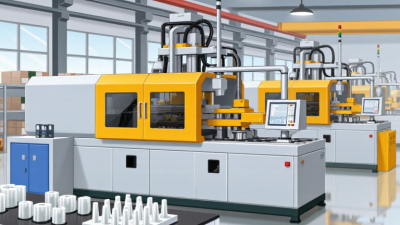
Why Choose PVC Injection Molding for Your Products?
Choosing a manufacturing process means weighing more than unit price. Tooling cost, dimensional consistency, material performance, and production volume all matter. For components exposed to moisture, household chemicals, or frequent handling, pvc injection molding may offer a useful balance of design flexibility and repeatable production. The fit depends on the part.
PlasticsEurope’s 2024 report, Plastics – the Fast Facts, estimates that global plastics production reached 413.8 million tonnes in 2023. That figure shows the scale of plastics manufacturing; it does not prove that any one polymer or process suits every product. PVC deserves closer evaluation because compound formulations can support rigid parts, while selected flexible grades can serve different design needs. Enclosures, fittings, and small technical components are common examples, though performance depends on the exact formulation and mold design.
There are trade-offs. PVC needs careful processing, and excessive heat or poor temperature control can degrade the material. That can affect appearance and part quality. A sensible project review should examine resin grade, wall thickness, gate placement, expected service conditions, and supplier process controls before tooling begins. Small details matter. I would not treat PVC as an automatic cost-saving choice; a prototype may reveal awkward flow or finishing issues that a quotation cannot show. Still, when the application and process are well matched, pvc injection molding can be a practical option for durable, repeatable products.
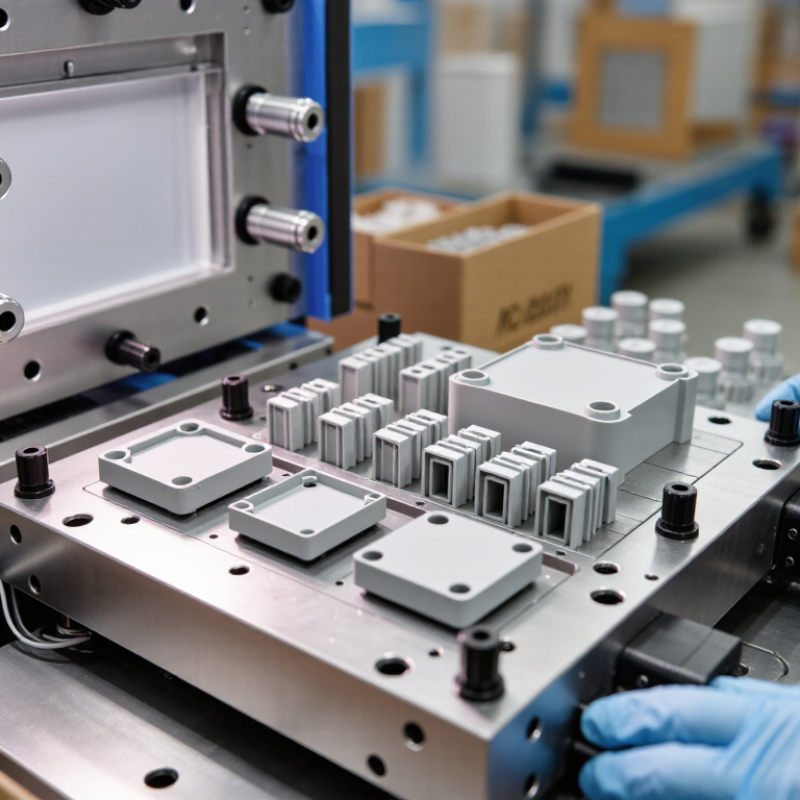
What PVC Injection Molding Is and How the Process Works
PVC injection molding turns formulated PVC compound into consistent, three-dimensional parts. The compound usually enters the machine as granules, with stabilizers and other modifiers already blended.
Grand View Research’s 2024 PVC market report valued the global market at $72.3 billion in 2023. It forecast a 3.9% compound annual growth rate from 2024 to 2030.
This figure covers PVC broadly, not injection-molded products alone. That distinction matters.
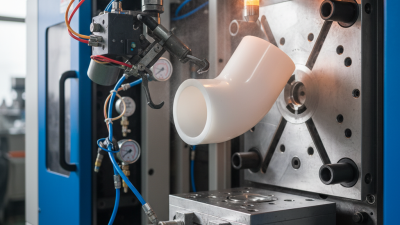
Inside the machine, a rotating screw conveys and heats the compound until it can flow into a closed mold. Cooling sets the shape, then ejector pins release the part. The machine cycle sounds simple. It isn’t.
PVC has a narrow processing window: too much heat or time in the barrel can degrade the material. Poor flow can leave short shots or visible weld lines. Operators adjust barrel temperatures, injection speed, pressure, and cooling to suit the compound and part geometry.
Rigid grades can form firm housings; flexible formulations make softer components. Small details matter. A gate beside a thick wall may create a visible mark or uneven cooling, so trial parts should be checked for dimensions, surface finish, and reliable ejection.
Key Properties of PVC for Manufactured Products
PVC is valued for its combination of durability, chemical resistance, and adaptable hardness. In molded products, rigid PVC can hold its shape in housings, fittings, and protective covers. Flexible formulations suit parts that need to bend slightly, such as gaskets or cable guides. The final properties depend on the formulation, not just the base resin.
It resists moisture and many common acids and alkalis, which can help parts last in damp or industrial settings. PVC also provides useful electrical insulation. A molded enclosure can protect internal components while remaining relatively lightweight. It is practical, not indestructible.
Heat deserves careful attention. PVC can soften or degrade if processing temperatures are poorly controlled, so material handling and machine settings matter. UV exposure may also cause fading or surface changes unless the formulation is designed for outdoor use. These limits are easy to overlook when a sample looks good on the bench. For reliable production, evaluate the part’s actual chemical exposure, operating temperature, and expected loads, then test molded samples under realistic conditions. Additives and wall thickness can affect performance, so a promising material datasheet is only a starting point.
Why Choose PVC Injection Molding for Your Products? - Key Properties of PVC for Manufactured Products
| Property or consideration |
Typical characteristics of PVC |
Relevance to manufactured products |
| Formulation flexibility |
PVC is available as rigid or flexible material; plasticizers and other additives can adjust its properties. |
Supports a broad range of part designs, from stiff housings and fittings to flexible components. |
| Density |
Typically about 1.3–1.45 g/cm³ for unfilled compounds; the exact value depends on formulation. |
Useful when estimating part weight and material requirements. |
| Strength and stiffness |
Rigid PVC commonly has a tensile strength around 40–55 MPa and a flexural modulus of roughly 2.4–4.1 GPa. |
Can provide useful rigidity for enclosures, connectors, and other structural parts, subject to design and grade selection. |
| Impact performance |
Impact resistance varies substantially with the compound, temperature, and test method; impact-modified grades are available. |
Select and test the grade for parts exposed to drops, knocks, or low-temperature use. |
| Chemical resistance |
Generally resistant to many acids, alkalis, and salts, but compatibility depends on concentration, temperature, and exposure time. |
Can suit some chemical-handling applications; check compatibility with the specific fluid, especially solvents. |
| Electrical insulation |
PVC compounds are widely used as electrical insulators; electrical performance varies by formulation and test conditions. |
May be suitable for cable accessories and electrical housings when the grade meets applicable requirements. |
| Water absorption |
Typically low compared with many hygroscopic engineering plastics, though the measured value depends on the compound and test method. |
Can help maintain part dimensions in humid environments; moisture and dimensional requirements should still be verified. |
| Heat sensitivity during processing |
PVC can thermally degrade if overheated or held too long at processing temperatures; stabilizers and controlled processing are important. |
Requires careful temperature, residence-time, and equipment control when injection molding. |
| Mold shrinkage |
Shrinkage is formulation- and process-dependent; rigid PVC compounds often have relatively low shrinkage. |
Use the selected compound’s supplier data and mold trials to establish dimensions and tolerances. |
| Flame behavior |
Some PVC formulations have favorable flame-retardant characteristics, but performance is grade-specific and must be tested. |
Confirm that the chosen compound and finished part meet the relevant fire-safety standard. |
Values and characteristics are indicative, not design guarantees. PVC properties vary by grade, additives, processing conditions, and test method; consult the compound supplier’s technical data and validate the finished part.
How PVC Injection Molding Supports Design and Production Needs
PVC injection molding can support products with practical shapes, repeatable dimensions, and integrated features. Designers can add ribs, clips, or textured surfaces without assembling separate pieces. Uniform wall thickness helps reduce uneven cooling and visible sink marks. Small details matter. Draft angles and rounded corners can also help parts release cleanly from the mold.
Production depends on matching the part design, mold, and PVC formulation. PVC is sensitive to processing heat, so temperature and material flow need careful control. Stable settings help limit defects such as discoloration or incomplete filling. Tool trials can reveal issues before full production, including tight corners or difficult ejection. Inspect sample parts for fit, surface quality, and dimensional variation. No process is perfect. A design that looks simple on screen may still need changes after molding, and those adjustments can affect tooling cost and lead time.
Common Product Applications for Injection-Molded PVC
PVC injection molding is commonly used for plumbing fittings, electrical enclosures, cable connectors, and small valve components. These parts often need to resist moisture, everyday chemicals, or repeated handling. A rigid PVC fitting, for example, can hold a precise thread and connect securely to a pipe. Small details matter. Poorly designed gates or uneven wall thickness can leave weak spots, visible seams, or sink marks.
Flexible PVC compounds suit different applications, including grips, protective caps, and selected appliance components. Their softer feel can improve handling, while molded shapes help keep parts consistent. Still, PVC is not a universal choice. Heat exposure, impact requirements, and contact with other materials should be assessed before selecting a grade. I would not assume that one compound works for every enclosure or fitting. That shortcut can cause trouble. Prototype parts and practical testing help reveal issues such as warping, brittle edges, or a poor fit. The right application depends on the formulation, mold design, and conditions the finished product will face.